When to Change Your Tires
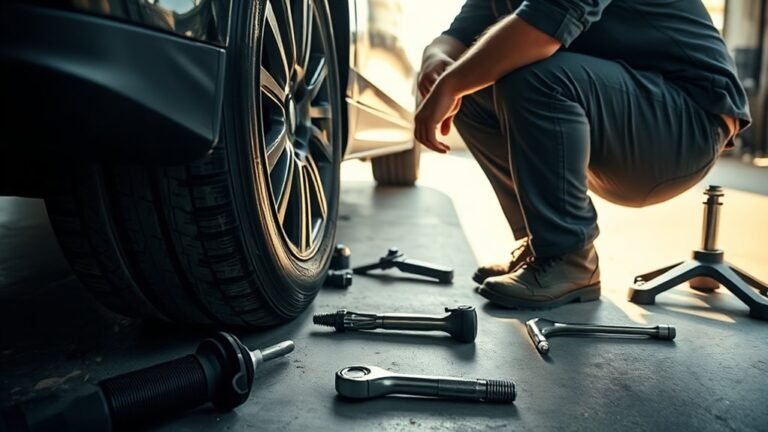
You should change your tires when tread gets too low, age or damage makes them unsafe, or the season calls for a different set. Tire safety is crucial, and knowing when to replace your tires can save you from accidents and improve your vehicle’s performance.
Replace them at 2/32 inch minimum, though 4/32 inch is smarter for wet roads and 6/32 inch for snow. It’s a good habit to inspect your tires monthly for cracks, bulges, and uneven wear. Also, check the DOT date after six years to make sure your tires aren’t too old.
Switch seasonal tires when temperatures stay near 45°F to 50°F. This helps you stay safe and get the best traction. There’s more practical guidance ahead to help you decide the best time to change your tires!
Key Takeaways
- Replace tires at 2/32-inch tread depth, but consider changing at 4/32 inch for wet roads and 6/32 inch for snow.
- Inspect tires monthly and before long trips using a tread gauge, penny test, or wear bars.
- Change tires sooner if you see cracks, bulges, exposed cords, punctures, or uneven wear patterns.
- Replace aging tires after six years of use, and by ten years maximum, regardless of tread depth.
- Swap seasonal tires when temperatures consistently stay near 45°F–50°F and road conditions regularly change.
It’s a good idea to keep an eye on your tires regularly. That way, you can catch any problems early and stay safe on the road.
How Often Should You Change Your Tires?
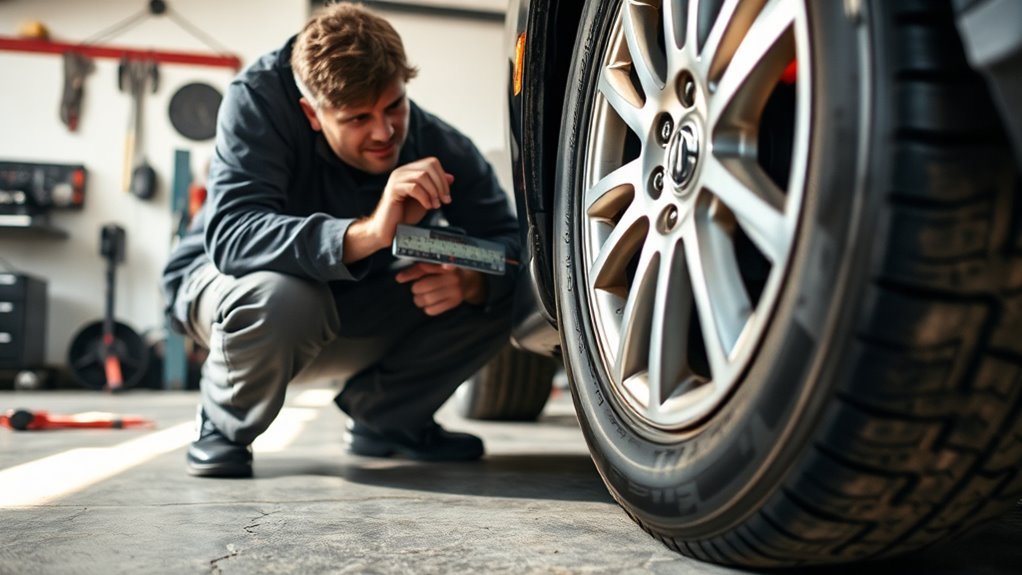
Generally, you should replace your tires every six years, but the right timing depends on how much you drive, the roads you use, and how well you maintain them. If you commute daily, tow loads, or face rough pavement, your tires may age faster and need earlier replacement.
Heat, sunlight, and long periods of parking also speed up rubber deterioration.
You should check your owner’s manual and tire warranty for mileage and age guidelines, then inspect your tires regularly for cracking, bulges, vibration, or uneven wear. Rotate them on schedule, keep them properly inflated, and align your wheels when needed.
Since neglect shortens tire life, these little steps really help. Even if your tires look fine, don’t push them far past their recommended age. Replacing them on time protects handling, braking, comfort, and your safety overall.
How Much Tread Do Your Tires Need?
You need enough tread to keep traction, and once your tires reach the minimum safe depth, it’s time to plan for replacement.
You can check tread depth with a gauge or a simple coin test to see whether your tires still have enough grip.
You should also watch for uneven wear, since it can signal alignment, inflation, or suspension problems.
Minimum Safe Tread
Tread depth acts as your tire’s last line of defense, helping it grip the road, channel water, and shorten stopping distance. Once tread wears too low, your tires lose traction faster on wet pavement, and hydroplaning becomes much more likely.
You also need more distance to brake, especially during sudden stops or in bad weather. So, it’s really important to keep an eye on your tread depth.
For most passenger vehicles, 2/32 inch is the legal minimum, but that doesn’t mean it’s the safest point to keep driving. You should replace tires before they reach that limit if you regularly drive in rain, snow, or on highways.
Many safety experts recommend changing them around 4/32 inch for wet conditions and 6/32 inch for snow. If your tread looks shallow, your tires may no longer protect you the way they should on the road. Better safe than sorry, right?
Measuring Tread Depth
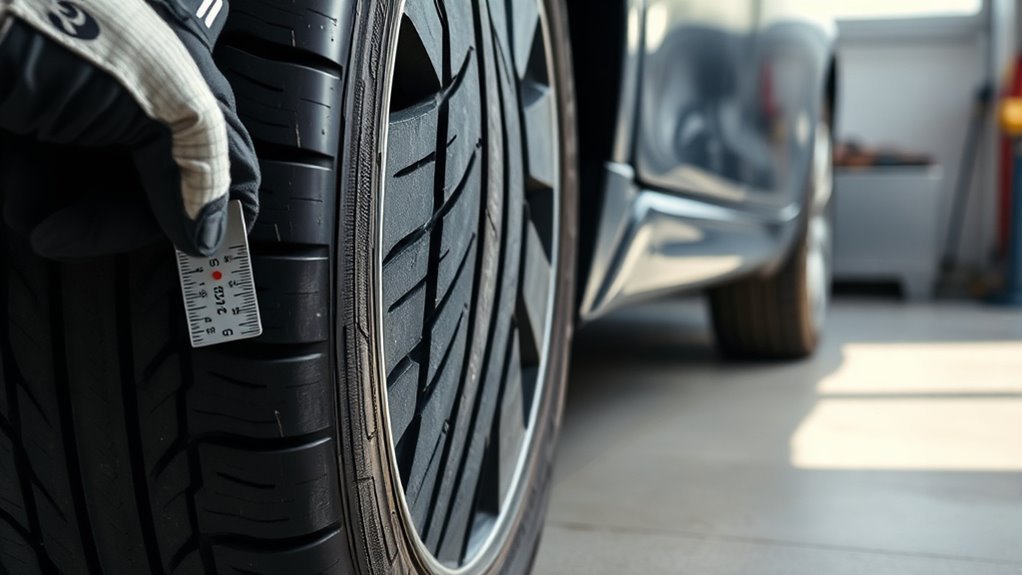
Often, the easiest way to check your tires is by measuring the tread depth with a gauge or a simple coin test. A tread depth gauge gives you the most accurate reading.
Insert it into the groove, press the base flat against the tread, and note the measurement. Check several spots across each tire, because one quick reading doesn’t tell the whole story.
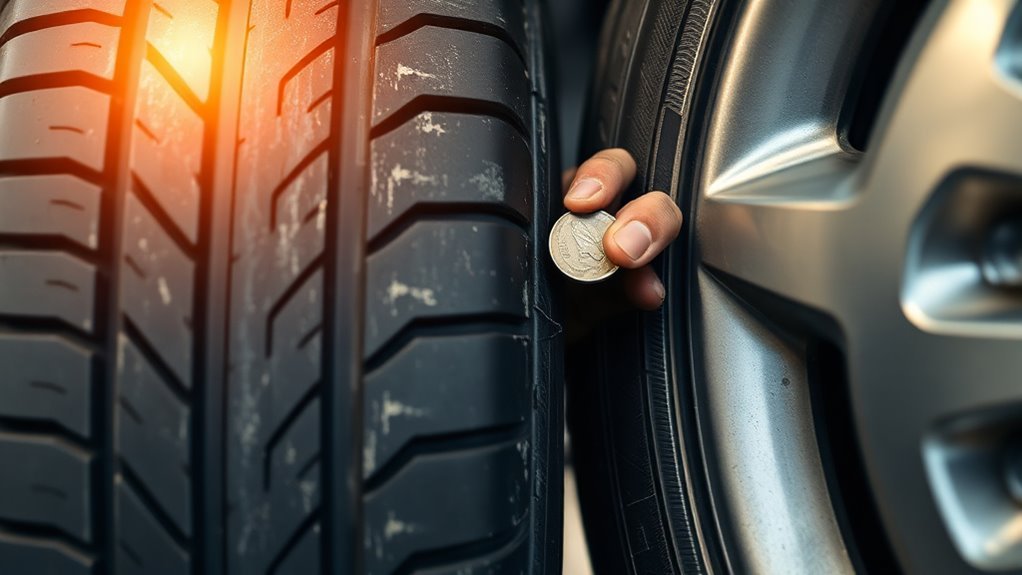
If you don’t have a gauge, use a penny or quarter. Place the coin into a tread groove with the head facing down.
If you can see the top of Lincoln’s head, your tread is too low. With a quarter, if Washington’s head is fully visible, you’re nearing replacement time.
Measure monthly and before long trips so you can spot low tread before it affects traction and safety. It’s a quick check that can really make a difference!
Signs Of Uneven Wear
Even if your tread depth looks acceptable at first glance, uneven wear can mean your tires still need attention. Check each tire for bald spots, feathering, cupping, or heavier wear on one edge.
These patterns often signal alignment, suspension, or inflation problems, and they can shorten tire life fast.
If the center tread wears faster, you may be overinflating. If both outer edges look smoother, your pressure may be too low.
One-sided wear usually points to poor alignment, while scalloped dips can suggest worn shocks or balance issues. You might also notice vibration, pulling, or more road noise while driving. Don’t ignore those clues.
Uneven wear reduces traction, especially in rain, and it can increase your stopping distance. Catching it early helps you replace tires and fix the cause.
How Old Are Tires Before They’re Unsafe?
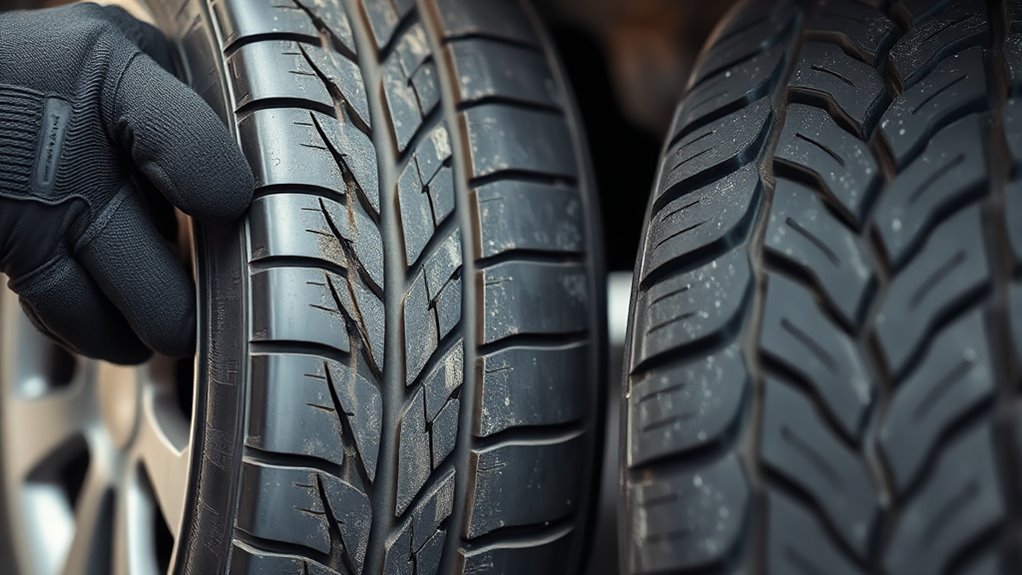
Aging matters as much as mileage when you’re deciding whether a tire is still safe. Rubber compounds dry out, harden, and lose flexibility over time, even if you don’t drive often.
Tire safety depends on age too, since rubber hardens and loses flexibility even when mileage stays low.
Heat, sunlight, and long periods of storage can speed up that aging process and weaken performance. So, it’s not just about how far you’ve driven.
You should check the tire’s DOT code to find its manufacture date. The last four digits show the week and year it was made.
Many automakers and tire makers suggest a closer inspection after six years. Replacement is often recommended by ten years at the latest, no matter how much tread is left.
If you live in a hot climate, park outside, or rarely use your car, your tires may age faster. When in doubt, just ask a trusted tire professional to check their age and condition.
What Visible Signs Mean Your Tires Need Replacing?
Sometimes, your tires will show clear warning signs before they fail, and you shouldn’t ignore them. If you notice tread worn down close to the wear bars, your tires can’t grip the road safely.
Cracks in the sidewall often mean the rubber is drying out and weakening. Bulges or blisters signal internal damage, and they can lead to a sudden blowout.
You should also watch for uneven tread wear. That often points to alignment, suspension, or inflation problems, but it still means the tire may need replacing.
Cuts, exposed cords, or punctures near the sidewall are serious red flags. If your tires keep losing air, don’t assume it’s minor.
Visible damage usually worsens over time, so replacing compromised tires quickly helps protect your traction, handling, and safety. Better safe than sorry!
When Should You Switch Seasonal Tires?
You should switch seasonal tires when temperatures stay consistently warm or cold enough for the other set to perform better.
You can also watch for changing road conditions, like frequent snow, ice, or heavy spring rain, that signal it’s time to make the swap.
Before you do, check tread wear so you’re not putting on a set that won’t give you safe traction.
Temperature Change Timing
Generally, the best time to switch seasonal tires comes when daytime highs and overnight lows consistently stay near 45°F to 50°F, since temperature affects how tire rubber grips the road.
If you wait for a single warm afternoon or cold snap, you may switch too early or too late. Watch weekly forecasts instead of reacting to one day’s change.
When temperatures stay below that range, winter tires remain flexible and perform as intended.
Once spring brings steady warmth above it, you should move back to all-season or summer tires. In fall, make the change before colder patterns fully settle in.
In spring, don’t rush just because one weekend feels mild. By timing your swap around consistent temperatures, you’ll help your tires wear more evenly and last longer overall.
Road Condition Signs
Temperature gives you a strong baseline, but the road itself often tells you when it’s time to switch tires. Pay attention to how your car feels during daily drives.
If winter roads have turned consistently dry and clear, snow tires can start to feel squirmy, soft, and less stable, especially during braking or quick lane changes.
In fall, watch for repeated cold-morning stiffness, slick bridges, and reduced grip on frosty pavement. Those signs suggest summer or all-season tires may no longer match conditions well.
In spring, listen for extra road noise and notice vague steering as temperatures rise. Also consider local patterns: frequent slush, heavy rain, or surprise cold snaps can justify waiting a little longer.
You’ll make a better switch when road behavior matches the season consistently, not just briefly. So, keep an eye on the road, not just the thermometer!
Tread Wear Check
Often, tread wear gives the clearest signal that it’s time to switch seasonal tires. You should inspect your tread depth regularly, because worn grooves can’t grip wet pavement, slush, or hot asphalt effectively.
If your winter tires look rounded, shallow, or uneven, they won’t deliver the traction you need once conditions change.
Use a tread depth gauge or the penny test to check each tire. If tread falls near 4/32 inch on winter tires, replace or swap them soon, since snow traction drops fast below that point.
For summer or all-season tires, low tread can also hurt braking and cornering. Watch for feathering, cupping, or one-sided wear, too. Those patterns can signal alignment or inflation problems, and they can make seasonal tire changes more urgent.
Should You Replace One Tire or All Four?
Replacing one tire can work if the others still have similar tread depth and your vehicle doesn’t have strict drivetrain requirements. If the difference is small, you can usually replace a single damaged tire without affecting handling, braking, or tire wear too much.
Just make sure to always match the new tire’s size, type, and speed rating.
You should replace two tires on the same axle if tread differences are larger, and many all-wheel-drive vehicles may require all four. Uneven diameters can strain drivetrain components and reduce traction, especially in wet or icy conditions.
So, check your owner’s manual for limits on tread variation. If your remaining tires are already worn near replacement depth, buying four often makes more sense.
That way, you’ll get balanced performance, longer-term value, and fewer alignment or rotation issues.
Frequently Asked Questions
Can Tire Pressure Monitoring Systems Detect All Tire Replacement Issues?
No, your tire pressure monitoring system can’t detect all replacement issues. It alerts you to pressure problems, but it won’t catch tread wear, sidewall damage, or uneven aging.
It also won’t spot punctures or structural defects. So, you’ll still need regular inspections to keep your tires in good shape.
Do Tire Warranties Cover Premature Wear or Road Hazard Damage?
Yes, you’ll often get coverage for premature wear through treadwear warranties and for road hazards through separate protection plans. But you must meet maintenance requirements, keep records, and understand exclusions like alignment problems, abuse, or repairs.
It’s important to stay on top of tire care and follow the guidelines. That way, you won’t run into issues when making a claim.
How Does Towing Affect Tire Lifespan and Replacement Timing?
Towing can chew through your tires like a hungry shredder, shortening lifespan and pushing replacement sooner. You’ll need more frequent inspections, higher inflation vigilance, and earlier changes because added weight builds heat and accelerates tread wear.
It’s kinda like your tires are working overtime. So, keeping an eye on them becomes super important. Don’t let the extra load sneak up on you!
Are Run-Flat Tires Replaced Differently Than Standard Tires?
Yes—you replace run-flat tires similarly to standard tires, but you can’t always repair them after pressure loss.
You should inspect internal damage, follow manufacturer limits, and often replace them sooner after punctures or sidewall stress.
It’s a bit different because run-flats are designed to keep you going even when they’re low on air, but that doesn’t mean they’re invincible. So, it’s important to be extra careful with them.
Can Wheel Alignment Problems Return After Getting New Tires?
Yes, wheel alignment problems can return after you get new tires. You’ll notice uneven wear, pulling, or vibration if suspension parts are worn, impacts happen, or alignment wasn’t corrected properly during installation or afterward.
It’s pretty common for these issues to come back if something else in the suspension system is off. So, even with new tires, keeping an eye on your alignment is a good idea.
Conclusion
You can’t afford to guess when your tires are “probably fine.” Check tread, watch for cracks and bulges, and don’t ignore age—even if you don’t drive much.
One key stat stands out: tires with tread worn to 2/32 inch can require nearly twice the stopping distance on wet roads as new tires. That means waiting too long puts you and everyone else at greater risk.
Stay ahead of wear, and you’ll drive safer, smoother, and with more confidence. Regular tire checks help you spot issues early, so you’re not caught off guard. Remember, tire maintenance isn’t just about performance—it’s about your safety on the road. Keeping your tires in good shape means better traction, shorter stopping distances, and a more comfortable ride. Don’t wait until it’s too late; changing your tires at the right time keeps you and your passengers protected every mile.