How Long Can You Drive on a Spare Tire?
You can usually drive only 50 to 70 miles on a temporary spare tire, and you should keep your speed around 50 mph or lower.
Driving on a spare tire is a handy solution when you get a flat, but it’s important to know its limits. These tires aren’t made for long distances or high speeds, so treating them with care is key.
Drive gently, avoid hard braking and sharp turns, and use the spare only to reach a tire shop. It’s really just a short-term fix, not a replacement for a regular tire.
If you have a full-size spare that matches your other tire and is in good shape, you can drive more normally.
Knowing what limits apply can help you stay safer on the road. So, take it easy and get your regular tire fixed or replaced as soon as you can!
Key Takeaways
- Most temporary spares are meant for short-term use only, usually about 50–70 miles. It could be less if your manual says so.
- The typical temporary spare speed limit is around 50 mph. Be sure to follow any lower limit on the tire or in the owner’s manual.
- Drive gently and avoid hard braking, sharp turns, and heavy loads. Spares offer less traction and stability, so take it easy.
- Full-size spares can be driven longer if they match the original tire type and are in good condition.
- Replace or repair the damaged tire as soon as possible. Also, inspect the spare after use for any wear or damage.
How Long Can You Drive on a Spare Tire?
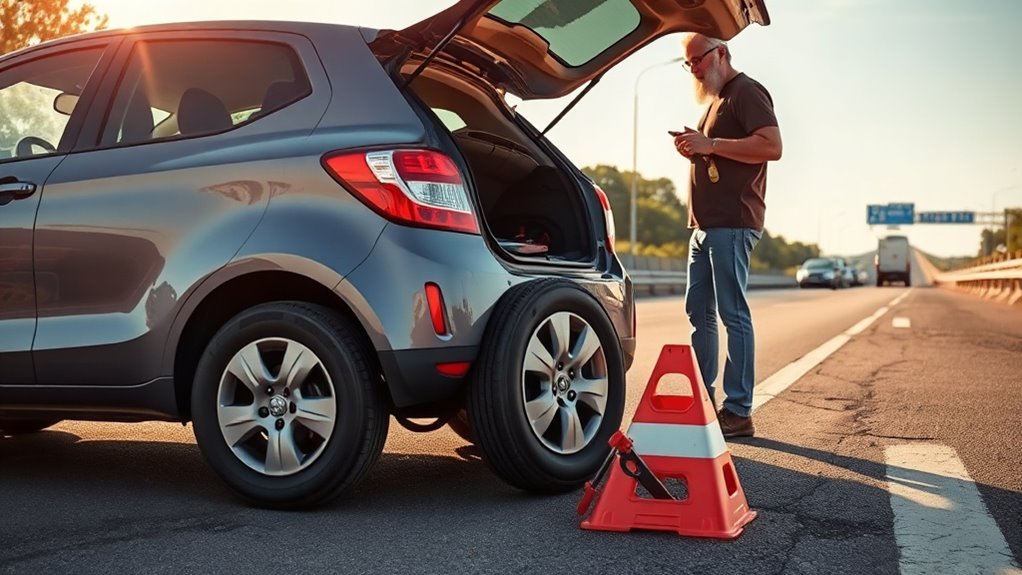
How long you can drive on a spare tire depends on the type of spare, but the safe answer is usually not very far. You should treat any spare as a short-term fix, not a replacement for your regular tire.
A full-size spare can let you keep driving more normally, but you still need to check its condition, pressure, and age before you rely on it. A compact spare usually gives you less grip, less stability, and a lower speed tolerance, so you’ll want to head straight to a repair shop.
Drive carefully, avoid hard braking, and don’t ignore vibrations or unusual handling. The sooner you get the damaged tire repaired or replaced, the safer you’ll be on the road.
Temporary Spare Limits to Know
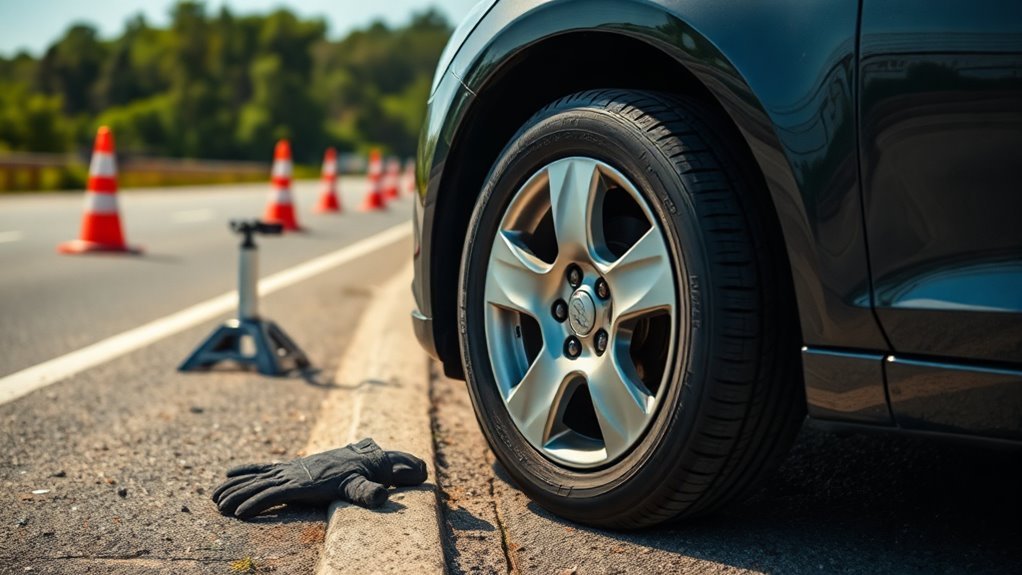
You need to watch a temporary spare’s distance limits, because it’s only meant for short trips to get you to a repair shop. You also shouldn’t exceed its speed limit guidelines, since driving too fast can reduce control and strain the tire.
The longer you use it, the more you risk extra wear and a safer trip turns into a bigger problem. So, it’s really best to get your regular tire fixed or replaced as soon as you can. That way, you avoid any unnecessary hassle down the road.
Spare Tire Distance Limits
If you’re driving on a temporary spare, distance matters as much as speed. Treat it as a short-term fix, not a replacement for your regular tire.
Most donut spares are meant for roughly 50 to 70 miles, though your owner’s manual may set a lower limit. You should plan the nearest repair or tire shop route right away and avoid using the spare for daily driving, long errands, or road trips.
Check the tire’s sidewall and your manual for the exact rating, because every vehicle can differ. If the spare looks worn, underinflated, or damaged, don’t trust it for any extra miles.
The sooner you swap it out, the better you protect your wheels, suspension, and safety. So, don’t wait too long to get it replaced!
Speed Limit Guidelines
Speed matters just as much as distance when you’re on a temporary spare. You should keep your speed at or below the limit printed on the tire, often 50 mph, because these compact spares aren’t built for normal highway cruising.
If you drive faster, you can reduce traction, increase heat, and put extra strain on your steering and braking. In city traffic, ease up smoothly and avoid sudden lane changes.
On the highway, stay in the right lane and use the spare only long enough to reach a repair shop or tire service. Treat the speed rating as a hard rule, not a suggestion.
If your owner’s manual gives a lower number, follow that instead. Your safety depends on matching speed to the spare’s design.
Time And Wear Risks
Even when a temporary spare looks fine, time and wear still matter. Its rubber can age, crack, or lose strength even with little use.
You shouldn’t treat it like a full-size tire, even if the tread looks decent. Heat, sunlight, and long storage can weaken the sidewall. Plus, repeated miles can raise blowout risk fast.
Check the sidewall date code, inspect for bulges or dry rot, and replace the tire if you notice damage.
- Limit driving to the shortest safe route.
- Keep speed low and avoid hard braking.
- Swap it out as soon as possible.
If you’ve already driven far on it, schedule a full inspection. Remember, a spare is a temporary fix, not a lasting solution.
How Far Can You Drive on a Full-Size Spare?
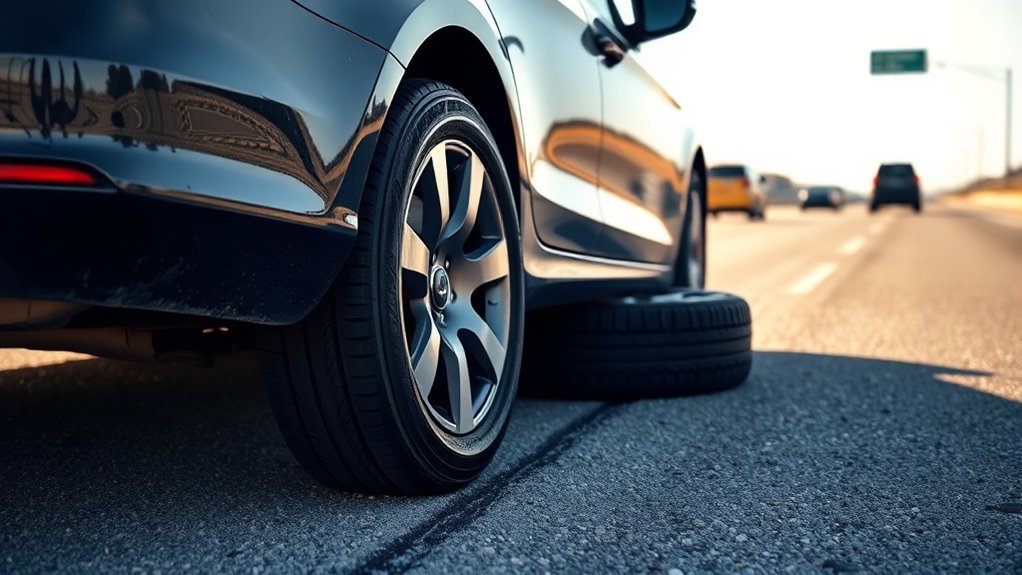
A full-size spare gives you much more freedom than a compact donut, and in most cases, you can drive on it just like a regular tire. You can usually keep driving until you reach home, a shop, or wherever you plan to replace or repair the damaged tire.
If the spare matches your other tires in size, load rating, and tread depth, it shouldn’t limit you much at all. Still, you shouldn’t treat it as a permanent fix.
Check the spare’s pressure before you head out, then drive normally but stay alert for any steering pull, vibration, or odd noise. If the spare is older, worn, or mismatched, replace it sooner rather than later so you don’t put extra stress on your drivetrain or handling.
What Affects How Far You Can Drive?
How far you can drive on a spare tire depends first on the spare type and size, since not all spares are built the same.
Your driving speed and how much weight you carry also matter, because both can wear the tire faster. If you push the tire too hard, you’ll cut down the distance you can safely travel.
Spare Type And Size
The kind of spare you’re driving on largely determines how far you can safely go, because full-size spares, compact donuts, and temporary run-flats all have different limits.
A full-size spare usually matches your regular tires, so you can keep going with less concern. That said, you still should replace it soon to stay safe.
A donut spare is smaller, lighter, and built for short emergency use. Its reduced size means less durability and fewer miles before you need a proper tire.
Temporary run-flats are designed to support you only long enough to reach help. They’re not meant for long drives, so don’t wait to swap them out.
- Check the sidewall for size and type.
- Match the spare to your vehicle’s manual.
- Replace any temporary spare as soon as possible.
Driving Speed And Load
Your speed and vehicle load can shorten how far you can safely drive on a spare tire. Keep your speed low, because heat builds fast and weakens the tire’s structure.
If you haul passengers, tools, or cargo, you add stress and reduce control. Drive gently, avoid sudden braking, and plan for a quick repair.
| Factor | Effect |
|---|---|
| High speed | More heat, faster wear |
| Heavy load | Greater strain, shorter range |
| Smooth driving | Less stress, better control |
| Light load | Longer, safer distance |
You should treat the spare as temporary, not dependable for long trips. If you must carry extra weight, cut your distance and speed even more.
Check the tire often for vibration, bulges, or loss of pressure, and replace it as soon as possible. It’s best not to push your luck with a spare tire!
Signs Your Spare Tire Is Wearing Out
Even a spare tire can wear out faster than you’d expect, especially if you leave it in place too long or drive on it for more than a short distance.
You should watch for cracks, bulges, or sidewall dry rot, since these show the rubber’s breaking down.
If the tread looks shallow or uneven, the tire may not grip well.
Vibrations, wobbling, or a flat-looking shape can also mean trouble.
A spare that’s more than a temporary fix may age even when it’s unused.
- Check for visible cracks along the sidewall.
- Look for low tread or worn edges.
- Notice shaking, pulling, or odd handling.
If you spot any of these signs, the spare isn’t dependable anymore and you’ll need to treat it as worn out.
What to Do After Using a Spare Tire
Once you’ve driven on a spare tire, replace it or have it repaired as soon as possible. Then, check the full-size tire it replaced for any damage.
Replace or repair your spare-tire replacement as soon as possible, and inspect the full-size tire for any damage.
Inspect the wheel, tread, sidewalls, and valve stem for punctures, bends, or embedded objects. If you notice uneven wear or a large cut, don’t drive on it until a professional takes a look.
Make sure to restore your normal tire pressure, and double-check that the spare is properly inflated before you store it away. If you used a compact donut, try to limit driving to short distances and low speeds until you get a permanent fix.
It’s also a good idea to schedule a tire rotation, alignment, or balance check if the flat happened because of impact or wear. Following these steps helps you avoid another roadside problem and stay safer on the road.
Frequently Asked Questions
Can I Drive on a Spare Tire in Wet Conditions?
Yes, you can, but you shouldn’t push it. You’ll have less traction and control, especially in heavy rain.
Drive slowly, avoid sudden moves, and replace the spare soon for safer handling. It’s better to be cautious out there!
Do Spare Tires Affect Fuel Efficiency?
Yes—your spare tire can drag like a parachute, hurting fuel efficiency. You’ll usually burn a bit more gas because it’s smaller, heavier, and less aerodynamic than your regular tire.
This is especially true if you drive far. So, it’s something to keep in mind when you’re on the road.
How Often Should a Spare Tire Be Checked?
You should check your spare tire monthly, and before long trips. Inspect pressure, tread, and damage.
Then make sure your jack and lug wrench’re present. That way, you’ll be ready if you need it.
Can a Spare Tire Handle Highway Speeds?
Yes, you can drive at highway speeds on some full-size spares, but you shouldn’t on compact donuts; they’re usually rated lower.
Check the sidewall, drive cautiously, and replace it with your regular tire soon.
Better to be safe and get that spare swapped out as soon as you can!
Should I Replace All Tires After Using a Spare?
You usually don’t need to replace all tires after using a spare, but you should inspect the damaged tire. Check the tread depth and replace any tire that’s worn unevenly or unsafe.
It’s a good idea to make sure all your tires are in good shape before hitting the road again. That way, you stay safe and avoid any surprise problems down the line.
Conclusion
You can think of a spare tire as a brief intermission, not the whole show. Whether you’re on a donut or a full-size spare, keep your drive short, slow, and careful until you can get the right tire back on.
Watch for wear, check your pressure, and replace it as soon as possible. A spare can save the day, but it isn’t made for a road trip worthy of Kerouac.
In short, a spare tire is a temporary fix designed to get you safely to a repair shop. Driving on it for too long or at high speeds can be risky. So always treat your spare with care—drive slowly, keep an eye on the tire’s condition, and swap it out with a regular tire as soon as you can. Remember, how long you can drive on a spare tire depends on the type, but it’s never meant for extended use. Stay safe and don’t push your spare beyond its limits!