How Far Can I Drive on a Spare Tire?
You can usually drive only a short distance on a spare tire, especially a compact donut. These tires are designed for temporary use and aren’t made for long trips or high speeds. Keep your speed low, often no more than 50 mph, and head straight to a repair shop or safe location.
Check your owner’s manual and the spare’s sidewall for exact limits. It’s important to avoid hard braking, sharp turns, and rough roads while driving on the spare. Driving too far can hurt handling, wear the tire fast, and raise the risk of a blowout, so there’s definitely more to know before you hit the road.
Key Takeaways
- Spare tires are temporary; you should only drive a short distance to a repair shop or a safe location.
- Donut spares usually allow about 50–70 miles, and you should keep your speed under 50 mph.
- Full-size spares can be driven farther, but it’s important to follow the limits in your owner’s manual.
- Drive slowly and smoothly. Try to avoid hard braking, sharp turns, rough roads, and heavy loads.
- Stop immediately if the spare feels shaky, pulls the car, or shows signs of wear, low pressure, or damage.
How Far And Fast Can You Drive On A Spare Tire?
How far and fast you can drive on a spare tire depends on the type, but the rule is simple: keep it short and slow. You should treat a spare as a temporary fix, not a normal tire.
If you’re using a compact spare, stay under highway speeds and head straight to a repair shop. Even a full-size spare isn’t a free pass; it still deserves caution because it may not match your other tires exactly.
Drive smoothly, avoid hard braking, and skip long trips or rough roads. The sooner you replace the damaged tire, the safer you’ll be.
If the spare feels shaky, looks worn, or pulls the car, stop and check it right away to protect yourself and your vehicle.
What Limits Apply To Spare Tires?
Spare tires come with strict limits, and they’re not all the same. You need to check your owner’s manual and the tire’s sidewall before you drive far.
These spares often cap speed, distance, and load, so you can’t treat them like regular tires.
| Limit | What you should do |
|---|---|
| Speed | Keep it low and steady |
| Distance | Drive only to repair |
| Load | Carry less weight |
| Pressure | Check it before moving |
You should avoid hard cornering, heavy braking, and rough roads, because a spare won’t handle stress well.
If your dashboard shows a warning, don’t ignore it. Use the spare only long enough to reach a tire shop or safe location.
Full-Size Spare Vs. Donut Tire
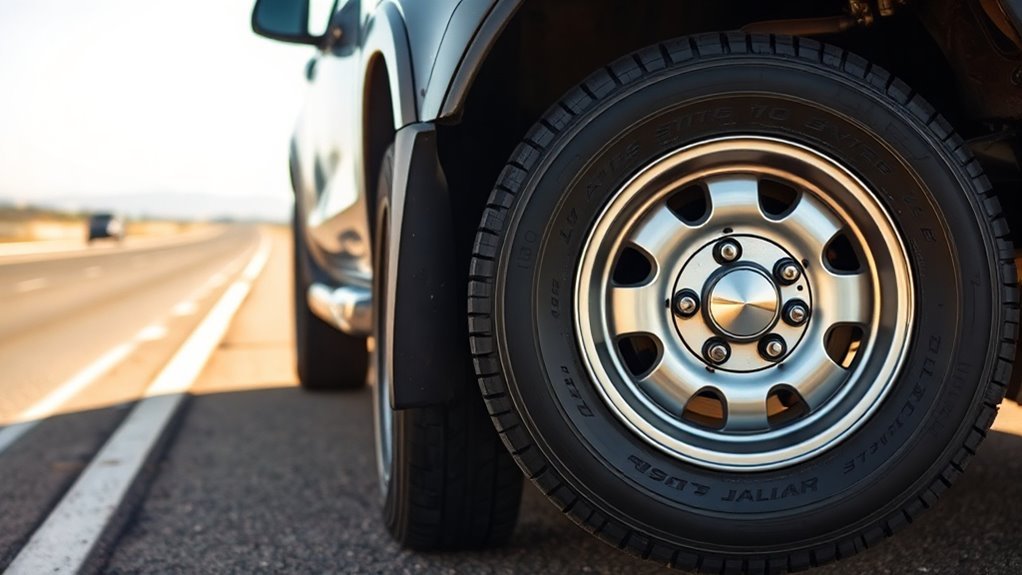
A full-size spare lets you keep driving with more confidence because it matches your other tires more closely in size and handling.
A donut tire can get you back on the road fast, but it usually comes with speed and distance limits. You’ll want to know which one your car has so you can use it the right way.
Full-Size Spare Benefits
A full-size spare gives you more flexibility and peace of mind than a donut tire because it matches your vehicle’s regular tires in size and handling. You can keep driving with normal steering response, braking feel, and traction, which helps you stay confident after a flat.
It also lets you maintain your usual speed and load balance better than a smaller temporary tire. If you drive long distances or in harsh weather, that consistency matters.
You won’t need to rush straight to a shop, and you can plan your repair or replacement on your schedule. A full-size spare can also serve as a reliable backup if you rotate tires regularly.
For many drivers, it’s the safer, simpler option when a tire failure catches you off guard.
Donut Tire Limits
Donut tires, however, come with strict limits that you can’t ignore. You should treat them as a temporary fix, not a real replacement. Most manufacturers recommend driving no faster than 50 mph and covering only about 50 to 70 miles.
That short range helps you reach a shop before the tire wears out or overheats. Because a donut is smaller and lighter than your regular tire, it changes handling, braking, and traction.
You may also notice your car sitting lower on one corner, which can strain the drivetrain if you keep driving too long. If you need to travel farther, stop and replace the spare with a full-size tire or call for help.
What Happens If You Drive Too Far?
If you drive too far on a spare tire, you’ll wear down the tread much faster and lose its limited grip. The tire can also build up dangerous heat, which raises the risk of a blowout.
And once that happens, you could lose control of your vehicle. So, it’s best to take it easy and get your regular tire fixed as soon as you can.
Tread Wear Risks
As you keep driving on a spare, its shallow tread can wear down fast, reducing grip and making the tire even more vulnerable to heat buildup, blowouts, and loss of control. You may notice the tread edges smoothing out sooner than on a regular tire, especially if you brake hard, corner sharply, or drive on rough pavement.
That reduced tread depth means less road contact, so your spare can slip more easily on wet or loose surfaces. If the tire wears past its limited design, it won’t respond as predictably when you steer or stop.
You’re also putting extra stress on the tire’s structure with every mile. To stay safer, drive only as far as needed, avoid high speeds, and replace the spare with a proper tire quickly.
Heat Build-Up
A spare tire can overheat quickly when you keep driving on it too long, especially at highway speeds or on hot pavement. As heat rises, the rubber softens and the tire loses strength, so you should treat every extra mile as a risk.
You can spot trouble by checking for a burning smell, sidewall bulges, or unusually warm rubber after stopping. Keep an eye out for these signs—they mean it’s time to take action.
| Condition | Heat Effect | Your Move |
|---|---|---|
| Short trip | Mild buildup | Drive straight to repair |
| Long highway run | Rapid overheating | Slow down and stop soon |
| Hot weather | Extra stress | Limit distance |
If the tire feels hot, replace it with a full-size tire or call for help. Waiting too long only increases damage and repair costs, so don’t push your luck.
Loss Of Control
When you drive too far on a spare tire, you can lose grip, steering response, and stability fast. As the tire flexes and wears, your car may pull, wander, or brake unevenly.
You’ll feel the difference most in wet turns and sudden lane changes.
- Steering can feel vague
- Braking distance can increase
- Traction may drop on corners
- The spare can wobble at speed
- A failure can happen without warning
Don’t ignore these signs. If the tire feels shaky, noisy, or soft, slow down and pull over safely.
A spare’s job is to get you to help, not to handle normal driving. The longer you keep going, the harder it gets to control your vehicle, and the greater your crash risk becomes.
How To Drive Safely On A Spare Tire
Driving on a spare tire means treating it as a temporary fix, not a long-term solution. You should slow down and keep your speed well below highway limits.
Accelerate gently, brake early, and steer smoothly to avoid stressing the tire. Keep a larger following distance so you have time to react.
Avoid hard cornering, potholes, and rough roads whenever you can. If your spare is a compact donut, check the sidewall for its speed rating and stay within it.
Don’t overload the car with extra weight, and leave unnecessary cargo behind. Use your headlights if visibility drops, and stay alert for changes in handling.
Plan your route carefully, choose the shortest safe path, and drive directly to your destination without unnecessary stops. It’s all about being cautious and getting there safely.
When To Replace The Spare And Fix The Flat
Once your full-size tire is repaired or replaced, swap out the spare right away and stop relying on it. You should also fix the flat before you drive long again.
A spare is only a temporary backup, and worn tread, low pressure, or age can make it unsafe fast.
- Replace the spare after any long trip on it.
- Fix the punctured tire as soon as possible.
- Inspect sidewalls, tread, and valve stems.
- Check the spare’s pressure monthly.
- Replace an old spare before it fails.
If you notice cracks, bulges, or uneven wear, get a new spare too. Don’t wait for another roadside emergency.
Keep both tires ready so you can drive safely and confidently.
Frequently Asked Questions
Can I Use a Spare Tire in Heavy Rain?
You can, but you really shouldn’t. A spare tire usually has less grip and shorter tread life, so you’ll hydroplane easier in heavy rain.
It’s best to drive slowly and avoid hard braking when using one. Make sure to replace it as soon as you can.
Does a Spare Tire Affect Fuel Economy?
Yes, a spare tire can hurt your fuel economy; its extra weight and different size drag mileage down.
You’ll feel less efficiency, but the drop’s usually small unless you drive on it longer.
Are Spare Tires Legal for Highway Driving?
Yes, you can usually drive on a spare tire on highways if it’s properly inflated and allowed by local law. But you shouldn’t go fast or far.
Check your owner’s manual to be sure. And replace the spare tire as soon as you can.
How Do I Know if My Spare Is Expired?
Check the sidewall date code; if it’s over six to ten years old, cracked, bulging, or underinflated, you’ve got an expired spare.
Think of rubber like bread: age and damage spoil it fast.
Can I Mix a Spare Tire With AWD Vehicles?
You can’t safely mix a spare tire with AWD vehicles for long; your drivetrain needs matching tire sizes.
It’s super important to check your owner’s manual before hitting the road. Drive cautiously while the spare is on.
Make sure to replace the spare with a proper tire as soon as you can to avoid any damage.
Conclusion
So if you’re ever stuck with a flat, your spare gets you out of a jam, not all the way to your next road trip. You’ll want to keep your speed down, your distance short, and your plans flexible—funny how the tire meant to save your day also asks for the least from it.
Once you’re safely off the shoulder, get the flat fixed or the spare replaced, and you’ll be back on track. Remember, driving on a spare tire is just a temporary fix. It’s important to limit your speed and avoid long distances to prevent damage.
In short, your spare tire is designed to help you get to a safe place or a repair shop, not for extended driving. So keep your speed low, drive carefully, and get your regular tire fixed or replaced as soon as possible to stay safe on the road.