How Often Should You Rotate Tires?
You should rotate your tires every 5,000 to 7,500 miles, unless your owner’s manual says otherwise. Tire rotation is important for even tire wear and better vehicle handling. It can also help extend the life of your tires, saving you money in the long run.
A good rule is to match tire rotations with your oil changes so you don’t forget. Rotating them regularly helps each tire wear more evenly, which keeps your ride smooth and safe.
If you notice uneven tread, vibration, or pulling while driving, it’s a sign to rotate your tires sooner. Different vehicles and driving habits can change the best schedule, so it’s good to stay flexible. There’s definitely more to know about tire care, but starting with regular rotations is a smart move.
Key Takeaways
- Rotate tires every 5,000 to 7,500 miles, or follow your owner’s manual if it differs.
- It’s a good idea to match tire rotations with oil changes to make the schedule easier to remember.
- You might want to rotate tires sooner if you notice uneven tread wear, vibration, pulling, or noisy rolling.
- Driving habits like hard braking, sharp cornering, towing, and short trips can mean you need to rotate more often.
- Always use the manufacturer’s recommended rotation pattern, since front-, rear-, and all-wheel-drive vehicles have different needs.
How Often Should You Rotate Tires?
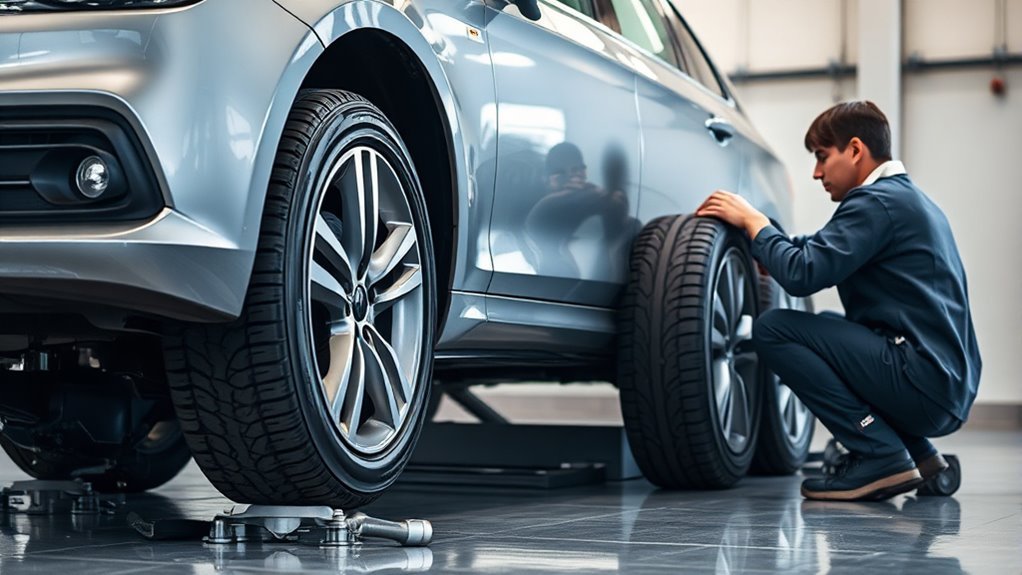
You should rotate your tires about every 5,000 to 7,500 miles, though your owner’s manual may recommend a different interval based on your vehicle and tire type. Check your mileage at each oil change so you don’t miss the schedule.
If you drive mostly in stop-and-go traffic, haul heavy loads, or take frequent short trips, you might need service sooner. You should also rotate tires after long road trips or when you notice uneven tread wear.
Front- and rear-wheel-drive vehicles often follow different patterns, so use the rotation method your manufacturer specifies. Keep records of each rotation and inspect tire pressure at the same time.
Staying consistent helps you follow a maintenance routine that keeps your vehicle handling predictably and safely. It’s a simple step that really pays off in the long run.
Why Tire Rotation Extends Tire Life
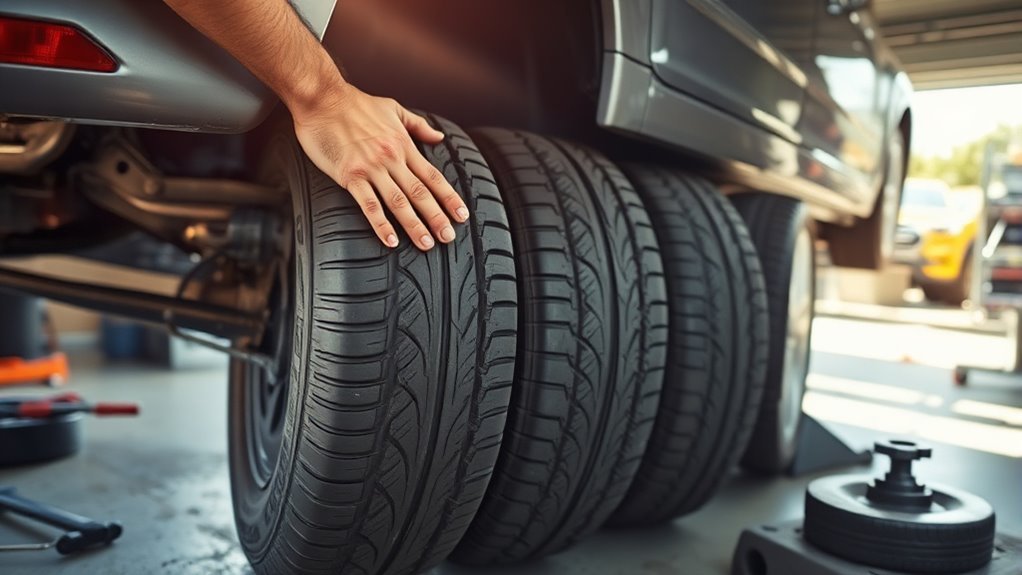
When you rotate your tires, you help them wear more evenly across all four wheels. That even tread wear keeps one tire from taking on extra stress while the others stay underused.
As a result, you can extend tire life and keep your vehicle handling more consistently. It’s a simple step that goes a long way in keeping your ride smooth and safe.
Even Tread Wear
Tire rotation helps the tread wear more evenly across all four tires, which extends their useful life and keeps performance more consistent.
You’ll notice less feathering and fewer bald spots when you move tires on schedule. That really makes a difference because each tire faces different loads and turning forces.
So, the tread won’t disappear at the same rate on all tires.
| Tire Position | Wear Pattern |
|---|---|
| Front Left | Faster edge wear |
| Rear Right | Slower center wear |
Balanced Tire Stress
That uneven wear isn’t just about appearance—it also means each tire is handling stress differently. When you rotate your tires, you spread that stress across all four corners of your vehicle instead of letting one tire take the hardest hits.
Your front tires usually work harder during braking and steering, while the rear tires often carry less load. By switching positions on schedule, you help each tire wear at a similar pace, which reduces the chance of premature failure.
You also keep traction more consistent, so your car feels more stable in rain, snow, and quick turns. Balanced stress means your tires can last longer, perform better, and save you money because you won’t need replacements as soon.
How Many Miles Between Tire Rotations?
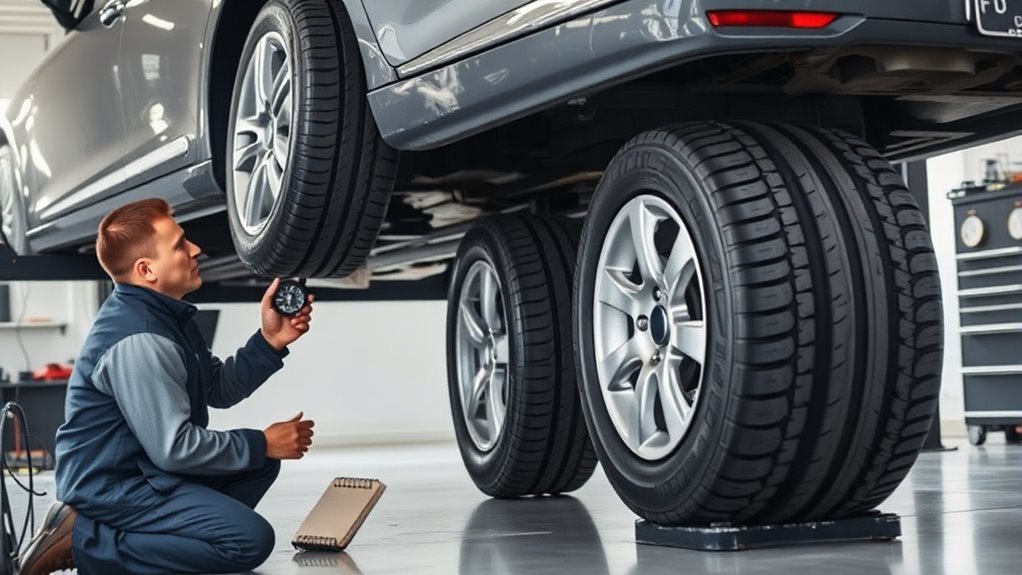
Most experts suggest you rotate your tires every 5,000 to 7,500 miles, though your vehicle’s manual may give a different interval. Your driving habits and road conditions can change that schedule.
Especially if you drive often in stop-and-go traffic or on rough roads. Check your tires regularly so you can adjust rotation timing before uneven wear builds up.
Typical Mileage Interval
A common tire rotation interval is every 5,000 to 8,000 miles, though your vehicle’s owner’s manual should always set the final word.
If you want a simple rule, match rotations to your oil-change schedule so you won’t forget. Staying on schedule helps your tires wear more evenly and can extend their useful life.
- Check your manual for the exact interval.
- Mark your mileage so you can track it.
- Rotate before tread wear becomes uneven.
You don’t need to guess or wait for visible problems. Instead, treat rotations as routine maintenance and keep the process consistent.
If you drive often, log the miles and plan ahead so you can get service on time. That small habit can save money and keep your ride feeling balanced.
Driving Conditions Matter
Your mileage interval is a good baseline, but your driving conditions can change how often you should rotate your tires.
If you drive mostly on smooth highways, you may be able to follow the standard schedule. But stop-and-go traffic, rough roads, potholes, and frequent turns can wear tires unevenly much faster.
You should also shorten the interval if you tow heavy loads, carry extra weight, or drive in hot climates. These conditions add stress and heat, which can wear out your tires quicker.
If you use an all-wheel-drive vehicle, follow the manufacturer’s guidance closely because mismatched tire wear can affect performance.
Check your tires regularly for uneven tread. Rotate them sooner if you notice any uneven wear.
Your goal is even wear, longer tread life, and safer handling.
Signs You Need a Tire Rotation Sooner
Sometimes, your tires will tell you they need attention before the mileage schedule does. You might notice uneven tread wear, vibration, or a pull to one side while driving.
Your tires may need attention before the schedule does—watch for uneven wear, vibration, or pulling while driving.
Those signs often mean your tires aren’t sharing the workload evenly, and a rotation can help restore balance.
- Check the front tires for faster wear than the rear.
- Feel for steering wheel shake at steady speeds.
- Inspect for noisy, rough, or uneven rolling.
If you spot any of these clues, don’t wait for the next service interval. A sooner rotation can improve traction, extend tire life, and keep your vehicle handling predictably.
Also, look for visible wear bars or shallow tread on any single tire. When one tire looks worse than the others, your rotation schedule should move up.
How Driving Habits Affect Rotation Timing
How you drive can shorten the time between tire rotations. If you brake hard, speed up fast, or take corners aggressively, you’ll wear tires unevenly and need service sooner.
Stop-and-go commuting, rough roads, and frequent heavy loads also push tires harder than relaxed highway driving.
| Habit | Effect |
|---|---|
| Hard braking | Faster front-tire wear |
| Sharp cornering | Uneven shoulder wear |
| Heavy loads | Quicker overall wear |
If you mostly drive gently on smooth roads, you might be able to stretch those intervals a bit. But you still shouldn’t ignore them.
Check your tires often, follow your owner’s manual, and rotate them early when your routine is tough. Consistent habits help you protect tread life and keep handling balanced.
Tire Rotation Patterns for Your Vehicle
The right tire rotation pattern depends on your vehicle’s drivetrain and tire setup, so it’s important to follow the pattern your owner’s manual recommends.
You’ll usually use one of a few common patterns to balance wear and keep handling predictable. Front-wheel-drive vehicles often need the front tires moved straight back and the rear tires crossed to the front.
Common rotation patterns help balance wear and keep handling predictable, especially on front-wheel-drive vehicles.
Rear-wheel-drive and all-wheel-drive vehicles may use a different cross pattern, while directional tires can only rotate front to back on the same side.
- Check tire sidewall arrows before moving them.
- Match the pattern to your drivetrain.
- Recheck pressure after every rotation.
If you’re unsure, just ask a tire shop to confirm the correct layout. It’s better to double-check than guess!
Frequently Asked Questions
Do Tire Rotations Affect Fuel Economy?
Yes, they can slightly improve your fuel economy by keeping tire wear even, reducing rolling resistance, and helping your car run efficiently.
You’ll notice the biggest benefit when you rotate them regularly and keep pressures right. It’s a simple step that really makes a difference over time.
Can I Rotate Tires Myself at Home?
Yes, you can rotate tires yourself at home; like swapping shoes after a long hike, it evens wear.
You’ll need jack stands, a lug wrench, and your owner’s pattern. Then torque lugs properly.
Should Spare Tires Be Rotated Too?
Yes, you should rotate a spare tire if it’s full-size and regularly driven.
Doing this helps it wear evenly and keeps your set balanced.
But don’t rotate a temporary spare unless your vehicle manual says to.
Do Winter Tires Need Different Rotation Schedules?
Yes—your winter tires usually follow the same rotation schedule, but you’ll want to check tread and wear more often.
They can wear like sandpaper on rough roads, especially if you drive aggressively. So, keeping an eye on them helps you stay safe and get the most out of your tires.
How Much Does a Tire Rotation Cost?
You’ll usually pay $20 to $50 for a tire rotation, though some shops include it free with service packages or oil changes.
It’s worth checking dealership coupons or membership discounts to save some money. You never know what deals might be available!
Conclusion
Think of tire rotation as giving your tires a fair shot at a long, even life. When you rotate them on time, you help them wear like a well-balanced dance instead of a lopsided march.
Stay alert to mileage, driving habits, and warning signs, and your ride will thank you with smoother handling and better traction. A little routine care now keeps you rolling farther, safer, and with fewer surprises down the road.
Regular tire rotation is key to maintaining even tire wear, which boosts your vehicle’s performance and extends tire life. By rotating your tires every 5,000 to 8,000 miles, you ensure balanced tread wear and improve safety on the road. So, keep an eye on your driving patterns and schedule rotations accordingly—your tires and your wallet will appreciate the care.