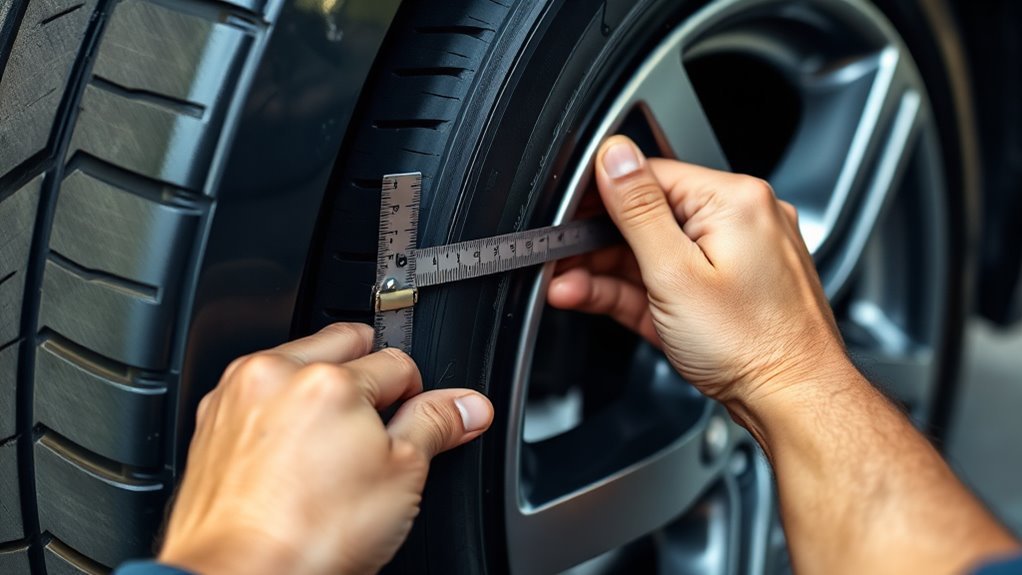
How to Check Tire Size in 7 Steps
To check your tire size in 7 steps, start by locating the raised numbers on your tire’s sidewall after cleaning it. These numbers are key to understanding your tire specs like width, aspect ratio, and construction type. For example, a code like P215/65R15 tells you a lot about your tire.
Next, decode the size code carefully to identify each part. Check that the rim diameter matches your wheel perfectly. It’s super important to compare these specs with your vehicle’s manual or the door sticker to make sure everything lines up.
Don’t forget to look at the load index and speed rating. These details guarantee your safety while driving, so they’re definitely worth a close look.
Finally, consider using online tools for quick accuracy and expert recommendations. Doing this will help you get all the tire size details you need without any hassle. Keep going to get all the details you need.
Key Takeaways
- Clean the tire sidewall and locate the raised numbers and letters indicating the tire size.
- Identify the tire type letter and decode the size format (e.g., P215/65R15) for width, aspect ratio, construction, and rim diameter.
- Calculate sidewall height using width and aspect ratio to understand tire profile and handling characteristics.
- Verify load index and speed rating on the sidewall to ensure they meet or exceed vehicle requirements.
- Use online tools with vehicle details and tire size for quick verification, then confirm results with the vehicle manual or a professional.
Find Your Tire Size on the Sidewall
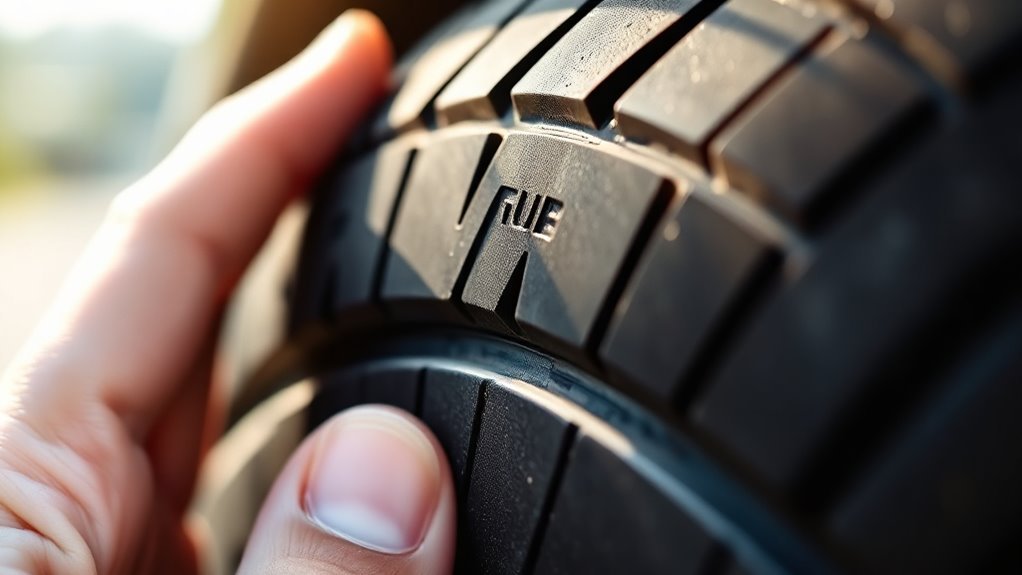
The easiest way to find your tire size is to look at the sidewall of your tire. You’ll see a series of numbers and letters printed on the rubber. These markings are usually raised and run along the edge of the tire.
Make sure the tire is clean so you can read everything clearly. You don’t need any special tools—just inspect the sidewall closely. If your vehicle has multiple tires with different sizes, check each one individually.
Sometimes, the size information also appears on the inside edge of the tire. Remember, the sidewall contains all the essential details about your tire’s dimensions, so this is your go-to spot for finding the information you need before you move on to decoding those numbers and letters.
Decode Tire Size Numbers and Letters
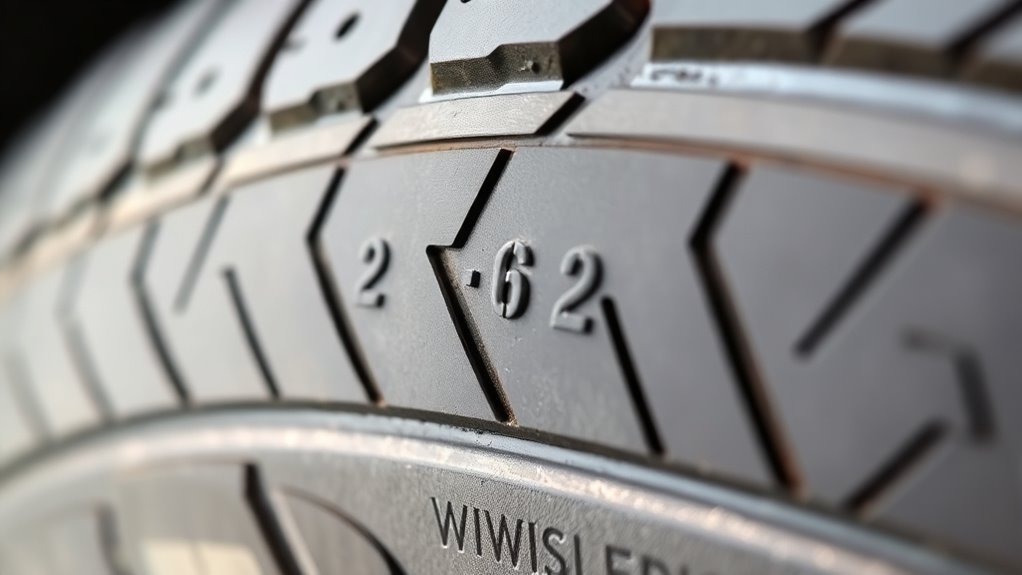
You’ll find a combination of numbers and letters on your tire’s sidewall that might look confusing at first. These codes tell you important details about the tire’s size and type.
For example, the letter usually indicates the tire type, while the numbers provide specific measurements. Here’s a quick guide to help you decode the common elements:
| Code | Meaning | Example |
|---|---|---|
| P | Passenger tire | P215/65R15 |
| R | Radial construction | P215/65R15 |
| 15 | Wheel diameter (inches) | P215/65R15 |
| 65 | Aspect ratio (%) | P215/65R15 |
Understanding these codes helps you make certain you’re choosing the right tire for your vehicle. It’s pretty handy once you get the hang of it!
Identify Tire Width and Aspect Ratio
Now that you’ve decoded the tire size numbers and letters, it’s time to focus on the tire width and aspect ratio. These measurements tell you how wide the tire is and the height of its sidewall relative to the width.
Understanding these dimensions helps you choose the right tire for your vehicle’s performance and safety. It’s pretty important stuff, so let’s break it down together.
Understanding Tire Width
How wide should your tires be? Tire width is the measurement of the tire’s cross-section from sidewall to sidewall in millimeters. It directly affects grip, handling, and comfort.
You’ll usually find this number as the first set of digits in the tire size code, like “205” in 205/55R16.
Here’s a quick reference:
| Tire Width (mm) | Vehicle Type | Common Use |
|---|---|---|
| 155 – 185 | Compact cars | Fuel efficiency |
| 195 – 225 | Sedans, SUVs | Balanced grip |
| 235+ | Performance cars | Enhanced traction |
Choosing the right width helps maintain proper handling and safety. So, always check your vehicle’s recommended specs before making a choice.
Decoding Aspect Ratio
Although tire width plays a pivotal role, understanding the aspect ratio is equally important when checking tire size. The aspect ratio is the number that follows the tire width on the sidewall, usually expressed as a percentage.
It represents the height of the tire’s sidewall compared to its width. For example, if the aspect ratio is 60, the sidewall height is 60% of the tire’s width. This ratio affects the tire’s overall height, ride comfort, and handling.
A lower aspect ratio means a shorter sidewall, which often improves handling but can result in a firmer ride. By knowing the aspect ratio, you get a clearer picture of the tire’s dimensions and performance characteristics. This helps you choose the right tire for your needs.
Measuring Tire Dimensions
Understanding the aspect ratio sets you up to accurately measure tire dimensions. Start by identifying the tire width, which is the first number on the tire size code, measured in millimeters from sidewall to sidewall. For example, in a 225/50R17 tire, 225 is the width.
Next, focus on the aspect ratio, the second number, which represents the sidewall height as a percentage of the tire width. A 50 aspect ratio means the sidewall height is 50% of 225 mm, equaling 112.5 mm.
Check Tire Construction and Rim Diameter
Before you choose a new tire, you’ll need to check its construction type and rim diameter, as these factors directly affect compatibility and performance.
Tire construction is usually indicated by a letter in the size code: “R” stands for radial, which is the most common and offers better ride comfort and durability. Meanwhile, “D” or “B” indicate bias-ply or belted bias tires, which are less common today.
Next, look at the rim diameter, expressed in inches, usually the last number in the tire size (e.g., in 205/55R16, “16” is the rim diameter). The tire must match the rim diameter exactly to fit properly; otherwise, it won’t mount securely or could cause handling issues.
Compare Tire Size to Vehicle Recommendations
When you pick a tire size, you should always compare it to your vehicle’s manufacturer recommendations to guarantee safety and peak performance. Check your owner’s manual or the sticker inside the driver’s door jamb to find the exact tire sizes recommended for your car.
Using the suggested size assures proper handling, braking, and fuel efficiency. If you choose a tire that’s too large or small, it can affect your speedometer accuracy, suspension, and even cause premature wear.
Make sure the overall diameter, width, and aspect ratio match or closely align with the manufacturer’s specs. This helps maintain your vehicle’s designed stability and comfort.
Sticking to these guidelines keeps your driving experience safe and smooth. It’s really worth taking the time to double-check before you buy new tires!
Check Tire Load Index and Speed Ratings
You need to check the tire’s load index to make sure it can support your vehicle’s weight safely. Next, look at the speed rating to understand the maximum speed the tire can handle.
Both ratings play a pivotal role in keeping you safe on the road. So, it’s really important not to overlook them when choosing tires.
Understanding Load Index
Although tire size often grabs your attention first, understanding the load index and speed rating is just as vital for safety and performance. The load index tells you the maximum weight a tire can safely carry when properly inflated.
It’s represented by a number on the tire’s sidewall, usually right after the tire size. You can look up this number in a load index chart to find the exact weight capacity in pounds or kilograms.
Choosing tires with the correct load index guarantees your vehicle handles properly and prevents premature tire wear or failure. Always match or exceed the manufacturer’s recommended load index to stay safe on the road and keep your tires in good shape.
Decoding Speed Ratings
Besides the load index, the speed rating tells you the maximum speed a tire can handle safely. You’ll find this rating as a letter on the tire’s sidewall, right after the load index.
Each letter corresponds to a specific speed limit set by the manufacturer.
Here’s how to decode it quickly:
- Look for the letter after the load index (e.g., 91H).
- Match the letter to its speed rating (H = 130 mph).
- Note that higher letters mean higher speed capabilities.
- Always choose tires with speed ratings that meet or exceed your vehicle’s requirements.
Understanding this helps you pick the right tire for your driving needs without guessing.
It’s pretty straightforward once you know what to look for!
Importance for Safety
When you check the tire load index and speed ratings, you’re directly ensuring your safety on the road. The load index tells you the maximum weight each tire can support, which prevents overloading that could lead to tire failure.
Ignoring this risks blowouts or uneven tire wear, which can really mess with your control. Speed ratings show the highest speed a tire can safely handle.
Using tires with lower speed ratings than your vehicle’s capability can cause overheating and reduce performance. By matching these ratings to your vehicle’s specs, you keep stability, handling, and braking sharp.
Always double-check these numbers before buying new tires. Remember, you’re not just buying rubber—you’re protecting yourself and others every time you drive.
Use Online Tools to Verify Tire Size
You can quickly look up your tire size using various online tools designed to make the process simple and accurate. These tools help confirm your tire dimensions, ensuring you pick the right size for safety and performance.
Easily verify your tire size online to ensure safety and optimal vehicle performance.
Here’s how to use them effectively:
- Enter your vehicle’s make, model, and year.
- Input the tire size printed on your current tire sidewall.
- Compare different tire options based on size, load rating, and speed rating.
- Review recommendations and compatibility notes provided by the tool.
These online resources save you time and reduce errors. They make it easier to verify your tire size before purchasing or replacing tires.
Just remember to double-check the results with your vehicle’s manual or a professional. It’s always better to be safe than sorry!
Frequently Asked Questions
How Often Should I Check My Tire Size?
You should check your tire size whenever you buy new tires, replace them, or rotate them. It’s also a good idea to do this at least twice a year during seasonal maintenance.
Doing this helps make sure your tires fit properly, which keeps you safe on the road. Plus, it helps your vehicle perform at its best.
Can Tire Size Affect Fuel Efficiency?
Tire size can make your fuel efficiency skyrocket or plummet like a rollercoaster.
Bigger tires mean more rolling resistance, so you’ll burn more gas. Choose wisely, or your wallet might scream louder than your engine!
Do Tire Sizes Vary by Season?
Yes, tire sizes can vary by season. You’ll often find winter tires are slightly different in size or profile to improve traction, while summer tires focus on performance.
It’s always a good idea to check your vehicle’s recommendations before switching. That way, you make sure you’re using the right tires for the right conditions.
How Does Tire Size Impact Vehicle Handling?
Tire size impacts your vehicle’s handling by affecting grip, stability, and steering response. Larger tires improve traction but may reduce agility.
On the other hand, smaller ones enhance maneuverability but might compromise stability during high-speed turns. It’s all about finding the right balance for your driving needs.
Are All Tire Sizes Compatible With Tire Pressure Sensors?
Not all tire sizes are compatible with tire pressure sensors. You’ll need to make sure the sensors match your tire’s specifications and your vehicle’s system.
Otherwise, you might face inaccurate readings or sensor malfunctions. It’s important to double-check before making any changes.
Conclusion
Now that you know how to check your tire size in 7 simple steps, you’re better equipped to keep your vehicle safe and efficient.
Did you know that using the wrong tire size can reduce fuel efficiency by up to 10%? That’s why decoding those numbers and letters isn’t just a quick task—it’s essential.
Always double-check your tire specs against your vehicle’s recommendations to make certain you have a smooth, safe ride every time. Understanding tire size helps you maintain optimal performance, improve fuel economy, and enhance overall driving safety.
So, take a moment to check your tire size regularly. It’s a simple step that can save you money and keep your vehicle running at its best on the road.