How Fast Can You Drive on a Spare Tire?
You should keep a spare tire at a reduced speed, especially when using a temporary donut spare. Most of these spares are limited to about 50 mph, though your owner’s manual or the tire’s sidewall might set an even lower speed limit.
It’s important to drive smoothly and avoid hard braking or sharp turns.
Don’t go far on a temporary spare—usually, they’re meant for only 50 to 70 miles. If the car feels shaky, pulls to one side, or shows any warning lights, pull over and check it out.
There’s definitely more to know about driving safely on one, so taking it slow and steady is always your best bet.
Key Takeaways
- Most temporary donut spares are limited to 50 mph, unless the sidewall or owner’s manual states otherwise. So, keep it slow and steady.
- Full-size spares can usually be driven at normal speeds if they match the other tires’ size, load rating, and inflation. That means you can treat them like your regular tires.
- Drive slowly and smoothly on a spare; avoid hard braking, sharp turns, and aggressive acceleration. It helps keep you safe and the spare in good shape.
- Temporary spares are usually meant for about 50 to 70 miles, so take the shortest safe route to a repair shop. Don’t push it further than that.
- Stop immediately if you feel vibration, pulling, or warning lights, because a spare can fail or handle poorly. Better safe than sorry!
How Fast Can You Drive on a Spare Tire?
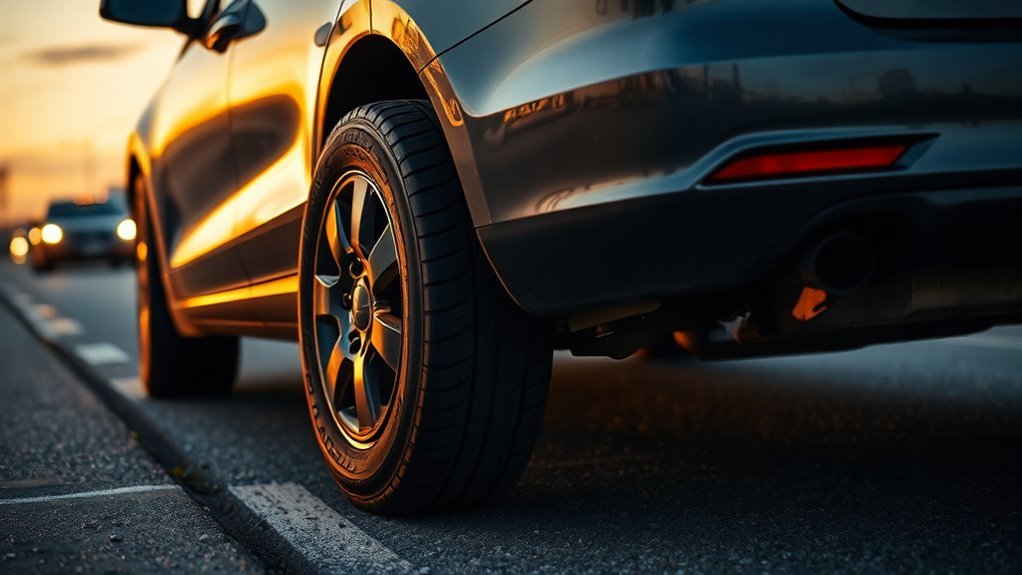
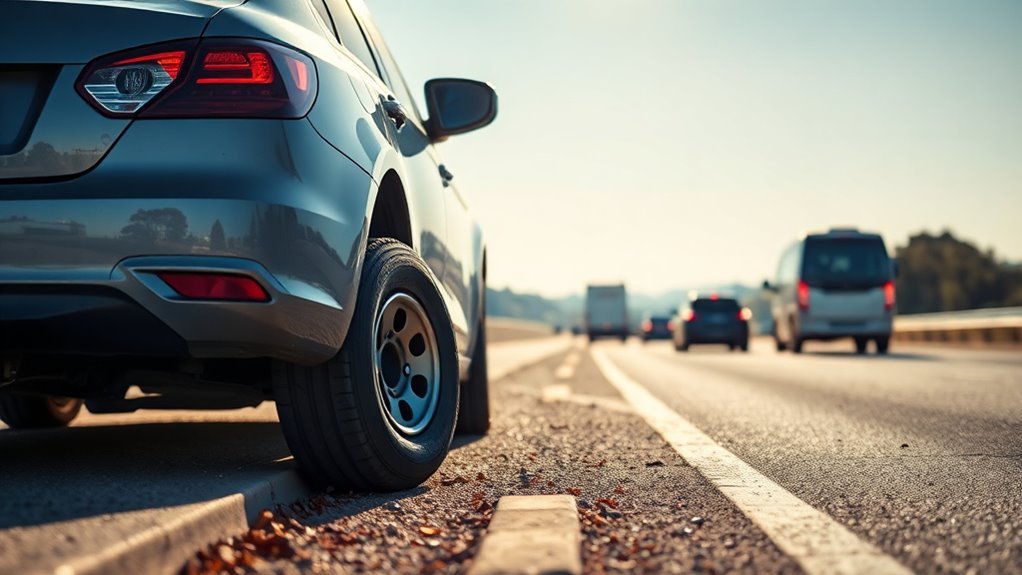
If you’re driving on a spare tire, keep your speed low—most temporary spares are rated for no more than 50 mph. You should check the sidewall or your owner’s manual before you head out, because limits can vary by vehicle and tire type.
Drive smoothly, avoid hard braking, and take corners gently to reduce stress on the spare. Plan the shortest safe route to a repair shop, and don’t use the spare for long trips or heavy loads.
If the tire feels shaky, the steering pulls, or the warning light stays on, pull over and inspect it. Remember, a spare buys you time to get help, not a reason to keep driving as usual.
Spare Tire Speed Limits for Donuts
If you’re driving on a donut spare, you should keep your speed low, since most are rated for about 50 mph. You also need to limit how far you go, because these tires are only meant for short trips.
Pushing past those limits raises your risk of tire failure, poor handling, and longer stopping distances. So, it’s really best to take it easy until you can get a full-size tire back on.
Donut Speed Limit
A donut spare tire isn’t meant for normal highway driving, so you should keep your speed low and cautious—usually no more than 50 mph. Though your owner’s manual may set a different limit, you need to treat that number as a hard cap, not a suggestion.
That’s because a compact spare can’t handle heat, stress, or braking the way a full-size tire can. If you push past the limit, you raise the risk of poor handling, faster wear, and tire failure.
Keep your acceleration smooth and avoid sudden lane changes. Also, watch your speed closely on hills or curves.
Since a donut gives you less grip and stability, driving gently helps you stay in control until you can replace it with a proper tire.
Distance Limits
Speed isn’t the only limit you need to watch with a donut spare; distance matters too. You should treat a donut as a short-term fix, not a replacement for a full-size tire.
Most manufacturers recommend driving only about 50 to 70 miles on it, though your owner’s manual gives the exact limit for your vehicle. If you keep driving past that range, you’re using a tire designed for emergency use well beyond its purpose.
Plan your route so you can reach a tire shop or home without stretching the spare. Check the spare’s pressure before you go, because low inflation can reduce the usable distance even more.
Once you’ve reached the limit, replace it right away and reinstall a proper tire. It’s just safer that way.
Safety Risks
Driving too fast on a donut spare can make the tire overheat, wear out quickly, or even fail suddenly, so you’ve got to keep your speed in check. You also increase the chance of losing traction, especially in rain, on curves, or during hard braking.
Because a donut has less rubber and a smaller contact patch, it can’t handle the same load or stability as a regular tire. If you ignore the limit, you may strain your suspension, wheel bearings, and transmission too.
Keep your driving smooth, avoid sudden lane changes, and stay off highways when you can. A spare tire buys you time to reach a repair shop, not to keep driving normally.
Treat it like a temporary fix, and replace it soon.
How Far You Can Drive on a Spare Tire
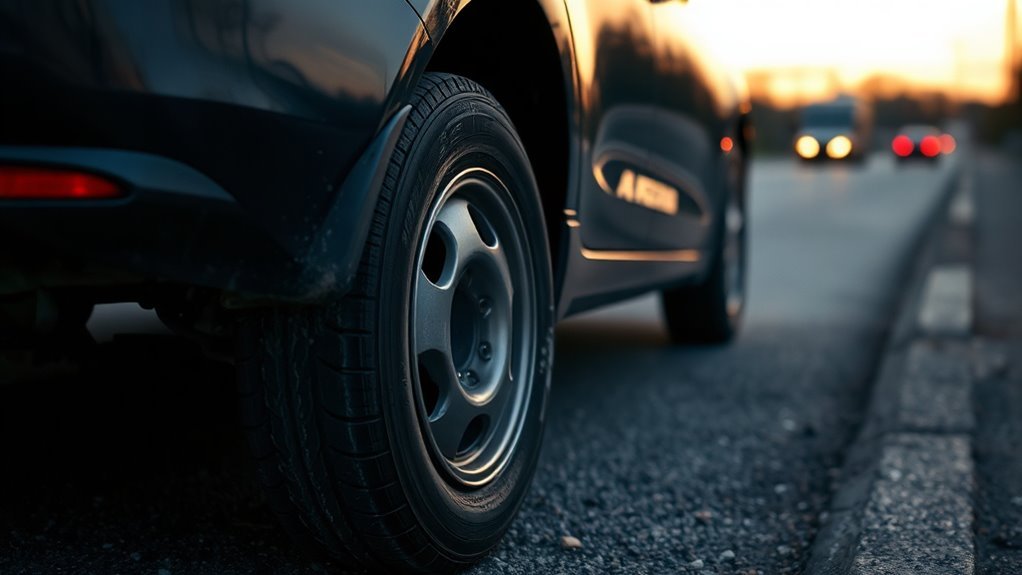
You can usually drive only a limited distance on a spare tire, and that range depends on whether it’s a donut or a full-size spare. Most temporary spares are meant for short trips, often around 50 to 70 miles, so you shouldn’t treat them like a long-term fix.
To stay safe, keep your speed down, head straight to a tire shop, and avoid any extra driving you don’t need. It’s best to get your regular tire fixed or replaced as soon as possible. Don’t rely on the spare for more than just a quick trip!
Spare Tire Distance Limits
How far you can drive on a spare tire depends on the type of spare, but the limit is usually much lower than with a regular tire. You need to treat that limit as a hard stop, not a suggestion.
Check your spare’s label, then plan to reach a repair shop quickly.
| Spare type | Typical limit | Your action |
|---|---|---|
| Compact | Short | Drive straight to service |
| Full-size | More flexible | Still monitor use |
| Donut | Restricted | Keep speeds low |
| Inflated kit | Emergency only | Get help fast |
You should also avoid extra miles from detours, errands, or delayed repairs. Every mile adds strain and raises the chance of failure.
If the tire feels odd, pull over and reassess. Better safe than sorry!
Temporary Tire Mileage Range
A temporary spare usually gets you only a short distance, often just enough to reach a repair shop or home safely. You can usually expect around 50 to 70 miles of use, though that number isn’t a guarantee.
Your exact range depends on the tire’s condition, your vehicle’s weight, road surfaces, and how hard you drive. If you push beyond the recommended limit, you’ll wear the tire faster and reduce its ability to support the car.
Because a temporary spare is smaller and less durable than a full-size tire, you shouldn’t treat it like a long-term replacement. Check the sidewall for the manufacturer’s mileage guidance, then plan to replace the damaged tire as soon as possible.
The sooner you swap it out, the better your car will perform. So, don’t wait too long to get that full-size tire back on.
Driving Range Safety Tips
That short spare tire range is only safe if you keep your driving gentle and limited. You should stay under the posted speed for the spare, avoid hard braking, and skip aggressive turns.
Drive only as far as you need to reach a tire shop or a safe parking spot. Check the owner’s manual, because your vehicle may set a stricter limit than the tire itself.
| Tip | Why It Matters | Your Action |
|---|---|---|
| Speed | Heat builds fast | Slow down |
| Distance | Wear increases quickly | Cut trips short |
| Handling | Grip is reduced | Turn smoothly |
| Load | Stress rises with weight | Remove extra cargo |
| Repair | Safety returns sooner | Replace it promptly |
If the tire feels odd, pull over and inspect it immediately. Don’t take any chances when it comes to your safety.
Why Spare Tire Speed Limits Exist
Spare tire speed limits exist because the tire itself isn’t built to handle the same heat, stress, and wear as a full-size tire. When you drive faster, the tire flexes more, heats up quicker, and loses durability sooner. That extra strain can weaken its structure and reduce traction, especially during braking or cornering.
Engineers set conservative limits to keep you from pushing a temporary tire beyond what it can safely manage. You also need to remember that spare tires often have lighter construction and less grip than regular tires, so they’re meant for short-term use only.
Driving Safely on a Full-Size Spare
When you’re using a full-size spare, you can usually drive more normally than with a temporary spare, but you still shouldn’t treat it like a permanent fix. You can follow regular speed limits if the tire matches your others in size, load rating, and inflation.
Still, check the spare’s pressure before you leave, because an underinflated tire can affect handling and wear. Drive smoothly, avoid hard braking, and take corners with extra care, especially in wet weather.
If the spare is older or has sat unused for a long time, inspect it for cracks, bulges, or uneven tread. Listen for vibration or pulling, since either can signal a problem.
Even with a full-size spare, you should stay alert and give yourself extra room on the road. It’s better to be safe than sorry!
What to Do After Installing a Spare Tire
After installing a spare tire, check the lug nuts, tire pressure, and overall fit before you drive far. Then drive slowly, avoid sudden turns, and keep your route short. If the spare is compact, treat it as temporary only.
| Step | Action |
|---|---|
| 1 | Recheck lug nuts |
| 2 | Confirm pressure |
| 3 | Inspect alignment |
| 4 | Limit speed |
| 5 | Visit a shop |
Watch for vibration, pulling, or warning lights, and stop if anything feels off. You should also clear out heavy cargo and keep extra distance from other cars.
As soon as you can, schedule a full inspection and replace the spare with a proper tire. That way, you’ll restore traction, handling, and safety without risking further damage.
Frequently Asked Questions
Can I Drive in Rain With a Spare Tire?
Yes, you can drive in rain with a spare tire, but you should drive cautiously. Spare tires often have less traction, so slow down and avoid hard braking.
It’s a good idea to replace the spare tire as soon as possible. Just take it easy on the road until then!
Does a Spare Tire Affect My Car’s Alignment?
Yes, a spare tire can affect your car’s alignment—what a tiny wheel, such big drama.
If you drive long on it, you’ll stress suspension and handling, but it won’t usually misalign everything immediately.
Are Spare Tires Safe on Highways at Night?
They’re safer only if you drive cautiously, because spares often have speed limits and reduced grip.
At night, you should slow down, avoid long trips, and replace it soon to stay safe on highways.
Can I Use Cruise Control With a Spare Tire?
You can, but you shouldn’t rely on it with a spare tire. You’ll reduce wear and maintain steadier speed, yet you must keep speeds low and avoid long trips until you replace the tire.
It’s best to be cautious here. Using cruise control on a spare is okay for short distances, but don’t make it a habit. Better safe than sorry!
Should I Replace the Spare Tire After One Use?
Yes—you should replace it after one use; a spare tire is a one-time bridge, not a long-term road companion.
You’ll want a new spare if you’ve driven on it, especially with damage or wear.
It’s all about safety and making sure you’re prepared for the road ahead.
Conclusion
So, how fast can you really drive on a spare tire? Not very fast, and not for very long. You need to keep your speed down, limit your distance, and treat the spare like the temporary fix it is.
Whether you’re rolling on a donut or a full-size spare, drive carefully and get your regular tire replaced soon. Picture yourself cruising cautiously to the shop—doesn’t that feel better than risking a breakdown?
Remember, spare tires are designed for short-term use only. Driving too fast or too far on a spare tire can lead to damage or unsafe driving conditions. So, keep your speed moderate, avoid long trips, and prioritize getting your regular tire fixed as soon as possible. Safe driving on your spare tire means staying alert, driving carefully, and treating it as a temporary solution until you can replace it.