How Often to Rotate Tires
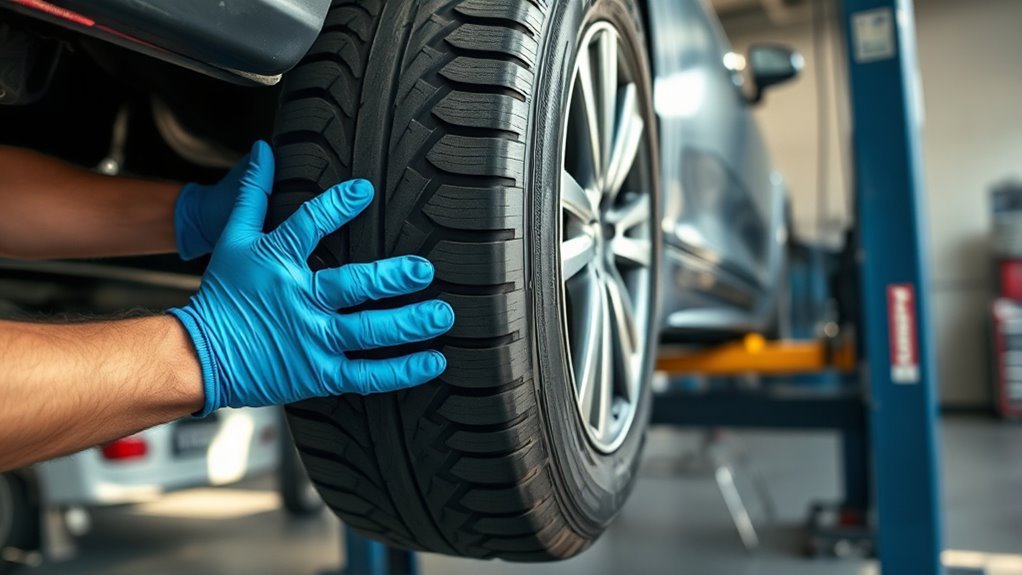
You should rotate your tires every 5,000 to 7,500 miles to keep them wearing evenly and maintain safe handling. Regular tire rotation helps extend tire life and ensures your vehicle performs at its best. If you want to avoid uneven tread wear and preserve the smoothness of your ride, sticking to this schedule is key.
If you drive mostly in the city or notice uneven tread or vibrations, you might need to rotate sooner. Stop-and-go traffic and tight turns can wear tires faster. On the other hand, smooth highway driving can stretch that interval a bit.
Always check your owner’s manual for vehicle-specific guidance, as it overrides general advice. Proper rotation not only extends tire life but also preserves your vehicle’s performance. There’s more to learn about patterns and timing that can help you get the best results.
Key Takeaways
- Rotate tires every 5,000 to 7,500 miles as a general guideline for even wear and optimal performance.
- But remember, it’s always best to check your vehicle owner’s manual for specific rotation intervals. Those are tailored to your driving conditions and tire type.
- If you notice uneven tread wear, vibrations, or your car pulling to one side, don’t wait. Rotate the tires sooner to avoid safety and handling problems.
- Also, if you drive aggressively or mostly in city conditions, you might need to rotate your tires more often than if you mostly drive on smooth highways.
- Finally, use the rotation patterns recommended based on your drivetrain and tire type. This helps get the most life and performance out of your tires.
How Often Should You Rotate Tires?
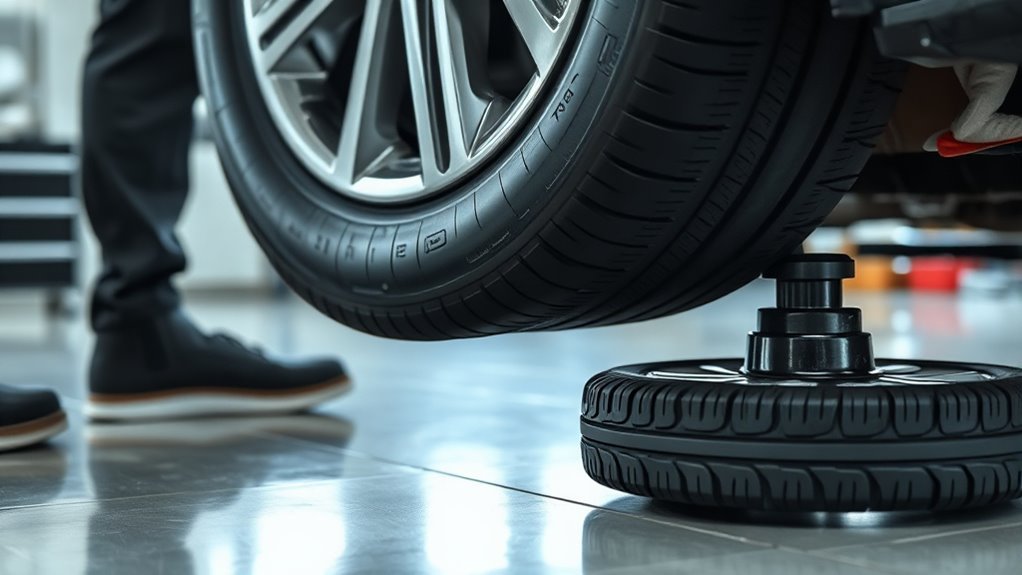
Regularly rotating your tires helps guarantee even wear and extends their lifespan. You should rotate your tires every 5,000 to 7,500 miles, though some manufacturers recommend specific intervals, so checking your owner’s manual is a smart move.
Rotate your tires every 5,000 to 7,500 miles to ensure even wear and longer tire life.
If you drive mostly on highways, you might stretch this interval a bit. But city driving with frequent stops calls for more frequent rotations.
Also, if you notice uneven tread wear or a vibration while driving, it’s a good idea to rotate your tires sooner. Keeping up with tire rotations not only saves you money by preventing premature tire replacement but also makes certain your vehicle handles as it should.
Mark your calendar or your service app to remind yourself when it’s time to rotate. It’s a simple step that really pays off in the long run!
Why Tire Rotation Matters for Safety and Performance
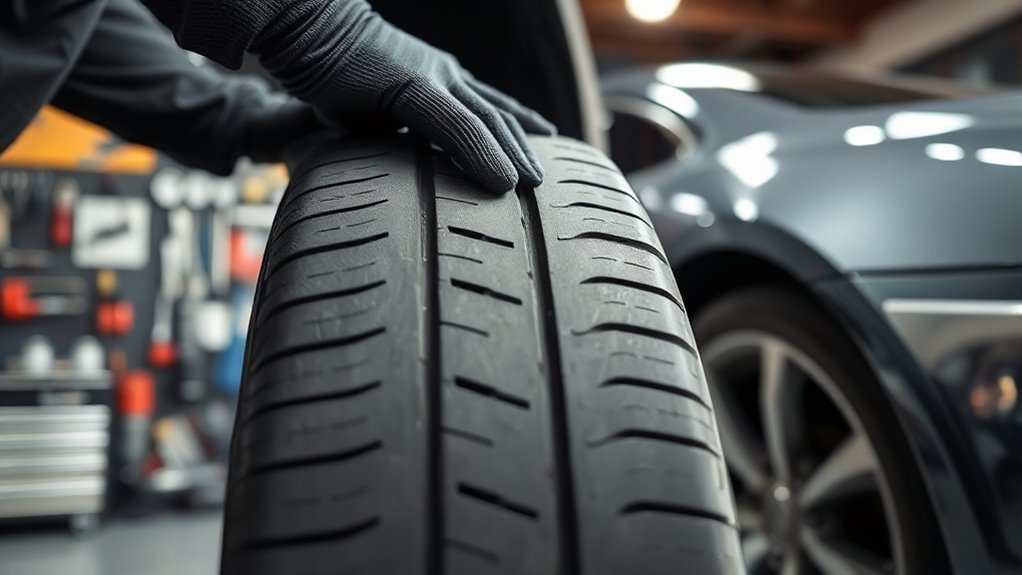
Frequently rotating your tires guarantees they wear evenly, which directly impacts both your vehicle’s safety and performance. Uneven tire wear can lead to reduced traction, increasing the risk of skidding or hydroplaning.
By rotating your tires regularly, you help maintain balanced handling and steering responsiveness. It also extends tire life, saving you money in the long run. Plus, properly rotated tires improve fuel efficiency by reducing rolling resistance.
Here’s why tire rotation matters:
- Guarantees consistent tread depth across all tires
- Prevents premature tire replacement
- Maintains peak grip in various driving conditions
- Improves braking performance and stability
- Promotes fuel economy through balanced tire wear
Rotating tires isn’t just routine maintenance—it’s essential for safe, efficient driving. So, don’t overlook it!
How Driving Style and Conditions Affect Tire Rotation Frequency

Your driving style plays a big role in how quickly your tires wear out—aggressive acceleration and sharp turns can speed up the process.
The type of roads you regularly drive on, like rough or gravel surfaces, also impacts tire wear.
Understanding these factors will help you decide how often to rotate your tires for the best performance.
Impact Of Aggressive Driving
Aggressive driving markedly speeds up tire wear, meaning you’ll need to rotate your tires more often. When you accelerate hard, brake suddenly, or take sharp turns, your tires experience uneven stress that wears them down faster.
This uneven wear can reduce traction and increase the risk of blowouts. To keep your tires in good shape, consider rotating them every 4,000 to 5,000 miles instead of the usual 6,000 to 8,000 miles.
Here are key aggressive driving factors that impact rotation frequency:
- Rapid acceleration causing tread wear on rear tires
- Hard braking wearing down front tires unevenly
- Frequent sharp turns stressing outer tire edges
- High-speed driving generating excessive heat in tires
- Sudden lane changes leading to irregular tire wear patterns
Adjust your rotation schedule to maintain safety and performance. It’s a simple step that can save you money and keep you safer on the road.
Effect Of Road Conditions
Driving conditions play a huge role in how quickly your tires wear and how often you need to rotate them. Rough roads, potholes, and gravel can cause uneven tire wear, forcing you to rotate more frequently.
If you often drive on smooth highways, your tires will wear evenly, allowing longer intervals between rotations. Your driving style also matters—frequent stops and sharp turns stress tires differently than steady cruising.
| Road Condition | Rotation Frequency |
|---|---|
| Smooth highways | Every 7,500 to 10,000 miles |
| City streets | Every 5,000 to 7,500 miles |
| Gravel roads | Every 3,000 to 5,000 miles |
| Pothole-heavy roads | Every 3,000 miles or less |
| Off-road terrain | Inspect & rotate frequently |
Common Tire Rotation Patterns Explained
Typically, tire rotation follows specific patterns designed to promote even wear and extend tire life. You’ll want to use the right pattern based on your vehicle’s drivetrain and tire type.
Here are some common rotation patterns you should know:
- Forward Cross: Front tires move straight back; rear tires cross to the front. Ideal for front-wheel drive vehicles.
- Rearward Cross: Rear tires move straight forward; front tires cross to the rear. Used mainly for rear-wheel or 4WD vehicles.
- X-Pattern: All tires cross to the opposite corners. Suitable for front-wheel drive cars.
- Side-to-Side: Tires switch sides without changing axles. Works for directional tires.
- Front-to-Rear: Tires swap only front to back on the same side, common for directional tires on 4WD.
Choosing the right pattern guarantees balanced tire wear and better performance. It really makes a difference in how long your tires last and how smoothly your vehicle runs.
Signs It’s Time to Rotate Your Tires
You’ll often notice certain signs that indicate it’s time to rotate your tires to maintain even wear and peak performance. Uneven tread wear, vibrations while driving, and pulling to one side are all clues that your tires need attention.
Catching these early helps extend tire life and improves safety. It’s a simple step that can save you money and keep your ride smooth.
| Sign | Description | What It Means |
|---|---|---|
| Uneven Tread Wear | One tire wears more on one side | Tires need rotating soon |
| Vibration | Shaking in steering wheel | Tires or balance issues |
| Pulling | Car drifts left or right | Uneven tire wear or alignment |
| Noise Increase | Louder road noise than usual | Tire wear or damage |
Watch for these signs regularly to know when to rotate your tires. It’s a good habit that keeps your vehicle running safely and efficiently.
How to Use Your Car Manual to Find Tire Rotation Info
You’ll want to start by locating the tire rotation section in your car manual. It’s usually found in the maintenance or tires chapter.
This section clearly outlines the recommended intervals for rotating your tires based on your vehicle’s make and model. Following these guidelines helps you keep your tires wearing evenly.
Plus, it extends their lifespan, which means you get the most out of your tires. It’s a simple step that makes a big difference.
Locate Tire Rotation Section
Digging into your car manual can save you time and guesswork when it comes to tire rotation. To locate the tire rotation section quickly, start by checking the table of contents or index for keywords like “tire maintenance” or “tire rotation.”
You’ll often find it grouped with other routine maintenance tasks. Here’s how to zero in on the right spot:
- Look for chapters titled “Maintenance” or “Scheduled Service.”
- Scan for subheadings such as “Tires” or “Rotating Tires.”
- Use the index at the back for exact page numbers.
- Check for diagrams or charts outlining rotation patterns.
- Note any special instructions or warnings related to your vehicle’s tires.
Following these steps helps you find accurate info tailored to your car model. It’s really the easiest way to get it right without any hassle.
Understand Recommended Intervals
Typically, your car manual provides clear guidance on how often to rotate your tires. This helps you maintain even tread wear and extend tire life.
Once you locate the tire rotation section, you’ll find recommended intervals expressed in miles or kilometers. These usually range between 5,000 to 8,000 miles. These intervals are based on your vehicle’s design and tire type.
Make sure to follow these guidelines closely. Rotating tires too soon or too late can impact performance and safety.
If your manual suggests different intervals for various driving conditions, go ahead and use those as a reference. You might also find diagrams showing the correct rotation pattern for your tires.
Frequently Asked Questions
Can I Rotate Tires Myself or Should a Professional Do It?
You can definitely rotate your tires yourself if you have the right tools and know the correct pattern.
However, if you’re unsure or want to save time, a professional can do it quickly and safely for you.
Does Tire Rotation Affect My Vehicle’s Warranty?
No, tire rotation usually doesn’t void your vehicle’s warranty.
In fact, manufacturers often recommend it to maintain tire wear and performance. Just keep records and follow their guidelines to guarantee your warranty stays intact.
How Much Does a Typical Tire Rotation Cost?
You’ll typically pay between $20 and $50 for a tire rotation, depending on your location and shop.
Some places even offer free rotations with other services, so it’s worth asking when you schedule your appointment.
Can Tire Rotation Improve Fuel Efficiency?
Yes, rotating your tires can improve fuel efficiency by ensuring even tread wear, which reduces rolling resistance.
You’ll get better traction and smoother driving, helping your vehicle use less fuel and save you money over time.
It’s a simple step that really makes a difference in how your car performs and how much you spend on gas.
Are Tire Rotations Necessary for All Types of Vehicles?
Yes, you should rotate tires on most vehicles to guarantee even wear and extend tire life.
Some specialty vehicles or tires might have different recommendations, so check your owner’s manual or consult a professional to be sure.
It’s always better to double-check than to guess when it comes to tire care!
Conclusion
Just like changing the seasons brings new colors to life, rotating your tires refreshes their grip and performance. If you want your car to dance smoothly on every road, stay ahead by rotating your tires regularly.
It’s not just about safety—it’s about feeling the road beneath you with confidence and control. Keep your tires turning in rhythm, and your journey will be as steady as a well-rehearsed waltz.
Regular tire rotation helps even out tire wear, which can extend the life of your tires and improve fuel efficiency. Plus, it keeps your vehicle handling predictable and safe, especially in tricky driving conditions.
So, don’t skip it! Make tire rotation a part of your routine vehicle maintenance. By rotating your tires on schedule, you’ll enjoy better performance, enhanced safety, and save money in the long run. Keep those tires spinning smoothly for a safer, more comfortable drive every time.