Where to Put a Dash Cam?
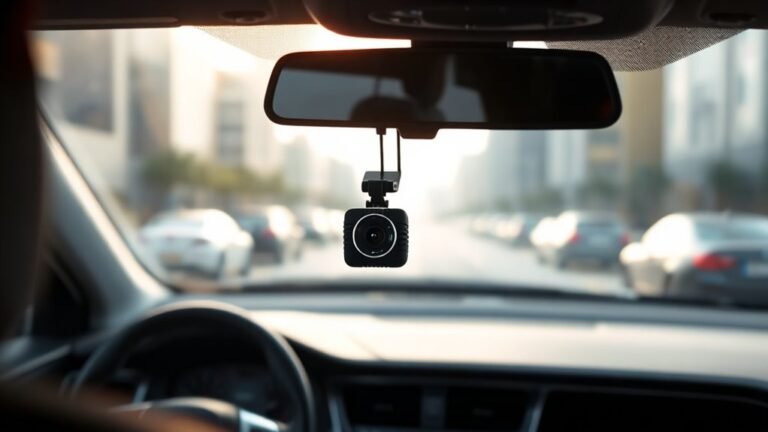
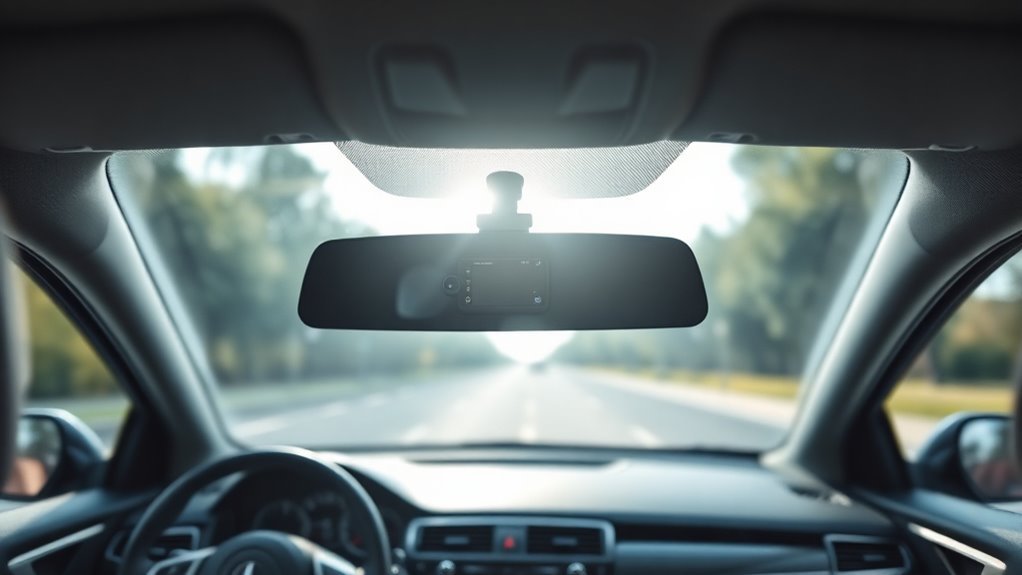
You should mount your dash cam just behind or slightly below the rearview mirror to get a clear, unobstructed view of the road without blocking your sight.
This spot is perfect for capturing everything ahead while keeping your driving view safe and sound. Plus, it helps keep your dash cam discreet and less noticeable to potential thieves.
Position it near a power source like the cigarette lighter or fuse box for easy wiring.
This makes installation smoother and keeps those cables tidy. Speaking of cables, secure them along the edges of your windshield or dashboard for a clean, clutter-free look.
Also, angle the lens slightly downward to avoid glare from the sun or headlights.
It’s a simple trick that improves recording quality. If you want to explore ideal placement and security tips, keep going for more insights.
Key Takeaways
- Mount the dash cam behind or slightly below the rearview mirror to avoid obstructing the driver’s view and reduce internal reflections. This spot keeps it out of the way but still effective.
- Position the camera near the center or top of the windshield for optimal forward road coverage and minimal glare. You want a clear, wide view of the road ahead.
- Ensure the lens has an unobstructed view, avoiding edges, sun visors, or areas with windshield tint strips. These can block or distort the footage.
- Place the dash cam close to power sources like the cigarette lighter or fuse box for neat wiring and easy installation. It makes setup simpler and keeps cables tidy.
- Choose a discreet, secure location to reduce theft risk, such as behind the mirror or higher on the windshield. Using tamper-resistant mounts helps keep it safe and steady.
Optimal Dash Cam Positions for Clear Front Road Footage

To capture clear front road footage, position your dash cam behind the rearview mirror, centered on the windshield. This spot offers a balanced view of the road ahead without distortion, capturing everything from traffic signals to license plates clearly.
Make sure the lens is unobstructed and angled slightly downward to avoid glare from the sky or headlights. Clean the windshield thoroughly before mounting to prevent blurry footage caused by dirt or smudges.
Also, check that the camera’s field of view covers both lanes in front of you for maximum coverage. Avoid placing it too low on the windshield, as objects like the hood can block the view.
Mounting Your Dash Cam Without Blocking Your View

You’ll want to place your dash cam where it captures clear footage without blocking your windshield view. Keep in mind any legal restrictions on where you can mount devices on your glass.
Finding the right spot means balancing ideal camera angles with safety and compliance. It’s all about making sure you get good video without distracting yourself while driving.
Optimal Camera Placement
Although mounting your dash cam might seem straightforward, finding the best placement requires careful consideration to avoid blocking your view. Aim to position the camera behind your rearview mirror, where it stays discreet and doesn’t interfere with your line of sight.
This spot offers a central view of the road ahead and keeps the device stable. Make sure the camera lens has a clear, unobstructed view to capture footage effectively.
Avoid placing it too low on the windshield or near the edges, as these spots can limit the camera’s field of vision and increase glare. By choosing the right location, you guarantee your dash cam records smoothly without distracting you or compromising safety while driving.
Avoiding Windshield Obstructions
Carefully selecting where you mount your dash cam helps you avoid obstructing your windshield view. You want clear sightlines for safe driving while still capturing great footage.
To do this, focus on spots that minimize visual interference: mount the dash cam behind the rearview mirror to keep it out of your direct line of sight. Avoid placing it near window edges or areas with sun visors that might block the lens.
Keep the camera low enough to reduce glare but high enough to capture the road clearly. And it really helps to use a compact dash cam model that fits neatly without sticking out.
Legal Mounting Restrictions
When mounting your dash cam, you need to take into account legal restrictions that vary by state or country to make certain your device doesn’t obstruct your view or violate regulations. Many places limit where you can place devices on your windshield, often requiring them to be within a specific area, such as behind the rearview mirror or below a certain height.
Some laws also restrict the size of the dash cam or how far it extends into your line of sight. To stay compliant, check your local traffic laws before installation. Position your dash cam carefully so it records effectively without blocking critical sightlines.
Powering Your Dash Cam: Choosing Spots Near Power Sources
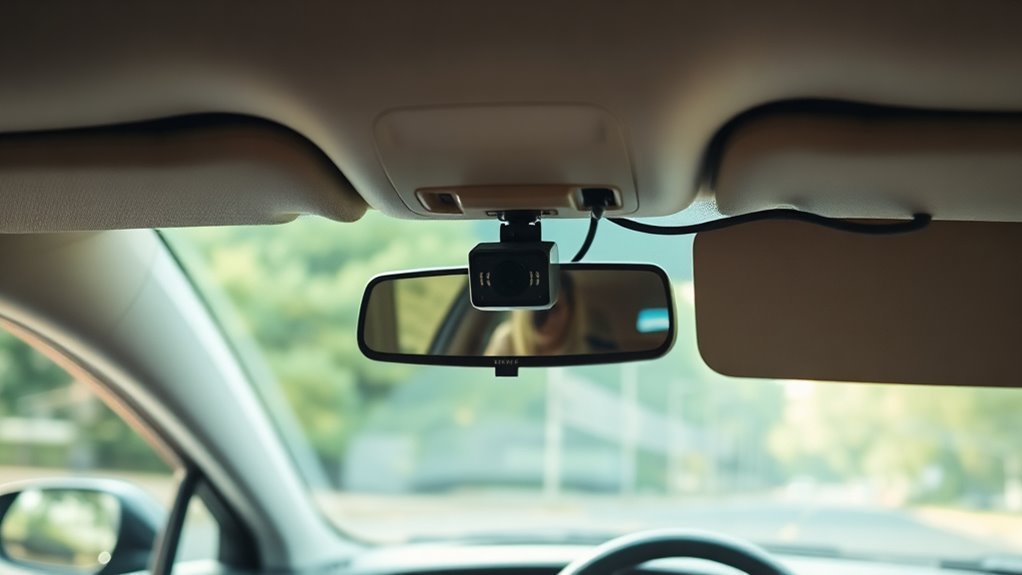
To keep your dash cam running smoothly, you’ll want to place it close to a reliable power source. This guarantees continuous recording without frequent interruptions. Most dash cams draw power via the vehicle’s 12V socket or hardwired connections, so proximity matters.
When choosing a spot, consider how easily you can access power without cluttering your dashboard or windshield. It’s all about finding the right balance between convenience and neatness.
Here are some practical places to position your dash cam near power sources:
- Near the cigarette lighter socket for simple plug-and-play power
- Close to the fuse box if you plan to hardwire the device
- Along the edge of the windshield to hide wiring neatly
- Near the rearview mirror where many power cables are accessible
Picking the right spot helps maintain tidy wiring and consistent power delivery. It makes your setup look clean and keeps your dash cam running without a hitch.
Best Dash Cam Mounting Spots for Parking and Security
When choosing your dash cam’s mounting spot for parking and security, focus on positions that offer clear visibility without glare or obstruction.
You’ll want to place it where it’s less likely to be tampered with or stolen.
Let’s explore how to balance these factors for the best protection.
Optimal Visibility Positions
Where should you place your dash cam to capture the clearest footage for parking and security? To maximize visibility, position your dash cam where it has an unobstructed view of both the front and sides of your vehicle.
Here are some ideal mounting spots:
- Just behind the rearview mirror on the windshield for a wide front view without distraction.
- Near the top corner of the driver’s side windshield to catch side angles during parking.
- On the dashboard facing outward, providing a stable view of parking spaces and surrounding vehicles.
- Attached to side windows with suction mounts for additional coverage of blind spots.
These placements help guarantee your dash cam records critical moments while parked. That way, you enhance security and make evidence collection easier.
Minimizing Glare And Obstruction
Picking the right spot for your dash cam is only part of the equation—glare and obstructions can still ruin your footage. To minimize glare, avoid mounting your camera directly opposite the sun or near reflective surfaces like the windshield’s tint strip.
Positioning the dash cam slightly below the rearview mirror helps reduce reflections from inside the car. Also, keep the windshield clean to prevent smudges from scattering light and distorting the image.
Obstructions like windshield wipers or dashboard items can block the camera’s view, so mount it where the lens has a clear, unobstructed line of sight. Make sure to adjust the angle carefully to avoid capturing your car’s hood or interior parts.
Taking these steps guarantees your dash cam records clear, usable footage both while driving and parked. It’s all about finding that sweet spot for the best view!
Securing Against Theft
Although securing your dash cam against theft may seem challenging, choosing the right mounting spot can make a big difference. You want a location that’s discreet yet effective, reducing the chances of your camera being spotted and stolen.
Think about mounting your dash cam behind the rearview mirror—it’s less visible from outside. Another good spot is high on the windshield, close to the roofline, which makes it harder to reach. Avoid places where the camera dangles or is easily accessible.
Here are some tips for securing your dash cam:
- Mount behind the rearview mirror to keep it discreet
- Position near the top edge of the windshield for limited visibility
- Use mounts with lock features or tamper-resistant screws
- Remove the dash cam when parking for extended periods if theft risk is high
Choosing a Discreet Spot for Your Dash Cam
How can you make sure your dash cam stays out of sight while still capturing everything you need? Start by placing it behind your rearview mirror. This spot keeps the camera discreet and prevents it from obstructing your view.
Make sure the lens has a clear line of sight through the windshield. You can also mount it near the top center of the windshield, which balances discretion with ideal recording angles.
Avoid placing the dash cam too low or off to the side, as it may catch reflections or be more noticeable. Tucking cables along the headliner and A-pillars helps maintain a clean look.
Securing Your Dash Cam Against Theft and Damage
To keep your dash cam safe, you’ll want to lock it down against theft and protect it from damage. Start by choosing a hidden or less obvious spot inside your vehicle.
Then, secure the dash cam firmly to avoid accidental falls or vibrations. Consider these tips to safeguard your device:
- Use a mount with a strong adhesive or suction cup.
- Opt for a model with a built-in locking mechanism or use a small cable lock.
- Remove the dash cam when leaving your car parked for long periods.
- Avoid placing it where direct sunlight or extreme temperatures can cause damage.
Frequently Asked Questions
Can Dash Cams Record Audio Inside the Car?
Yes, your dash cam can record audio inside the car if it has a built-in microphone.
Just make sure to check local laws, as some places restrict recording conversations without consent to protect privacy.
It’s always good to be aware of the rules before you start recording. That way, you stay on the safe side and respect others’ privacy.
Do Dash Cams Work in Extreme Weather Conditions?
Dash cams do work in extreme weather, but you’ll want one with a sturdy build and temperature resistance.
Imagine your camera braving scorching sun or freezing cold, capturing every moment without faltering.
It’s just like you expect it to.
How Much Storage Do Dash Cams Typically Require?
You’ll typically need 32 to 64 GB of storage for daily use, but if you want longer recordings, go for 128 GB or more.
Make sure your dash cam supports microSD cards with high write speeds to avoid lag. That way, your footage will be smooth and reliable.
Are Dash Cam Videos Admissible in Court?
Yes, dash cam videos are usually admissible in court as evidence. You’ll want to make sure the footage is clear, unaltered, and relevant to your case.
That way, it can really strengthen your position during legal proceedings. It’s all about making sure the video supports what you’re trying to prove.
Can Dash Cams Connect to Smartphones for Live Viewing?
Think of your dash cam as a window to the road.
Yes, many dash cams connect to your smartphone via Wi-Fi or apps, letting you watch live footage instantly.
This makes monitoring your drive as easy as checking a text.
Conclusion
Choosing the right spot for your dash cam can make all the difference in capturing clear footage without obstructing your view. You’ll want to balance visibility, power access, and security to protect both your device and your investment.
Don’t forget to find a discreet location that keeps your dash cam safe from theft or damage. A well-placed dash cam not only records important moments but also stays out of the way while driving.
So, where will you mount yours to get the best protection and peace of mind on the road? Finding the perfect spot ensures your dash cam captures everything clearly while staying secure. Remember, the right placement is key to protecting your dash cam and getting reliable footage whenever you need it most.