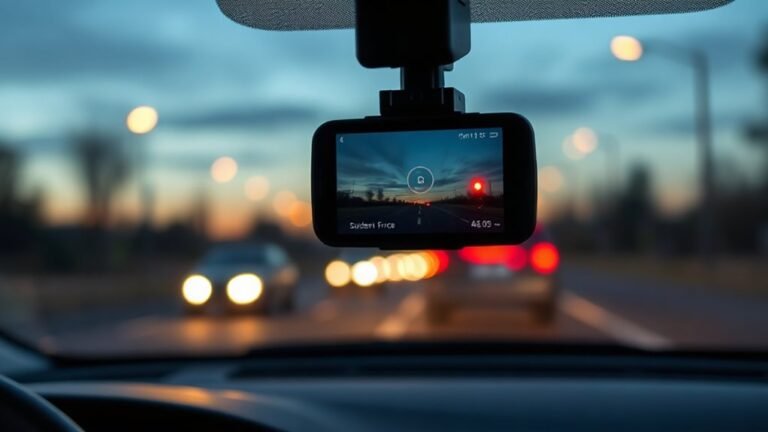
Which AI Dash Cam Is Best for Heavy Equipment?
The best AI dash cam for heavy equipment is one that can handle tough conditions like dust, vibration, moisture, heat, and rough terrain. It also needs to deliver clear front, side, and rear views to keep every angle covered.
You’ll want real-time safety alerts for blind spots, tailgating, drifting, and fatigue. Plus, in-cab coaching helps correct risky behavior quickly, keeping operators safer on the job.
The strongest systems go a step further by linking video to GPS and telematics. This makes fleet review and incident follow-up much easier and more efficient. Keep going, and you’ll see how to choose the right fit for your heavy equipment needs.
Key Takeaways
- The best AI dash cam for heavy equipment is rugged, weather-sealed, and vibration-resistant to handle tough jobsite conditions. It needs to be built tough because these environments aren’t exactly gentle.
- You want clear coverage from the front, sides, and rear, with strong image quality both day and night. Seeing everything around the equipment helps keep things safe and smooth.
- Real-time AI alerts for blind spots, tailgating, fatigue, and unsafe behavior are a huge plus. These alerts help keep operators aware and reduce the chances of accidents.
- It’s also great if the dash cam integrates with fleet-wide video, GPS, and telematics. That way, reviewing incidents and coaching operators across different types of equipment becomes way simpler.
- Plus, easy installation, cloud access, and automatic event tagging save time and cut down on downtime. Nobody wants to spend hours setting up or digging through footage manually.
What Heavy Equipment Needs in an AI Dash Cam?

Heavy equipment needs an AI dash cam that can handle harsh environments while actively improving safety and accountability on the jobsite. You need rugged hardware that resists dust, vibration, moisture, and extreme temperatures without failing mid-shift.
Choose a system with clear day and night image quality, wide coverage, and reliable storage so you don’t miss critical events. You should also look for simple installation, stable power, and connectivity that lets you review footage quickly.
Fleet managers benefit when the device works across loaders, excavators, dozers, and haul trucks with minimal upkeep. Since your equipment works long hours in rough conditions, durability and dependable recording matter as much as image clarity.
The right dash cam should fit your workflow, not slow it down.
Which AI Dash Cam Features Improve Jobsite Safety?

To improve jobsite safety, you need an AI dash cam that does more than record incidents—it should help prevent them. You should look for real-time alerts that warn you when operators drift, tailgate, or enter blind spots.
Driver behavior monitoring matters too, because it flags distraction, seatbelt use, harsh braking, and fatigue before small mistakes become costly accidents. In-cab coaching with audio prompts can nudge operators to correct unsafe actions immediately.
Driver behavior monitoring flags distraction, seatbelt use, harsh braking, and fatigue before small mistakes become costly accidents.
You also want geofencing and proximity detection so you can set safer boundaries around workers, vehicles, and restricted zones. Event tagging and video review help you spot recurring hazards, train crews better, and document compliance.
When your dash cam supports faster intervention, you reduce risk and keep your site moving safely. It’s all about staying one step ahead to protect everyone on site.
How AI Dash Cams Handle Harsh Conditions

Those safety features only matter if your AI dash cam keeps working in the conditions heavy equipment faces every day. You need a unit built to shrug off vibration, dust, mud, rain, and constant engine heat.
Look for rugged housings, sealed connectors, and wide operating temperature ranges so the camera doesn’t fail on a freezing morning or a scorching afternoon. Good mounts matter too, because steady hardware helps the camera keep recording clear footage instead of shaking loose.
You’ll also want scratch-resistant lenses and reliable image sensors that cut through glare, darkness, and flying debris.
- Shock resistance for rough terrain
- Weather sealing against water and dust
- Heat-tolerant components for long shifts
How AI Dash Cams Improve Mixed Fleet Visibility
When you run a mixed fleet, AI dash cams help you see what’s happening across different machines, drivers, and job sites from one system. You can compare excavators, dump trucks, pickups, and service vehicles without juggling separate tools or reports.
AI dash cams give mixed fleets one clear view across every machine, driver, and job site.
Real-time video and AI alerts give you a clearer picture of speed, seatbelt use, distracted driving, and risky maneuvers. That way, you spot problems faster and stay ahead of potential issues.
You also get consistent footage from every asset, which makes it easier to review incidents, coach operators, and verify what happened on the ground. Instead of relying on scattered notes or inconsistent eyewitness accounts, you use one view to track safety and performance across your operation.
That visibility helps you make better decisions and keep every machine accountable. It’s all about having the right info when you need it.
Which AI Dash Cam Integrations Save the Most Time?
The best time-saving AI dash cam integrations are the ones that cut out manual work, not add more of it. You save the most time when your dash cam syncs video, alerts, and telematics in one place, so you don’t jump between systems.
Automatic event tagging helps you find incidents fast, while cloud uploads let you review clips without pulling an SD card. Maintenance integrations also help because they can trigger work orders when the system spots impact events or rough handling.
- Video linked to GPS and engine data
- Instant cloud sharing for safety teams
- Maintenance alerts tied to impact detection
When you connect your dash cam to dispatch or coaching tools, you shorten follow-up, reduce paperwork, and keep your equipment moving. It just makes everything flow smoother and saves you a ton of time.
How to Choose the Best AI Dash Cam for Your Fleet?
Choosing the best AI dash cam for your fleet starts with matching the system to your actual jobsite needs, not just its feature list. You should weigh camera coverage, AI alerts, ruggedness, and installation speed before you buy.
| Priority | What to check | Why it matters |
|---|---|---|
| Visibility | Front, side, and rear views | You catch blind spots |
| AI alerts | Fatigue, distraction, near-miss detection | You prevent incidents |
| Durability | IP rating, shock resistance, heat tolerance | You reduce downtime |
| Support | Dashboards, training, and service | You save time |
Then compare storage, cellular uptime, and integration with your telematics platform. Also, ask for real jobsite footage, not just marketing clips.
If the system fits your terrain, crews, and compliance goals, you’ll get better coaching, fewer claims, and faster decisions. It’s all about finding the right fit for your unique needs.
Frequently Asked Questions
Can AI Dash Cams Record When Equipment Is Parked Overnight?
Yes, you can set many AI dash cams to record overnight while your equipment’s parked, using parking mode or motion detection. You’ll protect assets, catch theft, and review incidents when power’s available and settings are enabled.
It’s pretty handy because you don’t have to worry about missing anything important during off-hours. Just make sure your dash cam supports these features and is properly set up to keep an eye on things even when you’re not around.
Do AI Dash Cams Drain the Battery on Heavy Equipment?
Usually, no—if you wire it correctly, you won’t drain your heavy equipment battery.
Yet when you park and the cam keeps recording, coincidence can strike: a weak battery may fail just when you need it most.
Can One Camera Monitor Both Inside and Outside the Cab?
Yes, you can use one camera with dual lenses to monitor both inside and outside the cab.
This way, you’ll get driver-facing and road-facing coverage without needing to install separate systems.
It’s a convenient solution that keeps things simple and efficient.
Are AI Dash Cams Easy to Move Between Machines?
Like a well-packed toolbox, yes—you can move many AI dash cams between machines easily if you use magnetic mounts and quick-connect wiring.
You’ll save time, though calibration and power setup can still take a few minutes. It’s pretty straightforward once you get the hang of it.
Do AI Dash Cams Work Without Cellular Service?
Yes, you can use many AI dash cams without cellular service. They’ll still record locally and trigger alerts onboard.
But you won’t get live uploads, remote viewing, or cloud features until you reconnect. So, while the basic functions work fine offline, some of the cool connected features won’t be available.
Conclusion
Choosing the best AI dash cam for your heavy equipment comes down to safety, durability, and time savings. You need a system that works as hard as your fleet and handles rough jobsites. Plus, it should give you clear visibility across every machine.
The right setup helps you catch risks faster and manage operations smoother. It’s like having an extra set of eyes on every piece of equipment, giving you peace of mind on site.
When picking an AI dash cam, focus on one that fits your fleet’s unique needs. The best AI dash cam for heavy equipment keeps your crews protected while boosting efficiency. In the end, it’s about smart safety solutions that stand up to tough conditions and save you time every day.