What Is the Best Position for Your Dash Cam
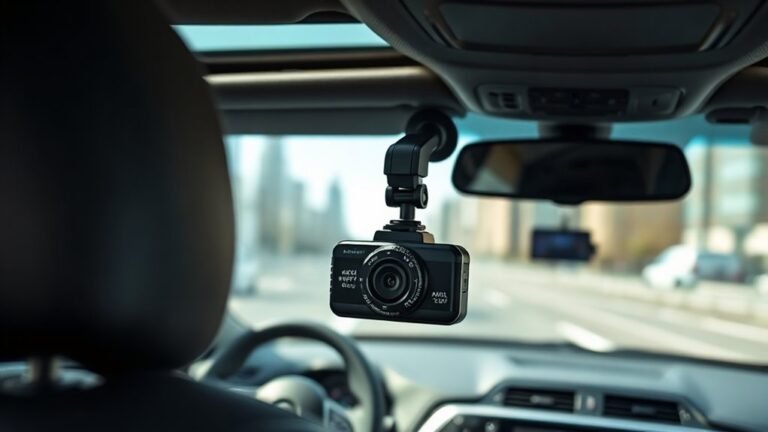
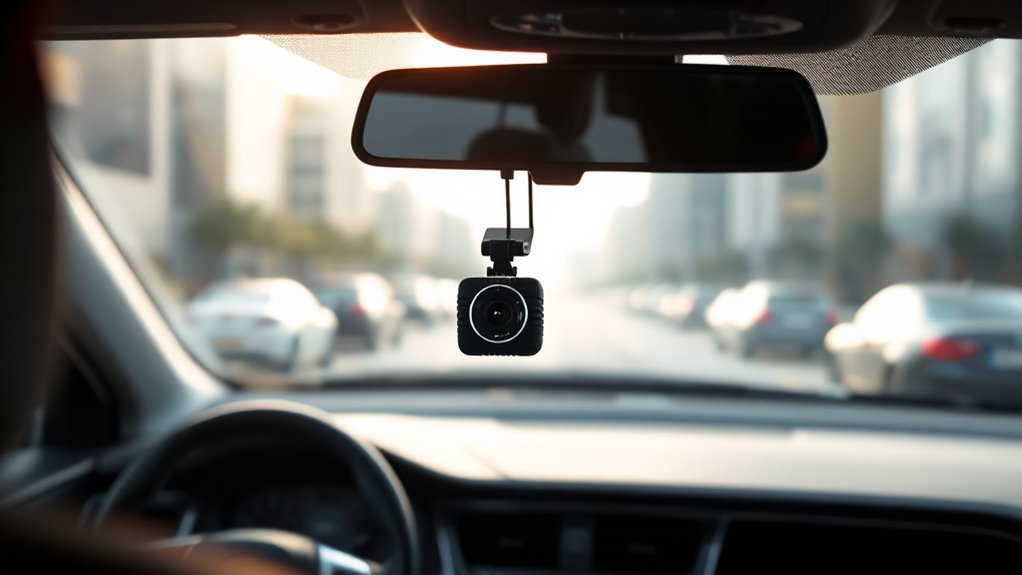
The best spot for your dash cam is typically behind the rearview mirror. This position keeps the camera out of your way and helps reduce glare, making it easier to focus on the road.
You can also mount it in the center or lower corner of the windshield. This placement gives you a clear, wide view of the road without blocking your vision.
Dashboard placement works too, as long as it doesn’t interfere with airbags or your sightlines.
If you want to capture what’s happening behind your vehicle, rear window installation is an option. Just be aware it requires careful cable management to keep everything neat and safe.
Keep exploring for tips on legal and safety guidelines to ensure your dash cam setup is both effective and compliant.
Key Takeaways
– Mount the dash cam behind the rearview mirror to keep it discreet and minimize driver distraction.
This spot is perfect because it stays out of your way but still captures everything you need.
– Position the camera at the center of the windshield for the widest and most balanced road view.
It helps you get a clear, straight-on shot of the road without any weird angles.
– Avoid blocking the driver’s line of sight or interfering with airbags when placing the dash cam.
Safety first, right? You don’t want your camera causing any hazards.
– Ensure the camera lens is angled correctly to reduce glare and capture clear footage.
A little adjustment can make a big difference in video quality.
– Secure cable management to prevent distractions and maintain a clean installation.
Tidy cables mean less clutter and no annoying wires flapping around while you drive.
Mounting Behind the Rearview Mirror
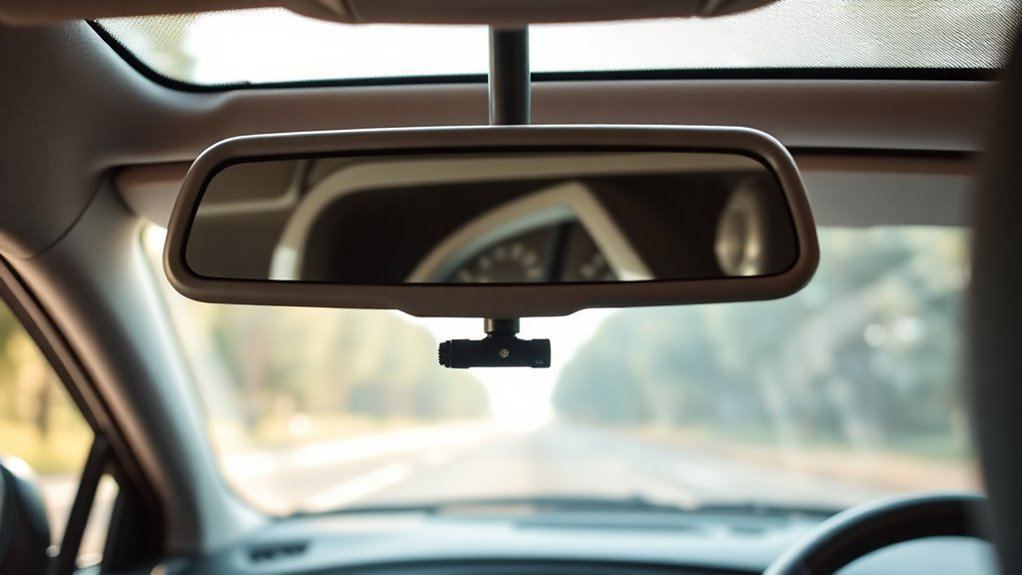
Mounting your dash cam behind the rearview mirror offers a discreet and effective way to capture footage without obstructing your view. When you place it here, the camera stays out of your line of sight, reducing distractions while driving.
This position also keeps the dash cam protected from direct sunlight, which can help prevent lens flare and improve video quality. You’ll want to verify the camera is aligned properly to capture a clear view of the road ahead.
Since this spot is close to your vehicle’s power source, cable management becomes simpler and neater. Just make certain the dash cam doesn’t interfere with any sensors or the mirror’s adjustments.
Center of the Windshield
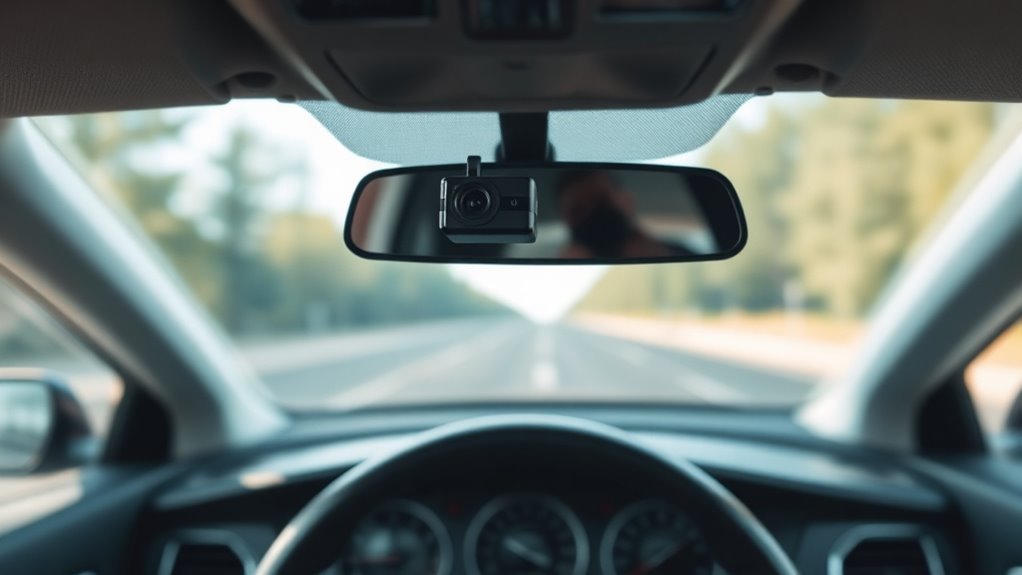
Placing your dash cam at the center of the windshield gives you a wide, unobstructed view of the road ahead. This position maximizes the camera’s field of vision, capturing essential details on both sides of the road. It also reduces blind spots and helps guarantee balanced footage, especially useful in multi-lane traffic.
However, you should avoid blocking your view while driving or interfering with airbags. Just something to keep in mind when finding the perfect spot.
| Advantage | Consideration | Tip |
|---|---|---|
| Maximizes road view | Potential glare from sun | Use anti-glare filters |
| Balanced footage | Might obstruct central vision | Position behind rearview mirror |
| Captures multiple lanes | Requires secure mounting | Check local laws on windshield mounts |
Center mounting is ideal if you want thorough coverage without sacrificing visibility. It’s a solid choice for balanced, reliable footage.
Lower Corner of the Windshield
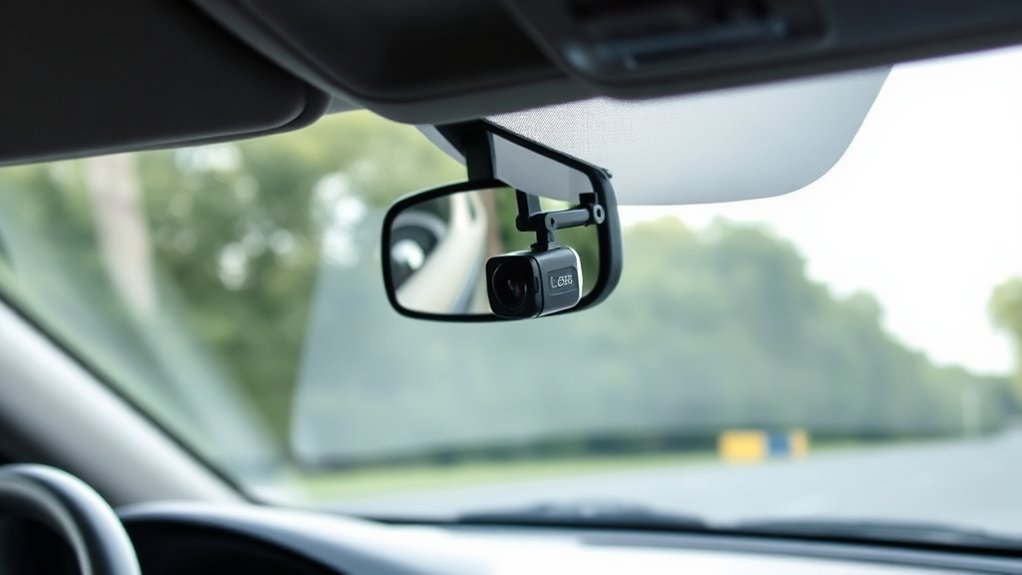
Placing your dash cam in the lower corner of the windshield gives you a clear, wide view without blocking your sight. This spot helps you capture important details while keeping distractions to a minimum.
You’ll stay focused on the road and still get the footage you need. It’s a smart way to keep safety and recording balanced.
Optimal Viewing Angle
Where should you position your dash cam for the clearest and most detailed view? The ideal viewing angle is key to capturing everything important on the road without distortion or blind spots.
Placing your dash cam in the lower corner of the windshield helps balance a wide field of view with minimal glare and obstruction.
To get the best angle, consider these tips:
- Tilt the camera slightly upward to capture both the road ahead and traffic signals.
- Avoid angles that create too much sky or dashboard in the frame.
- Adjust the camera to reduce reflections from the windshield.
- Make sure the lens points straight forward to avoid skewed footage.
With these adjustments, your dash cam will offer clear, thorough recordings every time you drive. Easy, right? Just a few tweaks, and you’re all set!
Minimizing Driver Distraction
Mounting your dash cam in the lower corner of the windshield not only captures a great view but also keeps your attention on the road. Placing it here reduces any obstruction in your direct line of sight, so you won’t have to glance away frequently.
This position helps you stay focused, minimizing distractions that can occur when the camera is mounted higher or in the center. Since it’s tucked away, it won’t interfere with your rearview mirror or dashboard controls.
You’ll still get clear footage while driving without the constant urge to adjust or check the camera. By choosing this spot, you create a safer driving environment, allowing you to concentrate on the road ahead instead of worrying about your dash cam’s placement.
Dashboard Placement
When placing your dash cam on the dashboard, you’ll want to guarantee it captures a wide, clear view of the road ahead. Make sure it doesn’t block your line of sight or interfere with airbags.
Positioning it correctly helps you get the best footage without compromising safety. So, take a moment to find that sweet spot before you start driving.
Optimal Viewing Angles
How can you guarantee your dash cam captures the clearest footage? Positioning it at the right viewing angle is key. Aim for a balance where the camera captures the entire road ahead without distortion or blind spots.
Here’s how to nail the ideal angle:
- Tilt the camera slightly downward to avoid capturing too much sky or dashboard glare.
- Center the lens so it faces straight ahead, capturing an even view of both lanes.
- Adjust the angle to include a bit of the hood, providing a stable reference point.
- Avoid extreme angles that can warp the image and reduce detail.
Avoiding Obstruction
Where exactly should you place your dash cam to keep its view unobstructed? Position it so nothing blocks the lens—avoid areas behind rearview mirrors, sun visors, or dashboard decorations.
If the cam’s view is partially covered, it can miss important details like license plates or pedestrians. Mounting the dash cam near the top center of your windshield usually works best, giving a clear, wide-angle perspective.
Also, steer clear of areas prone to glare or reflections from the dashboard. Make certain cables don’t dangle into the cam’s field of vision.
Rear Window Installation
Although installing your dash cam on the rear window may seem straightforward, you’ll need to take into account factors like visibility, wiring, and potential glare to get the best footage. You want a clear, unobstructed view of the road behind while keeping the device discreet and secure.
Careful placement helps avoid reflections from inside the car and guarantees the camera captures vital moments.
Thoughtful positioning prevents interior reflections and ensures your dash cam records crucial events clearly.
Keep these tips in mind for rear window installation:
- Position the camera near the top center for the widest view.
- Use cable clips or adhesive mounts to manage wiring neatly.
- Test for glare during different lighting conditions.
- Clean the glass thoroughly to avoid smudges affecting footage.
With the right setup, your rear dash cam will provide valuable coverage without distracting you. It’s all about finding that perfect spot and making sure everything’s tidy and clear.
Considering Legal and Safety Guidelines
After choosing the ideal spot for your rear dash cam, you’ll want to make certain your setup follows local laws and safety standards. Different regions have specific rules about windshield obstruction and camera placement, so check your state or country’s regulations before installation.
Avoid positioning the camera where it blocks your view or interferes with airbags. Secure cables neatly to prevent distractions or hazards while driving.
Also, consider privacy laws—some areas restrict audio recording or capturing footage without consent. Keeping your dash cam within legal and safety guidelines not only protects you from fines but guarantees you stay focused on the road.
Always prioritize a clear, unobstructed view to enhance safety for you and other drivers.
Frequently Asked Questions
Can Dash Cams Record Audio Inside the Vehicle?
Yes, your dash cam can record audio inside the vehicle if it has a built-in microphone.
Just make sure to check local laws, as some places require you to notify passengers before recording conversations.
It’s always better to be safe and let everyone know when you’re recording. That way, you avoid any legal trouble or misunderstandings.
How Much Storage Does a Typical Dash Cam Require?
You’ll typically need 16 to 64GB of storage for a dash cam, depending on video quality and loop length. Higher resolution videos use more space, so choose storage that matches your recording preferences and how often you want to overwrite footage.
Think about how often you want to review or save your clips. If you prefer longer recording times without overwriting, going for a larger capacity is a smart move. It all comes down to what works best for your needs.
Are Dash Cams Compatible With All Car Models?
Dash cams generally gel with most makes and models, but you’ll want to check compatibility carefully.
Some cars’ curved cabins or complex consoles can complicate installation, so confirm your cam’s fit before committing to capture clear, consistent footage. It’s always better to be sure than sorry!
Do Dash Cams Work in Low Light or Night Conditions?
Yes, dash cams work in low light or night conditions, but their performance depends on the camera’s sensor quality and infrared capabilities.
You’ll get clearer footage with models designed for night vision or enhanced low-light recording.
Can Dash Cams Be Connected to a Smartphone App?
Yes, you can connect many dash cams to a smartphone app. This lets you view footage, adjust settings, and download videos directly to your phone.
It’s super convenient to manage your recordings on the go. Plus, having everything on your phone means you can quickly share clips if needed.
Conclusion
Choosing the perfect spot for your dash cam is like finding the sweet spot in a song—it makes all the difference. Mounting behind the rearview mirror keeps it discreet, while the center of the windshield captures the road like a spotlight.
Just remember to follow legal and safety guidelines, so your view stays clear and your drive stays smooth. With the right placement, your dash cam becomes your silent co-pilot, always ready to catch every twist and turn.
The best position for your dash cam not only ensures optimal road visibility but also complies with local laws to avoid distractions. Placing it properly means you get clear footage without obstructing your view.
So, when installing your dash cam, think about both safety and functionality. The right dash cam placement can protect you in case of accidents and provide valuable evidence when needed.