Are Dash Cams Illegal?
You’re generally allowed to use dash cams, but the legality depends on where you live.
Most places let you record public roads, which is great for capturing evidence during your drives. However, you need to be careful not to block your view or record private areas.
Audio recording often comes with extra rules, so turning off the mic might be necessary.
Using your dash cam improperly can lead to fines or footage that won’t hold up in court.
So, if you want to use your dash cam confidently, understanding local laws and setting it up properly is key.
Key Takeaways
– Dash cams are generally legal in most U.S. states, but some restrict placement to avoid obstructing the driver’s view.
So, it’s important to check your state’s rules before you mount one on your windshield.
– European countries have stricter rules, with Germany limiting recording duration and how footage is used.
They take privacy pretty seriously over there, so that’s something to keep in mind if you’re traveling.
– Audio recording may violate wiretapping laws, so disabling the microphone is often necessary to stay legal.
Better safe than sorry, right? Turning off the audio can save you from legal headaches.
– Recording inside private properties or areas with privacy expectations is usually prohibited and can lead to legal issues.
If you’re capturing footage where people expect privacy, you could get into trouble.
– Improper installation or illegal recording can result in fines, confiscation, or footage inadmissibility in court.
So, make sure you install your dash cam correctly and follow the rules to avoid any problems.
Dash Cam Legality: Laws By Region
Although dash cams have become popular worldwide, their legality varies greatly depending on where you live. In the United States, most states allow dash cams, but some restrict placement to avoid obstructing your view.
Dash cam legality varies widely; in the U.S., most states allow them with placement restrictions to ensure clear views.
European countries have stricter rules—Germany, for example, permits dash cams but limits recording duration and use of footage. In the UK, using a dash cam is generally legal, but you must follow data protection laws.
Australia’s regulations differ by state; some allow them freely, while others impose conditions on recording in public spaces. Before installing one, you should check your local laws to make certain you comply.
It’s a good idea to understand these regional differences so you can avoid any legal trouble. Plus, that way, you can enjoy the added security dash cams provide without any worries.
What Privacy Rules Should You Know About Dash Cams?
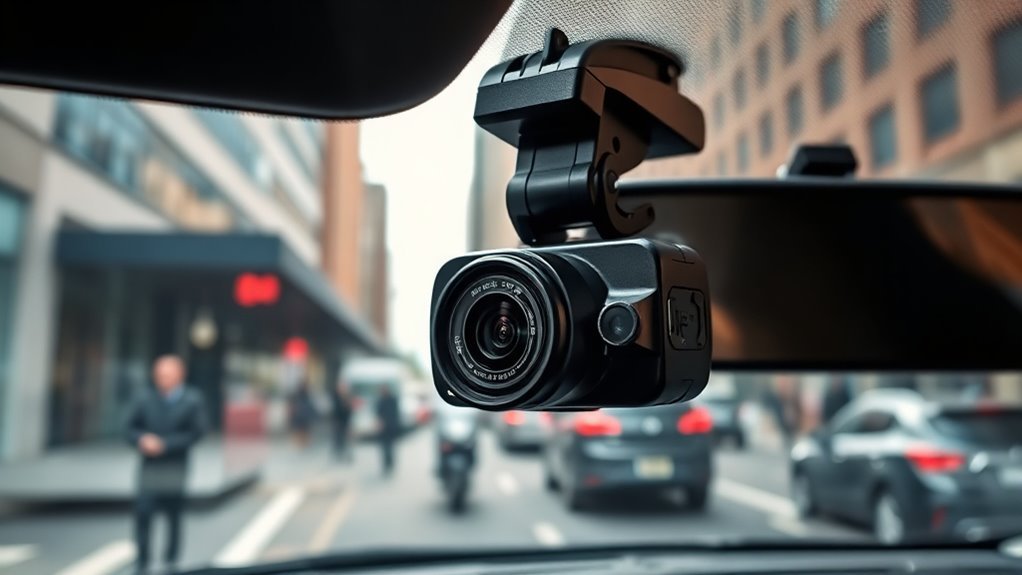
When you use a dash cam, you need to be aware of privacy rules that protect both you and others. First, understand that recording in public spaces is generally allowed, but capturing audio without consent can violate wiretapping laws in some states.
Avoid filming inside private properties or areas where people expect privacy, like inside homes or private driveways. Also, be cautious about sharing footage that identifies individuals without their permission, as this can lead to privacy infringement claims.
You should store recordings securely to prevent unauthorized access. Finally, check your local laws regularly, as privacy regulations around dash cams can change.
Being mindful of these rules helps you use your dash cam responsibly and avoid legal trouble. It’s always better to stay informed and respectful when recording.
Recording Restrictions for Dash Cams
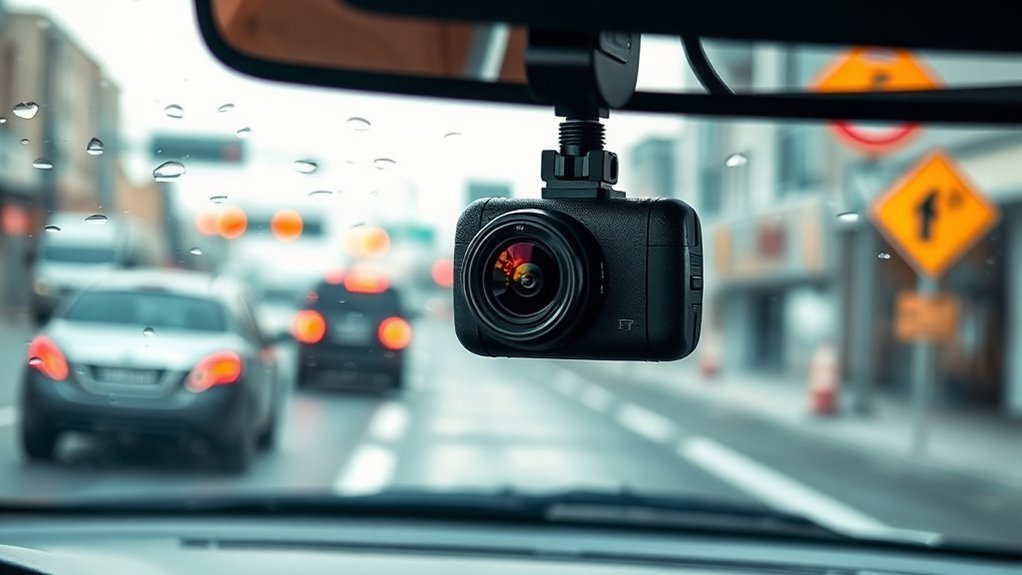
Understanding privacy rules is just one part of using a dash cam responsibly. You also need to be aware of recording restrictions that vary by location. For instance, some states or countries prohibit audio recording without consent, so you might have to disable the microphone.
Additionally, you should avoid capturing footage inside private properties where people have a reasonable expectation of privacy, like inside homes or private driveways. Public roads generally allow video recording, but don’t record beyond what’s necessary for safety or evidence.
Keep in mind, mounting your dash cam in a way that obstructs your view while driving can be illegal. Always check local laws to make sure your dash cam use complies with specific recording restrictions and protects everyone’s privacy.
Using Dash Cam Footage as Legal Evidence
You might wonder if dash cam footage can hold up in court. While it’s often admissible, you’ll need to take into account privacy laws that vary by location.
Knowing these rules helps guarantee your recordings support your case without legal issues. It’s always a good idea to check what’s allowed where you live, just to be safe.
Admissibility In Court
Although dash cams have become popular tools for capturing road incidents, their footage isn’t automatically accepted as evidence in court. When you want to use dash cam footage legally, you need to make sure it’s clear, unaltered, and relevant to the case.
Courts often evaluate whether the video accurately represents the event and if it was obtained legally. You should also be prepared to authenticate the footage, typically by explaining how and when it was recorded.
Keep in mind that poor video quality or missing context might reduce its impact. While dash cam recordings can strongly support your claims, they rarely stand alone.
Combining the footage with witness statements or other evidence strengthens your position in legal proceedings. So, it’s always a good idea to have more than just the video to back you up.
Privacy Considerations
Since dash cams record public and private spaces, you need to take into account privacy laws before sharing or using the footage as legal evidence. Different regions have varying rules about consent and data protection.
For example, recording audio without consent may violate wiretapping laws in some places. You should also consider how the footage captures bystanders or private property.
If the recordings infringe on someone’s reasonable expectation of privacy, you could face legal challenges. To protect yourself, limit recordings to public areas and avoid sharing footage that reveals sensitive personal information.
When submitting dash cam evidence in court, make certain it complies with local privacy regulations to avoid it being dismissed or causing legal trouble for you. Always check your jurisdiction’s specific laws before using dash cam footage.
How to Install Your Dash Cam Legally
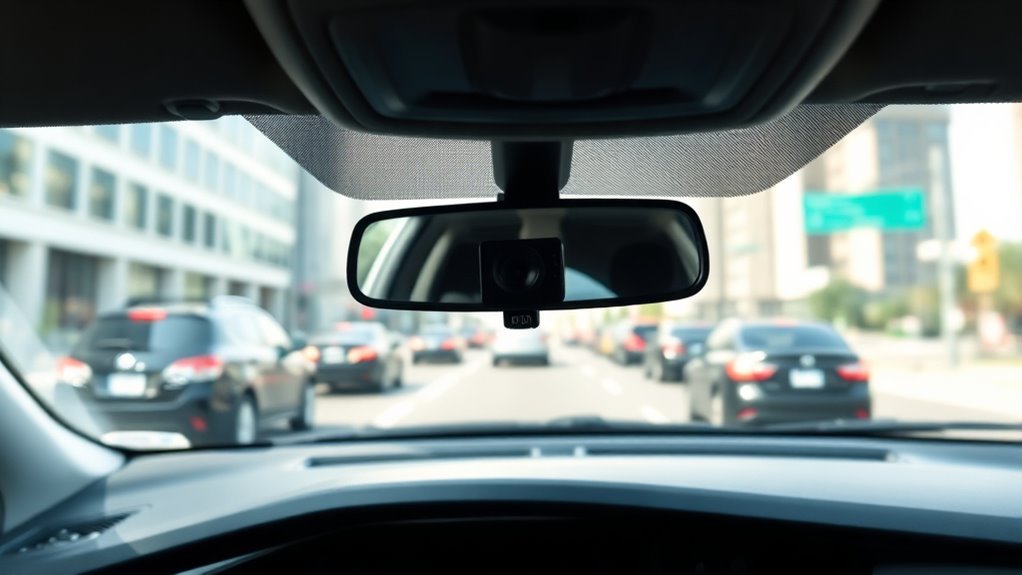
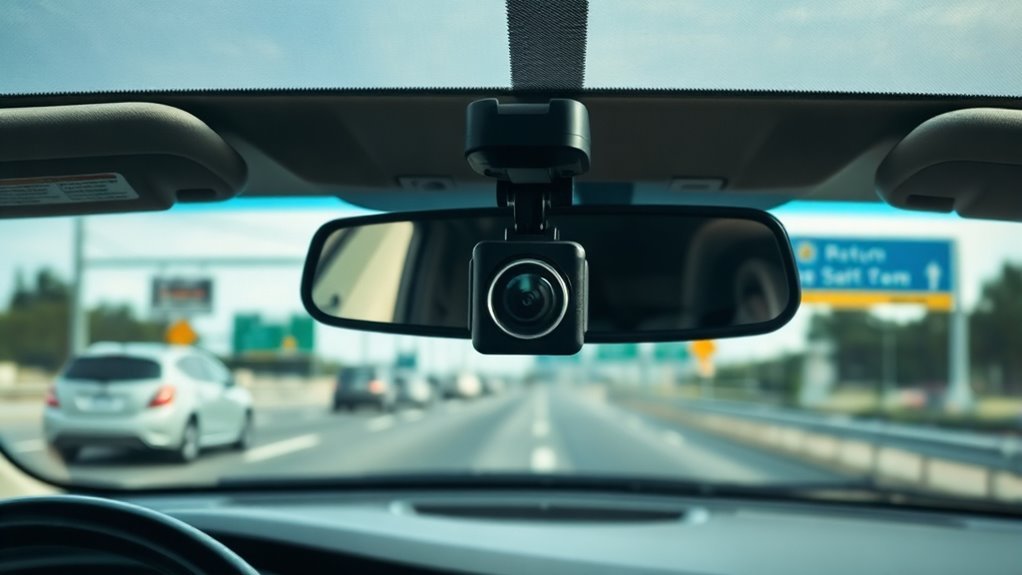
When installing your dash cam, making sure it doesn’t obstruct your view or violate local laws is essential. Place the camera behind your rearview mirror, where it captures the road without blocking your line of sight.
Use adhesive mounts or suction cups designed for windshield use to secure it firmly. Check your state or country’s regulations regarding dash cam placement, as some restrict devices within the driver’s direct field of vision.
Avoid mounting it too low or in spots that interfere with airbags. Route cables neatly along the trim to prevent distractions or hazards.
Before finalizing installation, test the camera’s angle and guarantee it records clearly without interfering with your driving. Following these steps helps you stay compliant and keeps your focus on the road.
Consequences of Illegal Dash Cam Use
Understanding the risks of illegal dash cam use is essential for every driver. If you install or use a dash cam against local laws, you could face fines, confiscation of your device, or even legal action.
In some places, recording without consent violates privacy laws, meaning your footage might be inadmissible in court or lead to lawsuits. You also risk distractions if your dash cam obstructs your view, which can result in traffic tickets.
Additionally, insurers might refuse claims if they find your dash cam use illegal or improperly installed. So, it’s really important to protect yourself by researching your area’s regulations before using a dash cam.
Following the rules guarantees you benefit from your device without facing costly penalties or legal trouble. It’s better to be safe than sorry!
Frequently Asked Questions
Can Dash Cams Improve My Driving Habits?
Yes, dash cams can improve your driving habits by making you more aware of your actions. Knowing you’re recorded encourages safer driving.
It also helps you analyze mistakes and motivates you to stay focused. Plus, it reminds you to follow traffic rules consistently.
What Features Should I Look for in a Dash Cam?
You should look for features like high-resolution video and a wide-angle lens. Night vision is also super helpful for those late drives or poor lighting conditions.
Loop recording is great because it keeps recording without you having to worry about storage space. A G-sensor for impact detection is another must-have — it automatically saves footage if something happens.
GPS tracking can be really useful to log your routes and speeds. And of course, easy installation makes the whole process hassle-free.
These features help you capture clear, useful footage anytime you drive.
How Much Do Dash Cams Typically Cost?
Dash cams typically cost between $50 and $200, depending on features like resolution, night vision, and GPS. You can find basic models for under $50, but advanced ones with multiple cameras might cost over $300.
It really comes down to what you need. If you want something simple, there are plenty of affordable options. But if you’re looking for extra features, be prepared to spend a bit more.
Can Dash Cams Work in Extreme Weather Conditions?
About 70% of dash cams are designed to operate between -20°C and 60°C, so you can trust many models to withstand extreme weather.
Just pick one with a sturdy build and temperature-resistant features for reliable performance. That way, your dash cam won’t let you down when conditions get tough.
Are Dash Cams Useful for Insurance Discounts?
Yes, dash cams can help you get insurance discounts by providing clear evidence during accidents. This can reduce claim disputes and make the whole process smoother.
Plus, having a dash cam often encourages safer driving habits. Insurers usually reward drivers who use them with lower premiums. So, it’s definitely worth considering!
Conclusion
You want the safety and clarity a dash cam provides, but you don’t want to cross legal lines. Like driving on a clear road versus a foggy one, understanding regional laws guarantees your recording is a helpful witness, not a legal hazard.
By respecting privacy rules and installation guidelines, you keep your dash cam’s eye sharp and lawful. This helps you avoid consequences that could cloud your journey.
Stay informed about the laws in your area to stay protected. Knowing what’s allowed means your dash cam works for you, providing clear evidence when needed. Drive with confidence, knowing your dash cam is both safe and legal.