What Does ZR Mean on a Tire?
ZR on a tire means it’s built for high-speed performance, designed to offer stability, heat control, and responsive handling above 149 mph. You’ll often spot it in the tire size, like 245/40ZR18. It’s a clear sign that the tire is made to handle faster speeds safely.
But here’s the thing: ZR by itself doesn’t show the exact top speed the tire can handle. To get the full picture, you need to check the service description and speed symbol, which are usually letters like W or Y. The load index is important too because it tells you how much weight the tire can safely carry.
Keep reading, and you’ll find out how ZR fits with other markings and what your fitment choices mean for performance and safety. It’s all about making sure your tires match your driving needs.
Key Takeaways
- ZR on a tire means it is built for high-speed performance, handling, and stability, historically for speeds above 149 mph.
- You’ll see ZR in the tire size code, like 245/40ZR18, but by itself, it doesn’t give you the exact top speed.
- The exact speed limit is confirmed by the speed symbol after the load index, usually W, Y, or sometimes (Y).
- Keep in mind, ZR doesn’t tell you about load capacity; that’s what the separate load index number is for—it shows how much weight each tire can safely support.
- When you’re replacing tires, make sure to match the size, load index, and speed rating to what your vehicle placard or owner’s manual recommends.
What Does ZR Mean on a Tire?
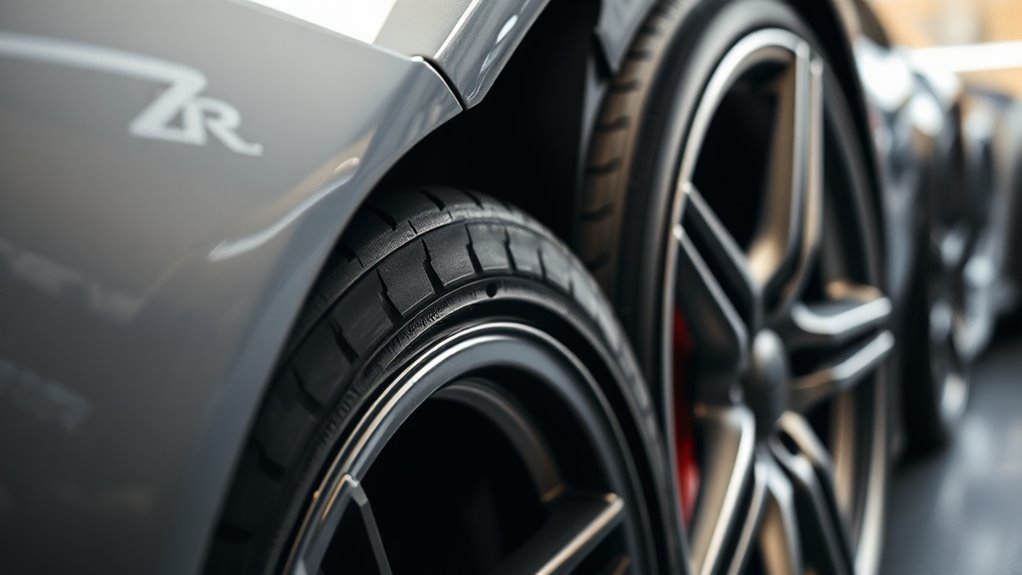
You’ll usually find ZR on sports cars, powerful sedans, and other vehicles engineered for sharper handling. It tells you the tire was made with stronger materials, tread design, and internal structure to support responsive cornering and control at elevated speeds.
If your vehicle came with ZR tires, you shouldn’t replace them with a lower-performance type without checking manufacturer guidance. Matching the intended tire category helps preserve handling, safety, and overall vehicle behavior.
What Speed Ratings Usually Accompany ZR?
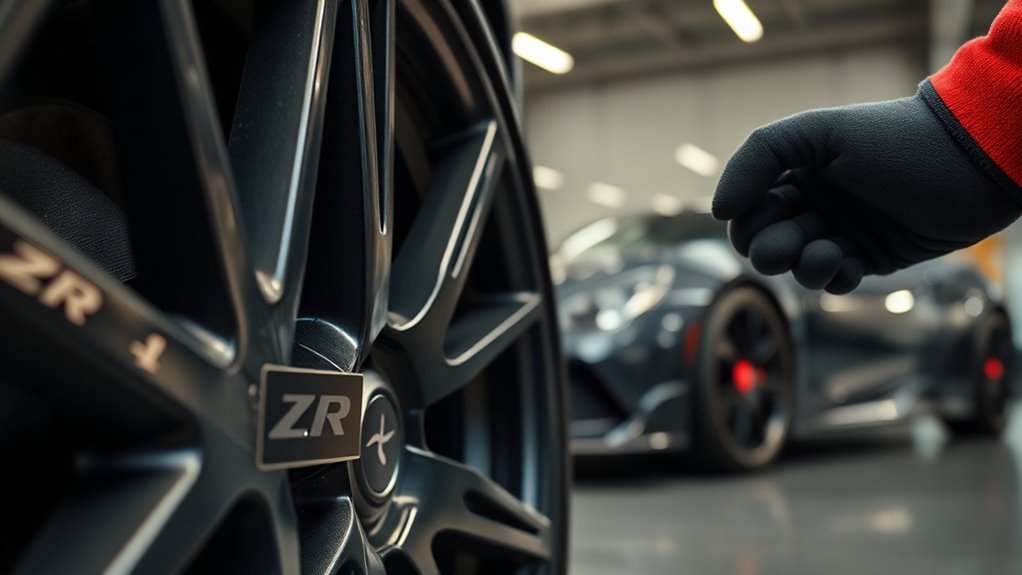
You’ll usually see ZR paired with W or Y on the tire’s service description. These letters tell you the specific top-speed category the tire meets beyond the older ZR mark.
If you want to read the rating correctly, you should know what W and Y each mean. It’ll help you understand exactly how fast your tires are rated to go.
Common ZR Pairings
Although “ZR” once signaled that a tire could exceed 149 mph, modern tire codes almost always pair it with a specific speed rating—most commonly W (up to 168 mph) or Y (up to 186 mph).
When you read a sidewall, you’ll usually see ZR embedded in the size, then a service description afterward.
For example, you might spot 245/40ZR18 followed by a load index and speed symbol. In practice, that means ZR works as part of the tire’s size designation, while the later symbol confirms the tire’s tested top-speed capability.
You may also encounter ZR on performance, ultra-high-performance, and some summer tires, especially on sporty coupes, sedans, and exotics.
If your vehicle came with ZR-marked tires, check the complete sidewall code so you match the intended performance category and manufacturer specifications exactly.
W And Y Ratings
Because ZR no longer stands alone as the full speed indicator, W and Y usually provide the exact rating that matters. When you read a tire code, you’ll often see ZR paired with either 94W or 98Y. Those final letters tell you the certified top speed under proper conditions.
That makes your choice more precise.
- W means the tire is rated for speeds up to 168 mph.
- Y means the tire is rated for speeds up to 186 mph.
- (Y) can indicate capability above 186 mph on select ultra-high-performance tires.
- ZR still signals a tire designed for speeds over 149 mph, but not the exact limit.
If you want accuracy, focus on W or Y first. Then treat ZR as supporting context when comparing performance tires.
ZR vs. R: What’s the Difference?
While both markings relate to speed capability, ZR and R don’t mean the same thing. R is a modern speed-rating letter that indicates a tire is approved for up to 106 mph, while ZR is a higher-speed designation used in a tire’s size code to show the tire is built for speeds above 149 mph.
When you read a sidewall, R and ZR also appear in different contexts. In a size like 225/45ZR17, ZR sits with the dimensions and construction details. By contrast, R can appear as the standalone speed symbol after the load index, such as 94R.
You’ll also see R in the size line meaning radial construction, so placement matters. If you want the correct meaning, check where the letter appears and read the full code.
Do You Need ZR Tires for Your Car?
You only need ZR tires if your vehicle is designed to use them and you want performance that matches that higher-speed capability.
If you drive a sports car, performance sedan, or another model with factory high-speed tuning, ZR-rated tires help preserve handling, stability, and braking feel.
If your car’s manual specifies a lower speed rating, you usually won’t gain much from choosing ZR.
Consider these factors before deciding:
- Check your owner’s manual for the recommended speed rating.
- Match your tire choice to how you actually drive each day.
- Consider ride comfort, tread life, and road noise.
- Think about climate, since summer-focused performance tires aren’t ideal year-round.
For many daily drivers, standard performance or touring tires make more practical sense and cost less overall.
Can You Replace ZR Tires Safely?
You can replace ZR tires safely if the new tires match your car’s required speed rating, load rating, and size.
If any of those specs don’t line up, you could affect handling, stability, and safety. Replacement is usually safe when you follow the manufacturer’s recommendations and choose tires that meet or exceed the original ratings.
It’s really about making sure the new tires are just right for your car. That way, you keep everything running smoothly and safely.
Matching Speed Rating
Because speed ratings reflect a tire’s heat tolerance and high-speed stability, you shouldn’t replace ZR tires with a lower-rated option unless your vehicle manufacturer specifically allows it. If you downgrade, you could reduce handling precision, braking confidence, and safety margins during sustained highway driving.
Matching the original rating helps your car perform as engineered, especially if it has a sport-tuned suspension.
- Check your owner’s manual for the manufacturer’s minimum approved speed rating.
- Match all four tires whenever possible to preserve predictable response and balance.
- If you install winter tires, confirm any alternate rating meets the vehicle’s stated guidance.
- Ask a qualified tire professional to verify compatibility before purchase.
If you upgrade to a higher rating, that’s usually acceptable, but it doesn’t automatically improve ride quality or durability. So, just keep in mind that a higher speed rating isn’t a magic fix for better performance.
Load And Size Fit
Checking load capacity and tire size matters just as much as matching the speed rating when you replace ZR tires. You need the correct load index so each tire can support your vehicle’s weight, passengers, and cargo without excess strain.
If the replacement tire carries less load than required, you risk poor handling, heat buildup, and faster wear.
You should also match the tire size listed on the sidewall or door placard. Width, aspect ratio, and wheel diameter affect clearance, steering response, braking, and speedometer accuracy.
A different size can rub suspension parts, alter ride height, or upset stability systems. Even if a tire fits the wheel, that doesn’t mean it fits your vehicle properly.
Always compare the full size code and load index before buying new tires.
When Replacement Is Safe
In most cases, replacing ZR tires is safe if the new tires meet or exceed the original tire’s speed rating, load index, and size specifications. You shouldn’t downgrade to a lower rating unless your vehicle manufacturer explicitly allows it.
Matching the original specs helps preserve handling, braking, and high-speed stability. It also keeps your tire choice aligned with the demands your suspension and braking system place on the road.
- Check the owner’s manual for approved tire ratings and sizes.
- Match or exceed the original load index on every replacement tire.
- Replace tires in complete axle pairs to maintain balanced grip.
- Confirm proper inflation and alignment after installation.
If you drive spiritedly or carry heavy loads, it’s a good idea to consult a tire professional before switching from ZR-rated tires on your vehicle. Better safe than sorry!
Where Is ZR Found on a Tire?
You should also check the service description near the size, because modern tires often pair ZR with a speed rating like W or Y, shown after the load index, such as 94Y.
If you’re identifying a tire correctly, read the full sidewall marking instead of focusing only on ZR. That gives you the complete picture of fitment, load capacity, and intended speed performance.
Frequently Asked Questions
How Does Tire Age Affect ZR Tire Performance?
Tire age reduces your ZR tire’s grip, stability, and heat resistance because rubber hardens, cracks, and loses flexibility over time. You’ll notice longer stopping distances, weaker high-speed handling, and greater failure risk, especially after six years.
It’s pretty simple — as your tires get older, they just don’t perform like they used to. So, keeping an eye on their age is really important for your safety and ride quality.
Are ZR Tires More Expensive Than Standard Tires?
Yes, you’ll usually pay more for ZR tires because they use advanced compounds, stronger construction, and tighter manufacturing standards.
You get better high-speed stability, sharper handling, and enhanced heat resistance, but you’ll spend extra upfront. It’s kind of like paying for premium quality—worth it if you need the performance.
Can ZR Tires Be Used in Winter Conditions?
No, you shouldn’t rely on ZR tires in winter conditions. They usually prioritize high-speed performance, not cold-weather grip.
You’ll get safer traction, braking, and handling if you switch to dedicated winter tires when temperatures drop. It’s definitely worth making the change for peace of mind on icy or snowy roads.
Do Electric Vehicles Commonly Use Zr-Rated Tires?
Yes, you’ll often find ZR-rated tires on electric vehicles, especially performance models. They handle higher speeds and instant torque well.
However, you should check your EV’s specific tire requirements, since range, load, and noise matter too. It’s not just about speed ratings with these tires.
How Often Should ZR Tires Be Rotated?
You should rotate ZR tires every 5,000 to 7,500 miles, because of course high-performance rubber magically wears evenly if ignored.
Check your owner’s manual, follow staggered-fitment limits, and inspect tread regularly to catch uneven wear early.
It might seem like a hassle, but staying on top of this can save you from bigger problems down the road.
Conclusion
Nearly 30% of drivers don’t know what their tire speed rating means, which can put safety and performance at risk. If you’ve seen ZR on your tire, you now know it points to high-speed capability and often appears with W or Y ratings.
You should always match your replacement tires to your vehicle’s needs and manufacturer recommendations. By checking the sidewall and understanding the markings, you’ll make safer, smarter choices every time you hit the road.
Knowing what ZR means on a tire helps you pick the right tires for your car’s speed and performance. It’s not just about going fast—it’s about staying safe and getting the best from your vehicle. So, next time you look at your tires, remember to check those speed ratings. That little detail can make a big difference in your driving experience and overall safety.