How Far Can You Drive With a Spare Tire?
You can usually drive about 50 miles on a spare tire. If it’s a compact temporary spare, you should keep your speed at 50 mph or less. These tires are designed for short-term use only.
Use the spare tire just to get home, reach a repair shop, or find a safe place for a full tire replacement.
Before you hit the road, check the spare for damage and proper pressure. It’s important not to treat it like a normal tire.
Handling and traction can change when using a spare, so drive cautiously. Keeping these few key details in mind can help you avoid trouble and stay safe while on the road.
Key Takeaways
- Most spare tires are meant for about 50 miles, just enough to reach home, a repair shop, or a safe stopping place.
- Compact temporary spares usually require speeds of 50 mph or less. Check the sidewall or owner’s manual for the exact limit.
- Full-size spares can drive more normally, but they should still be treated as temporary unless they match your regular tire exactly.
- Driving too far or too fast on a spare can reduce traction, overheat the tire, and strain braking, suspension, and drivetrain systems.
- Before using a spare, inspect its pressure, age, tread, and sidewall condition. Then, replace or repair the damaged tire promptly.
How Far Can You Drive on a Spare Tire?
Usually, you can drive about 50 miles on a spare tire, but the exact limit depends on the type of spare your vehicle has. Treat that distance as a short-term safety buffer, not a target you should try to reach.
Your goal is to get home, reach a repair shop, or find a safe place for a full replacement.
You should also keep your speed down, since spare tires aren’t built for normal driving demands. Sharp turns, hard braking, and rough roads can wear the tire faster and make handling less predictable.
If you notice vibration, pulling, or low pressure, stop and inspect it immediately. Check your owner’s manual for your vehicle’s recommendation, and replace or repair the damaged tire as soon as you can. Don’t postpone service.
Which Type of Spare Tire Do You Have?
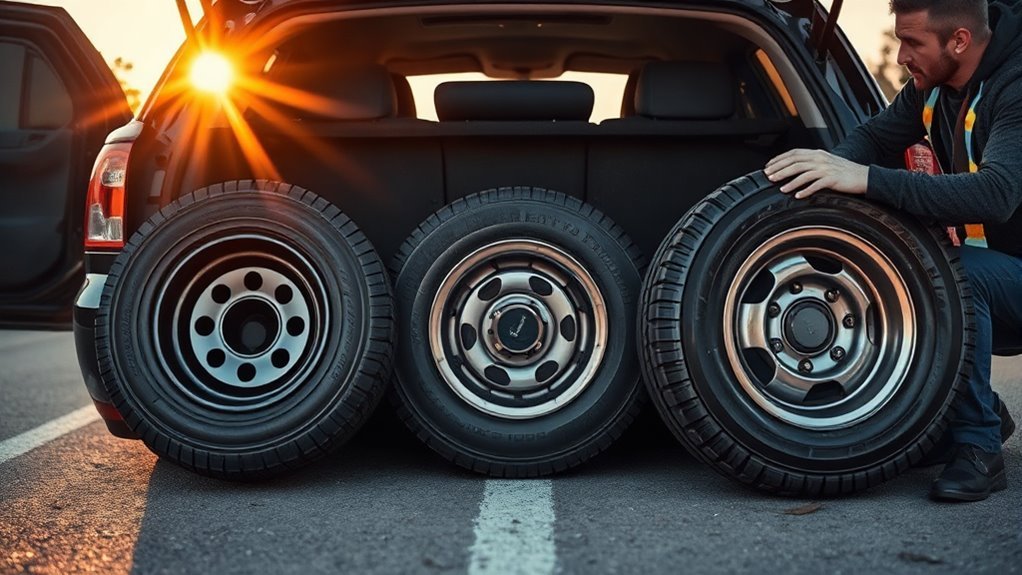
Before you go any farther, check what kind of spare sits in your trunk or under the vehicle. Your car may carry a full-size spare, a compact temporary spare, or run-flat support instead of a separate tire. Each setup changes what you can safely do after a flat.
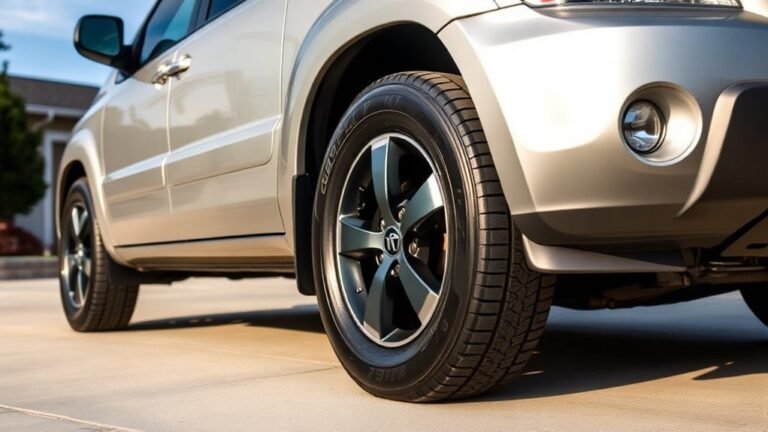
A full-size spare matches your regular tire more closely, so it offers the most familiar handling and ground clearance. A compact spare, often called a donut, is smaller, lighter, and easier to store, but it’s built only for short-term use.
Some trucks and SUVs use a matching wheel and tire, while some cars include an inflator kit instead of any spare at all. Be sure to read the sidewall, your owner’s manual, and any warning labels so you know exactly what you’re working with.
How Fast Can You Drive on a Spare Tire?

You should keep your speed within the limit listed for your spare tire, which is often no more than 50 mph. If you drive faster, you increase the risk of poor handling, longer stopping distances, and tire failure.
Knowing these limits helps you stay safer until you can replace the spare with a full-time tire. So, it’s really important to take it easy and not push your spare too hard.
Recommended Speed Limits
Although a spare tire can get you back on the road, it isn’t built for normal highway driving. You should usually keep your speed at or below 50 miles per hour, since most temporary spares are designed with that limit in mind.
Some manufacturers allow slightly different speeds, so check the label on the tire or your owner’s manual first.
If you can stay on slower local roads instead of faster highways, that’s often the better choice. You’ll have an easier time maintaining a steady pace without pushing the spare beyond its intended use.
Don’t assume every spare follows the same guideline, especially if your vehicle uses a full-size spare. A full-size spare may match your regular tires more closely, but you should still confirm the recommended limit before driving farther.
Risks Of Speeding
If you drive faster than the spare tire’s rated limit, you increase the chances of overheating, poor handling, and even tire failure. A compact spare isn’t built like a full-size tire, so extra speed creates more heat and stress than it can safely handle.
That can weaken the tire’s structure, reduce traction, and make sudden braking or cornering more dangerous. You really want to avoid pushing it too hard.
You also put added strain on your suspension, differential, and braking system when one tire spins differently at higher speeds. If the spare loses air or blows out, you could lose control, especially in rain or heavy traffic.
Even if nothing happens immediately, speeding shortens the spare’s usable life. So, treat it as a temporary solution, keep your speed down, and replace or repair your regular tire as soon as possible.
Why Do Temporary Spare Tires Have Limits?
You can’t treat a temporary spare like a regular tire because it’s built for short-term use only. Its speed and distance limits protect you from reduced traction, braking, and handling as you make your way to a repair shop.
Those restrictions come from design and safety tradeoffs. Since the tire is smaller, lighter, and less durable than a full-size replacement, it can’t perform the same way. So, it’s best to use it just to get where you need to go safely.
Speed And Distance Restrictions
Because temporary spare tires are built as short-term backups, they come with strict speed and distance limits to reduce the risk of failure and protect your vehicle’s handling. You should usually stay under 50 mph, though your owner’s manual may list a lower maximum.
Exceeding that limit can make braking, cornering, and emergency maneuvers less predictable. So, it’s really important to keep your speed in check.
You should also keep your trip short. Many manufacturers recommend driving no more than 50 to 70 miles before replacing the damaged tire with a full-size match.
If you keep going beyond that range, you increase wear on the spare and put extra stress on components that rely on balanced tire size and traction. Drive cautiously, avoid sudden inputs, and head straight to a repair shop instead of treating the spare like a normal tire.
Design And Safety Tradeoffs
Although a temporary spare can get you back on the road, its limits come from intentional design tradeoffs. Carmakers give you a compact tire so you save trunk space, reduce vehicle weight, and keep costs down.
Those benefits come with compromises that affect how your car handles, brakes, and grips the road.
- You get a smaller tread patch, so traction drops, especially in rain or hard turns.
- You carry less rubber and structure, so heat builds faster at highway speeds.
- You use a lighter wheel and tire, so durability and load capacity stay limited.
- You often mismatch tire diameter or tread design, so ABS, stability control, and differential behavior can change.
That’s why you should treat a temporary spare as a short-term backup, not a normal replacement for everyday driving.
Signs Your Spare Tire Is No Longer Safe
Often, a spare tire looks fine at a glance, but age, damage, and poor storage can make it unsafe long before you need it. Check the sidewall for cracks, dry rot, bulges, cuts, or exposed cords.
If the tread is worn unevenly or looks hardened and shiny, traction may be compromised. You should also inspect the valve stem for splits or brittleness.
Don’t ignore age. Even an unused spare can degrade after six to ten years, especially if heat and sunlight reach it.
Look for rust on the wheel, bent rims, or signs that the tire sat underinflated for months. If it won’t hold pressure, smells strongly of rubber decay, or shows repairs in the sidewall, you shouldn’t trust it in an emergency at all.
What to Do After a Spare Tire Change
Once you’ve confirmed your spare is safe enough to use, your next step is to treat it as a temporary fix, not a long-term solution. Don’t keep driving like nothing happened.
Treat a spare tire as a temporary backup, not a reason to keep driving like everything is normal.
A spare changes how your vehicle handles, brakes, and corners, so you should stay cautious and plan your next move right away.
- Check the spare’s pressure and look for obvious damage before getting back on the road.
- Drive below the recommended speed limit for spare tires and avoid hard braking or sharp turns.
- Head to a tire shop or repair center as soon as possible to repair or replace your regular tire.
- Ask a technician to inspect the wheel, alignment, and remaining tires so you don’t miss a bigger problem.
That approach keeps you safer and helps prevent more expensive damage later.
Frequently Asked Questions
Can You Put a Spare Tire on the Front Axle?
Yes, you can put a spare tire on the front axle, but you shouldn’t unless necessary.
You’ll handle better if you move a full-size rear tire forward and place the spare on the rear.
Do Spare Tires Need Different Air Pressure Than Regular Tires?
Yes, spare tires often need different air pressure than regular tires. You should check the sidewall or your vehicle manual.
That’s because compact spares usually require much higher PSI. So, don’t just assume the pressure should match your regular tires.
Can You Drive in Rain or Snow on a Spare Tire?
Yes—like skating on glass, you can drive in rain or snow on a spare tire, but you shouldn’t unless necessary.
You’ll get less traction and control, so slow down, avoid sudden moves, and replace it quickly.
Will Using a Spare Tire Affect ABS or Traction Control?
Yes, using a spare tire can affect your ABS and traction control because its size or grip may differ from your regular tires.
You might notice warning lights pop up, or feel reduced stability.
Braking and acceleration responses could also change a bit when you’re driving.
It’s pretty common, so just be aware and take it easy until you can get your regular tire fixed.
Can You Reuse a Temporary Spare Tire Multiple Times?
Yes—like a Band-Aid for your car, you can reuse a temporary spare tire multiple times if it’s undamaged and properly inflated.
But you shouldn’t rely on it often because it wears quickly and limits handling.
Think of it as a short-term fix, not a permanent solution.
Conclusion
A spare tire gets you moving again, but it also reminds you that quick fixes aren’t meant to carry you forever. If you’ve had to pull over, slow down, and swap tires, that’s no coincidence—it’s a cue to handle the real problem before it grows.
Drive only as far and as fast as your spare allows, then replace or repair your regular tire as soon as you can. Remember, spare tires are designed for short-term use, not long-distance driving.
So, how far can you drive with a spare tire? Typically, it’s best to keep it under 50 to 70 miles and avoid speeds over 50 mph. Making safe choices now helps prevent bigger trouble later. Always prioritize getting your regular tire fixed or replaced promptly to stay safe on the road.