How to Check Tire Tread With a Penny in 7 Steps
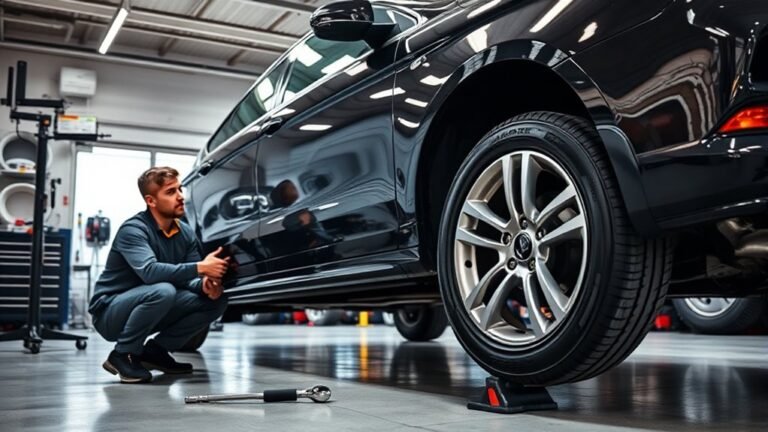
Use a U.S. penny with Lincoln’s head visible, a flat, well-lit spot, and check all four tires. This simple tire tread check can help you see if your tires are still safe to drive on or if it’s time to replace them.
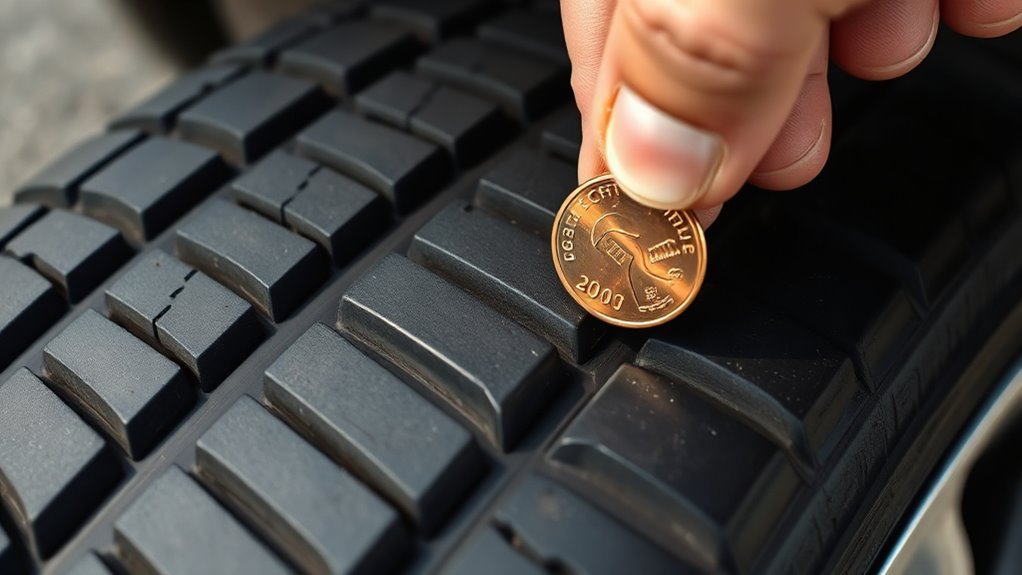
Hold the penny by its edges and place it head-down into a tread groove near the center. Push it straight down, then look at eye level.
If the top of Lincoln’s head shows, your tread is getting low and you should plan for replacement soon. Check multiple grooves for uneven wear, and there’s more to know if you keep going.
Key Takeaways
- Use a U.S. penny with Lincoln’s head facing down in a tread groove near the tire center.
- Push the penny straight down until it stops, without forcing or tilting it.
- Then, read the coin at eye level: if Lincoln’s head is visible, the tread is getting too shallow.
- Make sure to check several spots on each tire, including the inner and outer edges. This helps spot uneven wear.
- If you see Lincoln’s head, plan to replace your tires soon. Also, inspect for cracks, bulges, or exposed cords while you’re at it.
What You’ll Need for the Penny Test
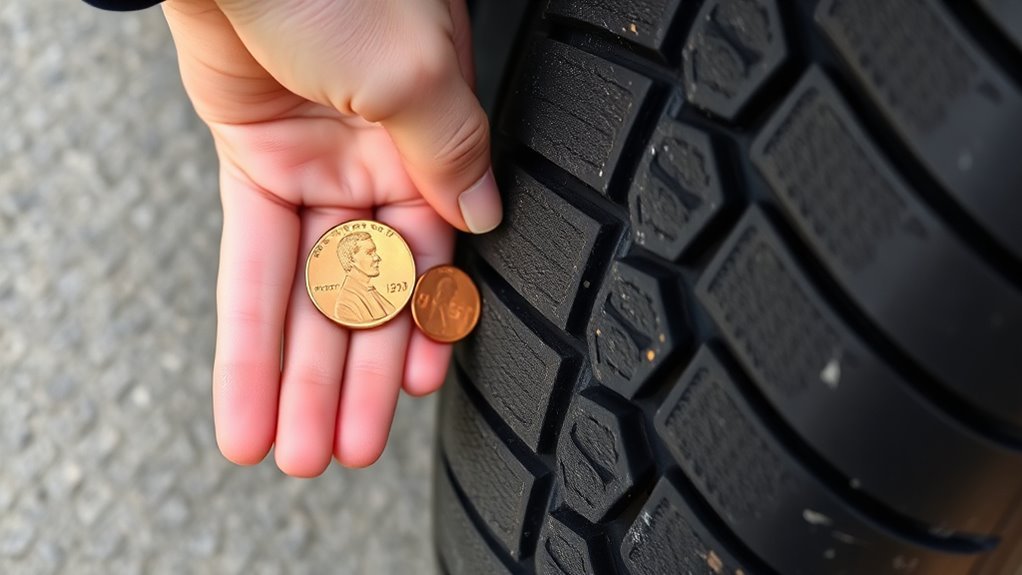
For the penny test, you only need a U.S. penny and a safe, flat place to check your tires. You can use a driveway, garage floor, or parking lot with good light so you can see clearly.
You only need a U.S. penny and a safe, flat place with good light to check your tires.
If you want, keep a paper towel nearby to wipe off dirt before you handle the coin. You should also wear shoes and avoid checking tires in traffic or on a slope.
No special tools, gauges, or apps are necessary for this quick check. Just make sure your penny has Lincoln’s head facing the right way before you begin.
Once you’ve gathered these simple items, you’re ready to assess your tread without spending money or time on complicated equipment. It’s super easy!
How to Check Tire Tread With a Penny
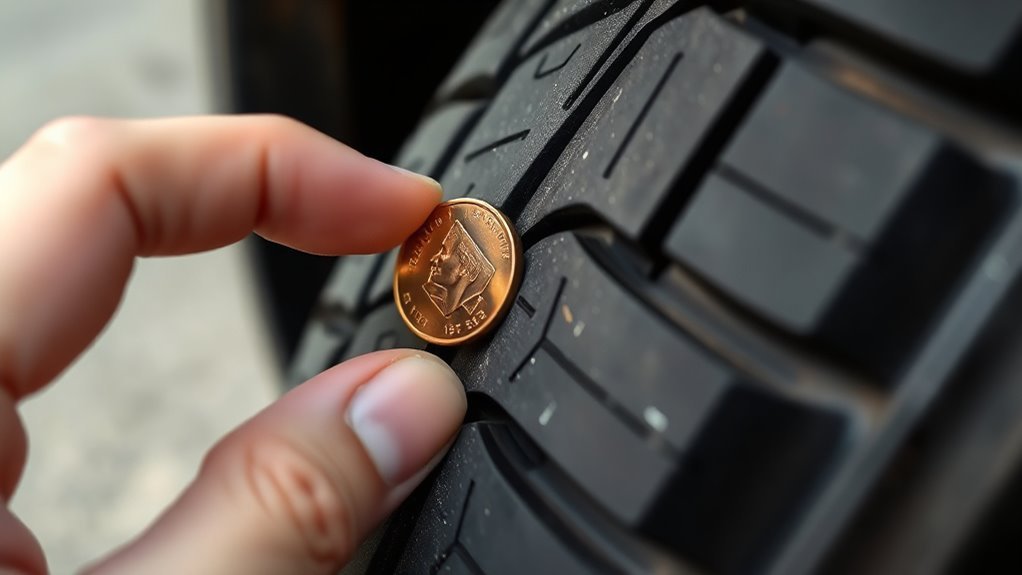
Place the penny into one of your tire’s tread grooves with Lincoln’s head facing down, then look at how much of his head is visible. If you can see the top of Lincoln’s head, your tread is getting low and you should plan for replacement soon.
If the tread covers part of his forehead, you’ve got more usable depth left. Check several spots on each tire, because wear isn’t always even.
- Use bright daylight.
- Inspect both front and rear tires.
- Repeat on inner and outer edges.
- Compare all four tires.
- Note any bald patches.
You’re only measuring tread depth, so don’t force the coin or dig it in. A quick, consistent check helps you catch wear early and drive with more confidence.
Place the Penny in the Tread Groove
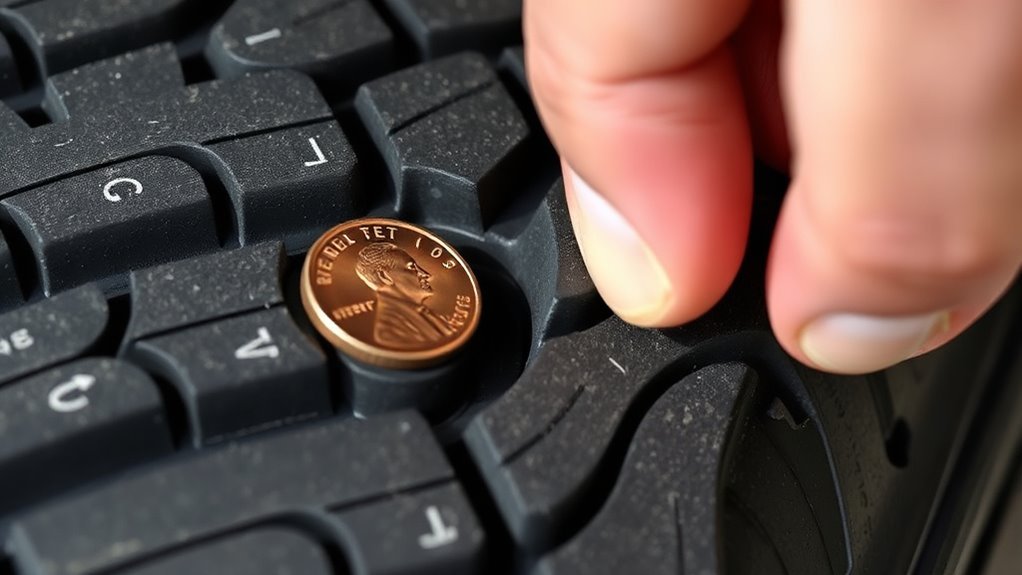
Now that you know what to look for, hold a penny by the edges and slide it into a tread groove near the center of the tire. Choose a groove that looks deep and clean, not one packed with dirt or pebbles.
Push the penny straight down until it stops, keeping it upright so it sits flat against the rubber. If the groove is shallow or uneven, try another spot nearby to get a better read.
Don’t force the coin into the tire; let the tread guide it naturally. A steady hand helps you avoid tilting the penny, which can throw off your check.
Once it’s seated, keep it in place long enough to inspect the next step carefully and confidently.
Use Lincoln’s Head to Judge Tread Depth
Look closely at Lincoln’s head once the penny is in the groove: if you can see the top of his head, the tread is getting too shallow. You’re using his portrait as a quick gauge, and the result is easy to read.
If more of Lincoln stays hidden, your tread still has usable depth.
- Eyes visible? Check again.
- Hairline covered? Better.
- Head showing? Replace soon.
- Press the penny straight down.
- Read the groove at eye level.
This simple test helps you judge wear without tools. It won’t replace a professional inspection, but it gives you a fast snapshot of tire condition.
When the tread can’t cover Lincoln’s head, you should start planning for new tires.
Check Tire Tread on All Four Tires
After checking Lincoln’s head, move on and inspect all four tires, because tread wear doesn’t always happen evenly. Place the penny in several grooves on each tire, not just one spot, and check the front, back, left, and right sides of the vehicle.
You want the same quick test on every tire so you can compare them fairly. If one tire looks closer to the wear line than the others, note it and keep checking the rest.
Also, make sure you test both shoulders and the center tread area on each tire. Taking a few minutes now helps you get a complete picture of your tire condition, so you can make smarter decisions about rotation, replacement, and safe driving.
Spot Uneven Tire Wear and Other Problems
If one tire wears faster than the others, or you notice bald spots, feathering, or edge wear, that can point to alignment, inflation, suspension, or rotation problems.
You can catch these clues while checking tread with a penny and inspecting each tire closely. Look for:
- one side worn smoother
- center wear from overinflation
- both edges worn from underinflation
- cupping or scallops from suspension issues
- feathered tread from poor alignment
Run your hand lightly across the tread to feel for rough, uneven patterns. Compare all four tires, including the spare if you use it.
If you spot a problem, keep an eye on it and track how fast it changes. That way, you can tell normal wear apart from something that’s actually hurting your tires.
Know When to Replace Your Tires
When the tread gets too low, it’s time to replace the tire, even if it still looks okay at a glance. You shouldn’t wait for a blowout or lose grip in rain before acting.
If the penny test shows Lincoln’s head is visible, your tread is too shallow for safe driving. Replace tires sooner if you see cracks, bulges, exposed cords, or frequent air loss.
You also need new tires if they’re older than six years, even if the tread seems decent, because rubber hardens with age. Match replacements by axle when you can, and keep tire sizes and load ratings correct.
New tires improve braking, steering, and wet-road control, so don’t gamble with worn rubber when a fresh set can protect you and your passengers. It’s worth the peace of mind!
Frequently Asked Questions
How Often Should I Check My Tire Tread?
You should check your tire tread monthly and before long trips. You’ll catch wear early, stay safer, and avoid surprises.
If you drive often or in rough conditions, inspect it even more frequently. It’s just a quick check that can save you a lot of trouble down the road.
Does the Penny Test Work on Winter Tires?
Yes, it can work, but you’ll want a better check too: winter tires need deeper tread for snow grip.
If you can see Lincoln’s head clearly, your winter tires likely need replacement.
Can Tire Tread Be Checked Without a Penny?
Yes, you can check tire tread without a penny. You can use a tread depth gauge, look for wear bars, or compare tread across grooves.
Doing this helps you spot uneven wear. That way, you’ll know exactly when it’s time for a replacement.
What Is the Legal Minimum Tire Tread Depth?
You must follow local laws, but most U.S. states require at least 2/32 inch tread depth. You should check your tires regularly, because worn tread reduces traction, especially in rain and snow.
It’s super important to keep an eye on your tread depth. When it gets too low, your tires just don’t grip the road like they should, which can be dangerous. So, a quick check now and then can really help keep you safe out there.
Should I Check Tire Tread After Replacing Tires?
Yes, you should. Like a quick encore, check new tire tread after replacement to confirm even wear, proper inflation, and correct installation.
You’ll catch problems early and keep your ride safer, smoother, and more confident.
Conclusion
Now you’ve got the penny test in your back pocket, so you can keep an eye on your tires like a hawk. Just press Lincoln into the tread, check each groove, and watch for uneven wear.
If that penny starts showing too much of its face, your tires may be skating on thin ice. Don’t wait until the rubber wears thin—replace worn tires before the road turns rough and your grip slips away.
Regularly checking tire tread depth with a penny is a simple yet effective way to ensure your safety on the road. Keeping your tires in good condition helps maintain traction, prevents accidents, and extends the life of your tires. So next time you grab a penny, remember it’s not just spare change—it’s a quick test to keep your tires road-ready and your drives smooth.