How to Measure Tire Tread Depth in 3 Steps
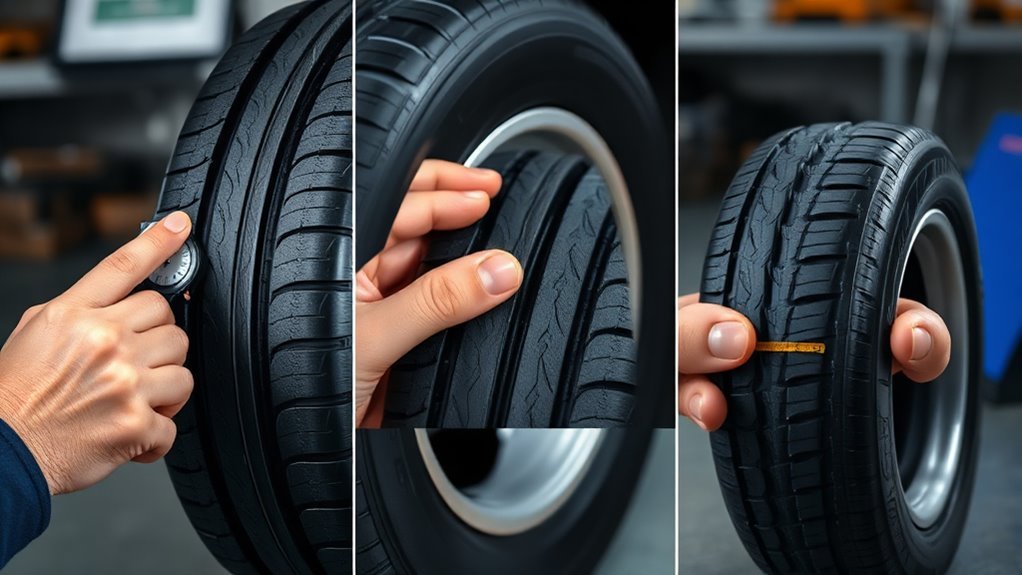
To measure tire tread depth in 3 simple steps, start by locating the deepest groove on your tire. Make sure to clean off any dirt or debris from that area first. This helps you get an accurate measurement and ensures your tires are safe for driving.
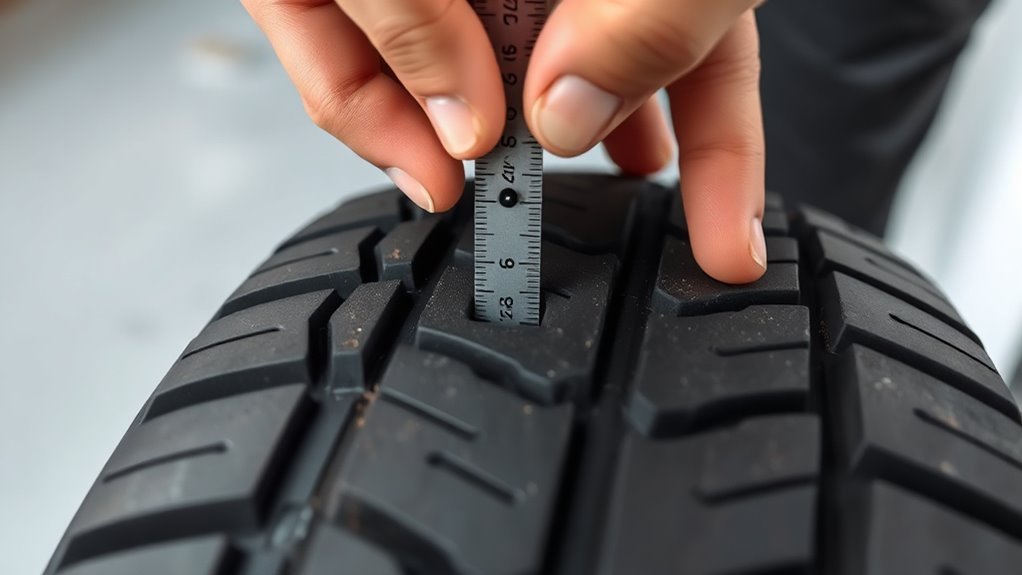
Next, take a tread depth gauge and place it straight down into the groove. Press it until the shoulder of the gauge rests flat on the tread blocks. Then, check the reading, which will be in 32nds of an inch or millimeters. It’s best to check several spots on each tire to get a full picture of their condition.
Finally, compare the results from all the spots you measured. This helps you understand if your tires are wearing evenly or if there might be a problem. If you want, you can also learn how to spot uneven wear and figure out when it’s time to replace your tires.
Key Takeaways
- Use a tire tread depth gauge and place the probe into the deepest groove on the tread. Press the gauge straight down until the shoulder sits flat on the tread blocks.
- Read the measurement, then repeat in several spots across each tire for accuracy. Keep the gauge steady to avoid tilting, and wait for digital readings to lock in.
- Compare results across all tires for uneven wear. Replace tires that measure below 2/32 inch.
What Tire Tread Depth Means
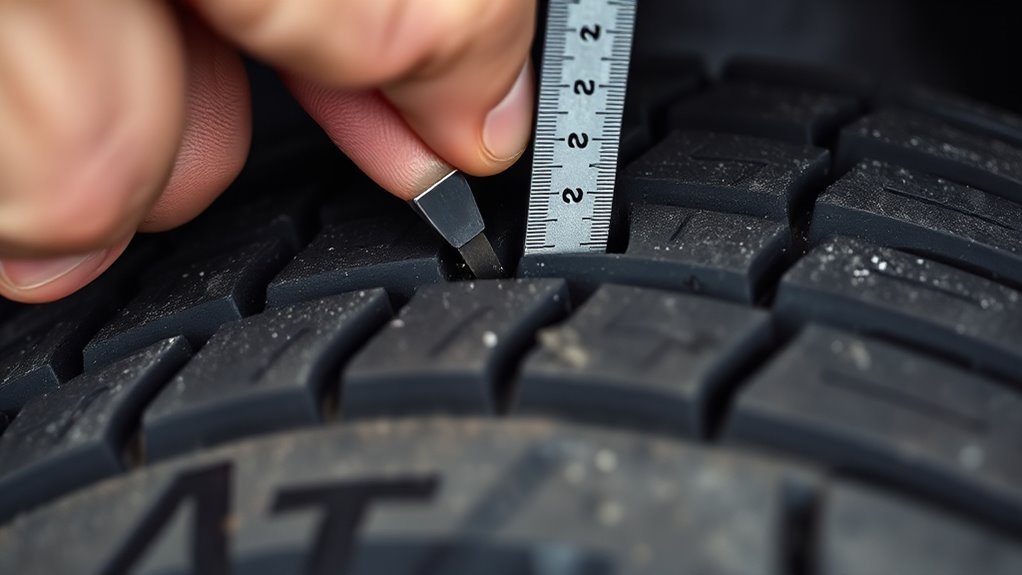
Tire tread depth is the amount of rubber between the top of the tread grooves and the bottom of the tire’s surface pattern. You use this measurement to understand how much tread remains on your tires.
Deeper tread helps your tires grip wet roads, channel water away, and keep better contact with the pavement. As the tread wears down, your tires lose traction and become more likely to slide, especially in rain or snow.
You should think of tread depth as a simple sign of tire health. When it gets low, your tires can’t perform as well, and stopping distances often increase.
Measure Tire Tread Depth With a Gauge
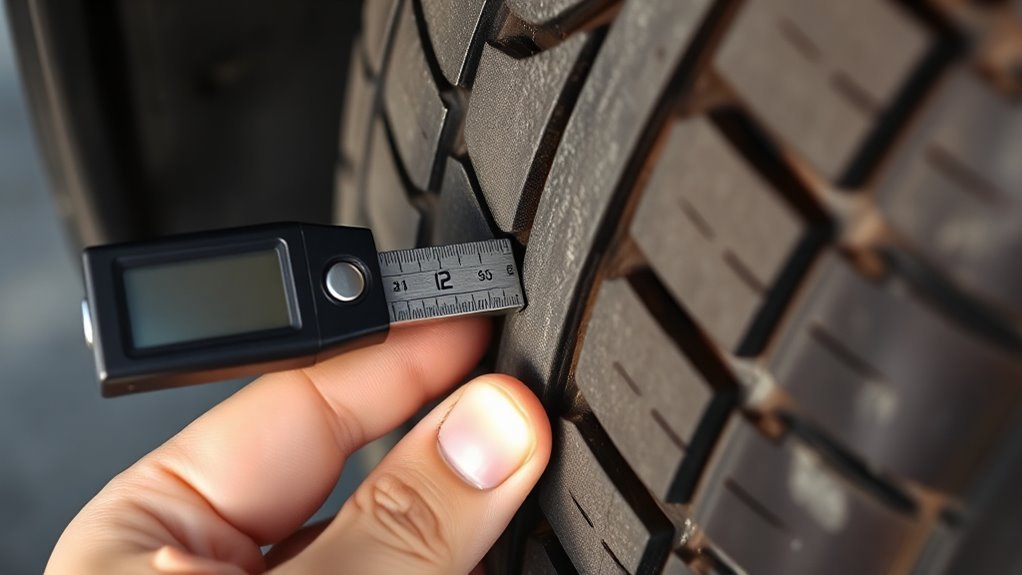
Grab a tread depth gauge and place it into the deepest groove of your tire to get an accurate reading. Push the probe straight down until the shoulder of the tool rests flat on the tread blocks.
Read the number shown on the gauge, then repeat the process in several spots across each tire. This helps you spot uneven wear and get a better overall picture of tread condition.
Keep the gauge steady so you don’t tilt it and change the result. If you’re using a digital gauge, wait for the display to lock in.
For a manual gauge, note the measurement in 32nds of an inch or millimeters. Compare the readings from all four tires so you can track tread depth consistently and accurately.
Know When to Replace Your Tires
If your tread depth is below 2/32 of an inch, it’s time to replace the tire. Worn tread can’t grip wet roads or shed water effectively.
Tread below 2/32 inch means it’s time for new tires—worn tread can’t grip wet roads well.
Don’t wait for a blowout or a skid to act. Check all four tires, plus the spare, and look for uneven wear, cracks, bulges, or exposed cords.
If one tire wears faster than the others, you might need an alignment, rotation, or suspension repair before putting on new ones. It’s better to fix those issues first.
You should replace tires sooner if you drive often in rain, snow, or heat. That’s because performance drops as the rubber ages.
Also, keep an eye on the tire’s age. Even if the tread looks good, most tires need replacement after about six years.
When in doubt, just have a trusted tire professional take a look. They can help you decide if it’s time for new tires.
Frequently Asked Questions
Can I Measure Tire Tread Depth Without a Dedicated Gauge?
Yes, you can use a penny or quarter to check tread depth. Insert it into the grooves; if you can see the top of the head or Washington’s head, your tires may need replacement soon.
It’s a quick and easy way to get a rough idea of your tire’s condition without any special tools. Just remember, it’s not as precise as a dedicated gauge, but it works in a pinch!
Does Tire Tread Depth Vary Across Different Areas of One Tire?
Yes—like a landscape worn by weather, your tire can show uneven tread depth.
You’ll often find more wear in the center, edges, or one side, depending on inflation, alignment, driving habits, and rotation.
What Happens if My Tires Have Uneven Tread Wear?
Uneven tread wear can hurt your grip, increase braking distance, and cause vibrations or pulling. It’s not just annoying—it can actually be dangerous.
You’ll also wear tires faster, which means more frequent replacements. Plus, you might need alignment or suspension repairs to fix the underlying issue promptly. Better to catch it early!
How Often Should I Check My Tire Tread Depth?
You should check your tire tread depth monthly, like checking a heartbeat. You’ll spot wear early, catch uneven wear, and stay safer in rain or snow.
Also, check before long trips and after rough driving. It’s a simple habit that can save you a lot of trouble down the road.
Can Weather Affect Tire Tread Depth Readings?
Yes, weather can affect your tire tread depth readings. You’ll get more accurate results on dry, clean tires.
Wet, muddy, or icy tread can hide grooves and make your measurement seem deeper or shallower than it is. So, it’s best to check when your tires are dry and clean for the most reliable reading.
Conclusion
By checking your tread depth, you’re giving your tires a voice before the road does. A simple gauge can tell you if your tires still have grip or if they’re wearing thin like a favorite pair of shoes.
Keep an eye on that tread, and you’ll stay safer through rain, heat, and rough pavement. When the grooves fade, don’t wait—replace them before traction slips away like sand through your fingers.
Measuring tire tread depth is a quick way to ensure your tires have enough grip for safe driving. Regularly checking tread depth helps prevent accidents caused by worn tires, especially in wet or slippery conditions. So, grab a tread depth gauge and make it part of your car maintenance routine. Your safety on the road depends on it!