How Often Should You Rotate Your Tires?
You should rotate your tires every 5,000 to 7,500 miles to keep them wearing evenly and driving safely. Regular tire rotation is key to maintaining good tire health, improving handling, and ensuring better traction on the road. It also helps boost fuel efficiency, which is a nice bonus.
If you do a lot of stop-and-go driving or carry heavy loads, stick closer to 5,000 miles. For mostly highway driving, you can stretch it to 7,500 miles. Rotating tires regularly helps improve handling, traction, and fuel efficiency while extending your tire’s life.
Keep an eye out for signs of uneven wear, and learn the best patterns and tips to make the process easier. This way, you’ll get the most out of your tires and stay safe on the road.
Key Takeaways
- Rotate tires every 5,000 to 7,500 miles, depending on driving conditions and vehicle type.
- Shorter intervals near 5,000 miles suit stop-and-go driving or heavy loads.
- Follow your vehicle owner’s manual for model-specific rotation frequency and patterns.
- Consistent rotations help ensure even wear, better handling, and improved safety.
- Also, check your tires visually and pay attention to vibrations to see if early rotation is needed.
How Often Should You Rotate Your Tires for Best Results?
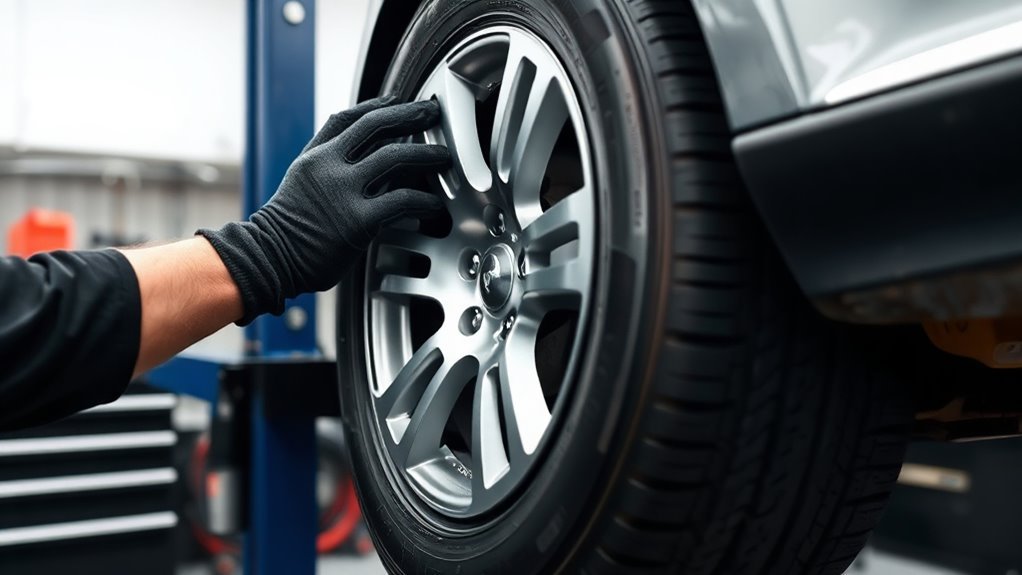
You should typically rotate your tires every 5,000 to 7,500 miles to maintain even wear and extend their lifespan. Regular rotations prevent uneven tread wear caused by differences in wheel alignment, suspension, and driving habits.
If you drive mainly in stop-and-go traffic or carry heavy loads, you might want to rotate your tires closer to every 5,000 miles for best results. On the other hand, if you mostly cruise on highways, stretching to 7,500 miles between rotations is usually fine.
Keep in mind that your vehicle’s owner manual often provides specific recommendations tailored to your model, so it’s a good idea to check that as well. Staying consistent with tire rotations helps improve safety, fuel efficiency, and overall tire performance.
Tire Rotation Patterns: Which to Use and When

Choosing the right tire rotation pattern depends on your vehicle type and tire configuration. If you drive a front-wheel-drive car, try the “forward cross” pattern, where the front tires move straight back and the rear tires cross to the front.
Select the right tire rotation pattern based on your vehicle type for optimal tire wear and performance.
For rear-wheel or all-wheel-drive vehicles, the “rearward cross” pattern works best. This swaps the rear tires straight forward and crosses the front tires back.
If you have directional tires, stick to the “front-to-back” pattern. This keeps tires on the same side to maintain proper rotation direction.
For staggered setups (different front and rear tire sizes), rotation options might be limited. So, be sure to check your owner’s manual.
Following the correct pattern guarantees even wear and helps you get the most from your tires. It’s a simple step that can save you money and keep your ride smooth!
Why Rotate Tires? Benefits for Lifespan and Safety
You want your tires to wear evenly, and rotating them helps achieve that by balancing the tread use across all tires. This even wear not only extends the life of your tires but also improves your vehicle’s handling and safety on the road.
Keeping your tires in good shape means better traction and a smoother, safer drive every time. It’s a simple step that really makes a difference when you’re out on the road.
Even Tire Wear
Regularly rotating your tires promotes even tire wear, which directly extends their lifespan and enhances your vehicle’s safety. When you don’t rotate your tires, the ones on certain positions—like the front tires on a front-wheel-drive car—wear out faster due to steering, braking, and power delivery demands.
By swapping tires from front to back and side to side, you guarantee that wear spreads evenly across all four tires. This balance prevents premature tire replacement and helps maintain consistent traction and handling.
Uneven wear can lead to vibrations, noise, and reduced performance, so rotating your tires regularly keeps your ride smooth. Ultimately, even tire wear saves you money and keeps your tires functioning efficiently longer.
Enhanced Driving Safety
Frequently rotating your tires plays a crucial role in enhancing driving safety by maintaining peak traction and control.
When your tires wear evenly, you reduce the risk of unexpected skids and improve handling, especially in wet or slippery conditions.
Here’s why you should rotate your tires regularly:
- Improved Traction: Even tread wear guarantees better grip on the road.
- Enhanced Stability: Balanced tires keep your vehicle steady during turns and braking.
- Reduced Blowout Risk: Worn tires are more prone to sudden failure.
- Optimized Braking: Consistent tread depth shortens stopping distances.
What Happens If You Don’t Rotate Your Tires Regularly
If you don’t rotate your tires regularly, you’ll notice uneven tire wear that can shorten their lifespan. This uneven wear can also affect your vehicle’s handling and braking performance.
Ignoring tire rotation puts your safety on the line every time you drive. It’s a simple step that makes a big difference!
Uneven Tire Wear
Neglecting to rotate your tires can quickly cause uneven wear, leading to reduced traction and compromised safety. When you skip tire rotations, certain tires bear more weight and stress, wearing down faster than others.
This imbalance affects your vehicle’s handling and may result in costly repairs. Here’s what uneven tire wear can cause:
- Bald spots on tires that reduce grip, especially in wet conditions.
- Vibrations while driving, making your ride uncomfortable.
- Increased risk of blowouts due to weakened tire areas.
- Decreased fuel efficiency as your vehicle works harder to maintain traction.
Rotating your tires regularly helps distribute wear evenly. It extends tire life and keeps your driving smooth and predictable. Trust me, it’s an easy way to avoid bigger headaches down the road.
Reduced Vehicle Safety
When you skip regular tire rotations, your vehicle’s safety takes a serious hit. Uneven tire wear can cause poor traction, especially in wet or slippery conditions, increasing your risk of skidding or hydroplaning.
Tires worn unevenly also reduce your car’s handling and braking performance, making it harder to control during sudden stops or sharp turns. This can lead to dangerous situations on the road.
Additionally, uneven wear may cause vibrations, which can affect your steering and overall driving comfort. By rotating your tires regularly, you make certain even wear, maintain peak grip, and keep your vehicle stable and responsive.
Neglecting this simple maintenance step compromises your safety and could result in costly repairs or accidents down the line. So, it’s definitely worth the effort to keep up with tire rotations.
How to Know When It’s Time for Tire Rotation
You should regularly check your tires for signs of uneven wear to know when it’s time for a rotation. Uneven tread wear can lead to handling problems and unsafe driving conditions.
Here’s how to tell if it’s time:
- Visual Inspection: Look for uneven tread depth across your tires.
- Vibration While Driving: Noticeable vibrations might mean uneven wear.
- Mileage Check: Rotate tires every 5,000 to 7,500 miles as a general rule.
- Warning from a Mechanic: Trust professional advice during routine maintenance.
Practical Tips for Easy and Effective Tire Rotation
Regularly rotating your tires can markedly extend their lifespan and improve your vehicle’s performance. To do it easily and effectively, start by checking your owner’s manual for the recommended rotation pattern—usually front-to-back or a cross pattern.
Make sure your car is parked on a flat surface and engage the parking brake. Use a jack to lift the vehicle and safely secure it with jack stands.
Before removing tires, mark their current positions with chalk or tape to keep track. When swapping tires, tighten lug nuts in a star pattern to guarantee even pressure.
Don’t forget to check tire pressure after rotation and adjust as needed. Finally, note the date and mileage to stay on schedule for your next rotation.
Frequently Asked Questions
Can I Rotate Tires on a Front-Wheel-Drive Car Myself?
Yes, you can rotate tires on a front-wheel-drive car yourself. Just follow the correct rotation pattern, use proper tools, and make sure the lug nuts are tightened securely.
Always consult your owner’s manual for specific guidelines. It’s a pretty straightforward job once you get the hang of it!
Does Tire Rotation Affect My Car’s Warranty?
Picture your warranty as a grumpy cat—ignore tire rotation, and it might just scratch your coverage.
You won’t void it by rotating tires; in fact, doing so keeps your car purring and warranty happy.
How Do Different Tire Types Impact Rotation Frequency?
Different tire types impact rotation frequency because performance and directional tires wear unevenly. You’ll need to rotate directional tires less often but rotate performance tires more frequently to maintain even tread and peak handling.
Can Tire Rotation Improve Fuel Efficiency?
Like a well-tuned orchestra, rotating your tires keeps everything balanced. And yes, it can improve your fuel efficiency by reducing uneven wear and rolling resistance.
Should I Rotate Tires in Winter or Summer Only?
You should rotate your tires regularly, regardless of winter or summer. Rotating every 5,000 to 7,500 miles helps guarantee even wear.
It improves safety and extends tire life, no matter the season you’re driving in. So, don’t skip it just because it’s cold or hot outside!
Conclusion
Think of your tires like the pages of a well-loved book—each one deserves equal use to keep the story smooth and lasting. By rotating them regularly, you’re turning those pages evenly, preventing worn-out spots that could interrupt your journey.
Skipping this simple act is like skipping chapters, risking safety and performance. So, keep your drive steady and your tires balanced—because every mile deserves a well-told story. Regular tire rotation helps extend tire life, improve traction, and maintain even wear.
In short, rotating your tires every 5,000 to 7,500 miles is key to safe driving and maximizing tire performance. Don’t miss out on this easy maintenance step—your tires and wallet will thank you!