How Often Should I Get My Tires Rotated?
You should rotate your tires every 5,000 to 7,500 miles, or follow your owner’s manual if it gives a specific interval. Regular tire rotation is key to keeping your tires in good shape and ensuring they wear evenly. It’s easiest to pair rotations with oil changes so you don’t forget.
Rotate them sooner if you tow, drive rough roads, commute in stop-and-go traffic, or notice uneven tread wear, vibration, or pulling. Keeping up with rotations helps your tires last longer and maintain predictable handling. There are a few key exceptions worth knowing, but generally, sticking to this schedule will keep your ride smooth and safe.
Key Takeaways
- Rotate tires every 5,000 to 7,500 miles, or follow your owner’s manual or tire manufacturer’s recommended interval. It’s really about what works best for your specific vehicle and tires.
- Pair tire rotations with oil changes or other routine service to make the schedule easier to remember and maintain. That way, you won’t forget when it’s time for the next one.
- Rotate sooner if you tow, drive long distances, commute in stop-and-go traffic, or regularly travel on rough roads. These conditions can wear tires unevenly and faster than usual.
- Check monthly for uneven tread wear, vibration, pulling, or road noise, which can signal you need an earlier rotation. Catching these signs early helps keep your ride smooth and safe.
- Regular rotations promote even tread wear, better handling, longer tire life, and lower replacement costs. So, staying on top of this simple maintenance really pays off in the long run!
How Often Should You Rotate Your Tires?
Typically, you should rotate your tires every 5,000 to 7,500 miles. Though, the right interval really depends on your vehicle, tire type, and driving habits.
That range works for most cars, trucks, and SUVs. It helps your tires wear more evenly across all four positions.
You can also line up rotation with routine service, especially oil changes. This makes the schedule easier to remember.
If your owner’s manual lists a specific mileage, follow that recommendation first. Staying on schedule improves tread life and maintains steadier handling.
It can also help you avoid replacing tires sooner than necessary. Plus, it gives your technician a chance to inspect tread depth and catch uneven wear early.
When you keep up with rotations, you protect your investment. You also help your vehicle perform more consistently on the road.
What Affects Your Tire Rotation Schedule?
Your tire rotation schedule depends on how you drive, what you drive, and where you drive. Hard braking and fast cornering can wear tires unevenly.
Your vehicle and tire type also play a role. Plus, whether you have front-, rear-, or all-wheel drive can change the wear patterns.
Rough roads, extreme temperatures, and wet or snowy conditions? They can all make you rotate your tires sooner than usual. So, it really pays to keep an eye on these factors.
Driving Habits Matter
Even careful maintenance won’t override the fact that how you drive plays a big role in how often you should rotate your tires. If you brake hard, corner fast, or accelerate aggressively, you put uneven stress on the tread.
Frequent stop-and-go traffic can also speed up wear, especially during daily commuting. So, pay attention to habits like these:
- Hard braking grinds tread faster.
- Quick acceleration increases wear.
- Fast cornering stresses tire edges.
- Heavy commuting adds repeated friction.
- Long highway trips can wear centers.
If your routine includes any of those patterns, inspect your tires more often and rotate them sooner than the standard interval. Consistent, smoother driving helps your tires wear more evenly, improves traction, and may extend their usable life between rotations over time.
Vehicle And Tire Type
Driving style affects wear, but your vehicle and tire setup also shape how often you should rotate them. Front-wheel-drive vehicles usually wear front tires faster because those tires handle steering, braking, and power delivery.
Rear-wheel-drive models shift more workload to the rear, while all-wheel-drive systems can demand stricter rotation intervals to protect traction balance. So, your ride’s setup really makes a difference.
Tire type matters too. Directional tires can only swap front to back on the same side, which limits rotation patterns.
Staggered setups, with different tire sizes front and rear, may prevent rotation altogether. High-performance tires often use softer compounds that wear faster, so you’ll need closer inspections.
If you drive a truck or SUV, your heavier vehicle can increase load-related wear. Always check your owner’s manual and tire maker’s guidance first — it’s the best way to keep things rolling smoothly.
Road And Climate Conditions
Because road surfaces and weather change how tires grip and wear, they can shift your rotation schedule more than you might expect. If you drive on rough pavement, gravel, steep hills, or roads filled with potholes, your tires can wear unevenly faster.
Extreme heat can soften rubber, while freezing temperatures can reduce flexibility and traction, changing wear patterns. Wet roads also increase stress during braking and cornering.
- Rough roads can scrub tread faster.
- Potholes can knock alignment off slightly.
- Hot climates can accelerate rubber wear.
- Snow and ice can alter traction balance.
- Heavy rain can increase irregular tread stress.
If your area has harsh seasons or poor roads, check tread more often. And don’t hesitate to ask your mechanic whether you should rotate tires sooner than the standard mileage interval.
Why Do Front and Rear Tires Wear Differently?
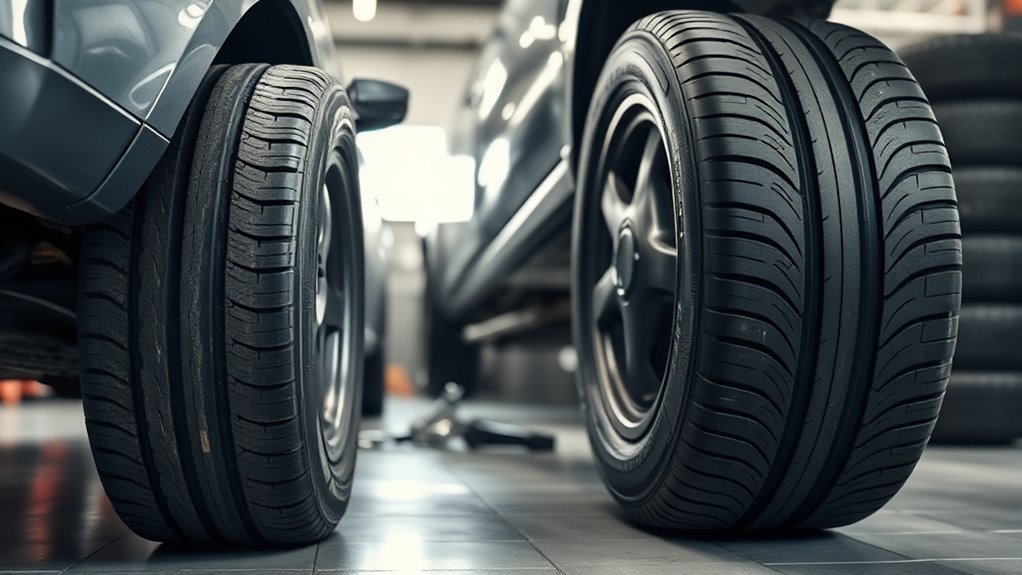
Notice how your front and rear tires don’t share the workload equally. On most vehicles, the front pair handles steering, much of the braking, and extra engine weight.
That constant demand scrubs tread faster and creates different wear patterns than you’ll see in back.
| Tire position | Main job | Wear effect |
|---|---|---|
| Front tires | Steer, brake, carry weight | Faster shoulder and tread wear |
| Rear tires | Follow, stabilize, support load | Slower, more even wear |
If you drive a rear-wheel or all-wheel-drive vehicle, the balance shifts somewhat, but the principle stays the same. Your driving habits matter too.
Hard cornering, quick stops, and frequent city driving ask more from specific tires, so each axle ages at its own pace over time.
What Signs Mean You Need a Tire Rotation?
Often, your tires tell you it’s time for a rotation before your maintenance reminder does. If you pay attention, you can catch uneven wear early and schedule service before it worsens.
Look for these common clues:
- Tread looks more worn on one tire than another
- Front tires show faster shoulder wear than rear tires
- Your vehicle feels slightly rougher at highway speeds
You might also notice a faint hum that wasn’t there before. Or the tread pattern could appear uneven across the tire surface.
You can check your tread depth with a gauge or the penny test. If one position wears noticeably faster, rotation is likely due.
Doing a quick visual inspection every month helps you spot changes early and keep your tires wearing more evenly over time. It’s a simple step that can save you headaches down the road.
What Happens If You Skip Tire Rotations?
If you skip tire rotations, your tires can wear unevenly and lose tread faster in certain spots. You may also notice reduced handling control, especially during turns, braking, or wet-road driving.
Over time, that uneven wear can shorten your tires’ lifespan and cost you more money. So, it’s really worth keeping up with regular rotations to get the most out of your tires.
Uneven Tread Wear
Over time, skipping tire rotations causes your tires to wear unevenly because each position on your vehicle handles weight, steering, and braking differently. When you leave tires in the same spots too long, certain tread areas wear faster, shortening overall tire life and forcing earlier replacement.
Front tires often wear the shoulders faster. Rear tires may develop different wear patterns. Heavier corners can scrub tread more quickly.
Consistent placement speeds irregular tread depth loss. Uneven wear reduces usable tread across sets.
You’ll also notice that mismatched tread depth makes maintenance planning harder. Instead of replacing all four tires together, you may end up buying two early, then replacing the others later.
Rotating on schedule helps spread wear evenly, protects your investment, and keeps each tire wearing at a more consistent rate over time. It’s a simple step that really pays off in the long run.
Reduced Handling Control
Uneven tread wear doesn’t just shorten tire life—it also changes how your vehicle responds on the road. When tires wear at different rates, they grip the pavement unevenly, which can make steering feel less precise. You may notice your car pulling slightly, resisting smooth turns, or feeling unsettled during quick maneuvers.
That reduced control becomes more noticeable in rain, on curves, or during sudden stops. Worn areas can lose traction faster, so your tires may not respond evenly when you brake or swerve. You might also feel more vibration through the steering wheel, which makes the ride feel unstable.
Regular rotations help keep tread depth more consistent across all four tires. So, your vehicle handles more predictably and stays easier to control in everyday driving situations overall.
Shorter Tire Lifespan
Skip tire rotations long enough, and you’ll wear out your tires much faster than necessary. Each wheel position carries weight differently, so certain tires scrub away tread quicker.
When you don’t rotate them, uneven wear builds up until replacement becomes unavoidable well before the tire’s expected mileage. Front tires often wear faster from steering and braking forces.
Rear tires can develop flat spots or irregular tread patterns. Uneven tread depth shortens usable life across the whole set.
Premature replacement costs you more money over time. Rotations help you get the full value from every tire.
How Can You Keep Tire Rotations on Schedule?
Regularly pairing tire rotations with another routine service, like an oil change, makes the schedule much easier to remember. You’ll build a consistent habit, reduce the chance of uneven tread wear, and keep your vehicle handling predictably.
Checking your owner’s manual also helps, since it lists the interval your manufacturer recommends for your specific model.
You can stay on track by setting calendar reminders on your phone or writing the mileage target on a sticker inside your windshield. Ask your repair shop to note the next rotation date on your invoice, too.
If you drive long distances, tow loads, or face rough roads often, monitor tread wear more closely and rotate sooner if needed. Staying organized helps you protect your tires, improve safety, and avoid replacing them early.
Frequently Asked Questions
Can Tire Rotations Improve Gas Mileage?
Yes, tire rotations can improve your gas mileage by promoting even tread wear and reducing rolling resistance.
You’ll help your tires maintain better road contact, so your vehicle runs more efficiently and doesn’t waste extra fuel.
It’s a simple step that can make a noticeable difference in how your car uses gas. Give it a try!
Do Electric Vehicles Need More Frequent Tire Rotations?
Yes, you’ll often need more frequent tire rotations with electric vehicles, because their battery bulk and instant torque create quicker, uneven wear.
You should follow your manual, but rotating every 5,000 to 7,500 miles helps. It keeps your tires wearing evenly and lasting longer.
Should Spare Tires Be Included in Rotation Patterns?
Yes, you should include your spare in rotation patterns if it’s a full-size matching tire. Doing so helps you even out wear, extend tire life, and keep your set balanced.
But don’t rotate temporary spare tires. They’re not designed for regular use and can cause issues if included in the rotation.
Can Tire Rotations Affect Wheel Alignment or Balancing?
Yes—like opening Pandora’s box, tire rotations can reveal alignment or balance problems, but they don’t usually cause them.
You’ll notice vibrations, pulling, or uneven wear afterward if your wheels already need adjustment or rebalancing.
Are Tire Rotations Covered Under New Car Warranties?
Usually, you won’t get tire rotations covered under a new car warranty unless your plan includes free scheduled maintenance. You should check your warranty booklet or dealer agreement, because coverage varies by manufacturer and package.
It’s always a good idea to ask your dealer directly if you’re unsure. That way, you know exactly what’s included and what’s not.
Conclusion
Rotate your tires on schedule, and you’ll trade uneven wear for a smoother, safer ride. Ignore it, and a simple service can turn into costly replacements, weaker traction, and shorter tire life.
Your front and rear tires face different jobs, but regular rotations help them wear more evenly and last longer. Watch for warning signs, follow your maintenance plan, and stay consistent.
A quick visit now can save you money, stress, and trouble down the road. Keeping up with tire rotations is key to extending tire life and maintaining optimal traction. So, don’t overlook this easy maintenance step—rotating your tires regularly ensures safer driving and better performance every time you hit the road.