Best Snow Covers for Car Windshield
You want the best snow cover for your car windshield that’s easy to install and fits snugly. It should hold up well against harsh winter weather to keep your windshield clear.
Look for water-resistant fabrics with reinforced edges and UV protection to make sure it lasts through the season. Magnetic edges or adjustable straps are great features to keep the cover secure, even on windy days.
Plus, soft linings on the inside protect your windshield glass from scratches. Don’t forget to measure your windshield for the right size or choose a universal fit with adjustable options.
Real users love covers that are both tough and simple to handle. So, keep these key points in mind as you shop around. This way, you’ll find the perfect snow cover to meet your winter needs and keep your car ready to go!
Key Takeaways
- Choose snow covers with weather-resistant, waterproof materials and reinforced stitching for durability in harsh winter conditions. These features help your cover last longer and stand up to tough weather.
- Look for easy installation features like adjustable straps or magnetic edges to ensure a secure, snug fit on the windshield. This way, you won’t have to struggle every time you put it on or take it off.
- Opt for covers with a soft inner lining to protect glass surfaces from scratches during use and removal. It’s a small detail that makes a big difference in keeping your windshield safe.
- Select sizes that match your vehicle’s windshield dimensions, with universal or custom-fit options for better compatibility. Getting the right size means better coverage and less chance of snow sneaking in.
- Review user feedback for insights on performance, ease of use, and effectiveness against heavy snow and ice buildup. Real experiences can really help you pick the best option for your needs.
Top Features to Look for in a Snow Cover
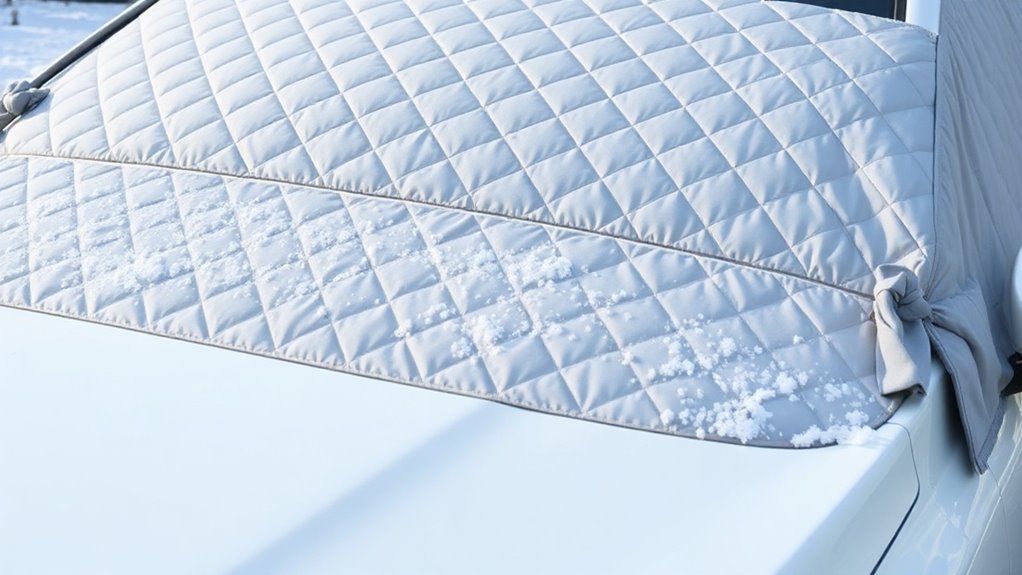
When choosing a snow cover for your car windshield, you’ll want to focus on features that guarantee easy installation, durability, and effective protection against ice and snow buildup. Look for covers with adjustable straps or magnets to secure them firmly, so they won’t blow away in strong winds.
It’s also important to prioritize designs that fit your windshield size snugly to prevent gaps where snow can sneak in. A cover with a soft inner lining will protect your glass from scratches while preventing frost.
Plus, consider covers that fold compactly for easy storage when not in use. And finally, check if the cover is easy to remove without struggling with frozen edges—this will save you time and effort during harsh winter mornings.
Weather-Resistant Materials and Durability

Although many snow covers look similar, their effectiveness largely depends on the materials used and overall durability. You want a cover made from weather-resistant fabrics like polyester or nylon with a waterproof coating to keep moisture from seeping through.
Look for covers featuring reinforced edges and strong stitching that won’t fray or tear after repeated use. Durable materials withstand harsh winter conditions—like freezing rain, snow, and wind—so your cover stays intact season after season.
Some covers also include UV protection to prevent material degradation from sunlight exposure. Choosing a durable, weather-resistant snow cover means you won’t have to replace it frequently, saving you time and money.
Ease of Installation and Removal

A key factor to take into account is how quickly and easily you can install and remove your snow cover. You want a cover that slips on effortlessly, ideally without needing extra tools or complicated steps.
Look for designs with magnetic edges or elastic straps that secure the cover in place but also let you pull it off in seconds. Avoid covers that require folding awkwardly or wrestling with buckles, especially when you’re rushing in cold weather.
Easy removal means you won’t have to scrape ice off your windshield, saving you time and frustration. Prioritize covers that fold compactly for storage, so you can grab and deploy them without hassle.
This way, you can protect your windshield efficiently, even on the busiest mornings.
Size and Compatibility With Different Vehicles
Choosing the right snow cover means making certain it fits your vehicle perfectly. You want a cover that snugly fits your windshield without leaving gaps where snow can sneak in.
Measure your windshield’s width and height before shopping to find a cover designed for your car type—whether it’s a compact sedan, SUV, or truck. Some covers come in universal sizes with adjustable straps or elastic edges to accommodate different vehicles, giving you flexibility.
Others are custom-fit, offering a tighter seal but less versatility. Don’t forget to check compatibility with side mirrors and windshield wipers, as some covers extend over these parts for better protection.
Picking the right size guarantees easy installation and maximum coverage, keeping your windshield clear and saving you time on snowy mornings.
User Reviews and Performance Insights
When you read user reviews, you’ll find valuable insights about how different snow covers perform in real-life conditions. Many users praise covers that stay securely in place despite strong winds, while others highlight ease of installation as a key factor.
Durability and water resistance also come up frequently, helping you judge which covers hold up under heavy snow and ice. Here’s a quick snapshot of common feedback from real users:
| Snow Cover Model | User Praise | Common Concerns |
|---|---|---|
| FrostGuard Pro | Strong hold, durable fabric | Slightly bulky to store |
| EasyCover XL | Quick setup, lightweight | Less effective in heavy snow |
| WindBlocker Ultra | Excellent water resistance | Straps can loosen over time |
These insights help you pick a cover that fits your needs best. So, take a moment to consider what matters most to you before making your choice.
Price Range and Value for Money
User feedback often reflects how well a snow cover balances features with cost. When you shop, you’ll find prices ranging from budget-friendly options around $15 to premium covers exceeding $50.
Cheaper models usually cover basic protection but might lack durability or secure fittings, which could frustrate you on windy days. Mid-range covers often provide better materials and adjustable straps, offering a reliable fit without breaking the bank.
Basic covers protect but may lack durability; mid-range options offer better materials and secure, adjustable fits.
Higher-end options deliver superior weather resistance, easy installation, and extra features like magnetic edges or reflective surfaces. To get the best value for your money, consider how often you’ll use the cover and the typical weather conditions you face.
Investing a bit more upfront can save you time and hassle during harsh winters, making your daily routine smoother. So, think about what matters most to you before making a decision.
Frequently Asked Questions
Can Snow Covers Prevent Ice Buildup Overnight?
Yes, snow covers can prevent ice buildup overnight by creating a barrier between your windshield and snow or frost.
They make mornings easier, so you won’t have to scrape ice off before driving.
It’s a simple step that saves you time and hassle when you’re in a rush.
Are Snow Covers Effective Against Heavy Wind?
You won’t have to worry about your cover blowing away in a fierce gust if you choose one with secure straps or magnets.
It’ll stay snug, protecting your windshield from snow and ice even during heavy windstorms.
How Do Snow Covers Impact Windshield Wiper Function?
Snow covers protect your windshield wipers from freezing and ice buildup. This means they can move freely when you start your car.
Without a cover, wipers can stick or get damaged. This reduces their effectiveness and lifespan. So, using a snow cover can really help keep your wipers working well.
Can Snow Covers Protect Against UV Damage in Summer?
Yes, snow covers block sunlight, reflect heat, and shield your windshield. They prevent UV damage, reduce fading, and keep your car cooler.
You’ll protect your glass just as effectively in summer as in winter. It’s a smart way to keep your car looking great all year round!
Do Snow Covers Cause Scratches on the Glass?
Snow covers generally won’t cause scratches if you choose ones with soft, non-abrasive materials. Just make sure to remove any debris before covering.
And avoid dragging the cover across the glass to keep your windshield scratch-free. It’s all about being gentle and careful!
Conclusion
Choosing the best snow cover for your car windshield doesn’t have to be rocket science. Focus on weather-resistant materials, easy installation, the right size, and solid user feedback.
By doing this, you’ll find a cover that saves you hours of scraping every winter. It’s all about making your mornings easier and your car safer.
Remember, investing in a quality snow cover isn’t just about money. It’s about reclaiming your mornings and protecting your vehicle like a superhero shield against harsh snowstorms.
With the right windshield snow cover, you’ll avoid the hassle of ice and snow buildup. So, pick a durable, easy-to-use option that fits your car perfectly. You’ve got this!