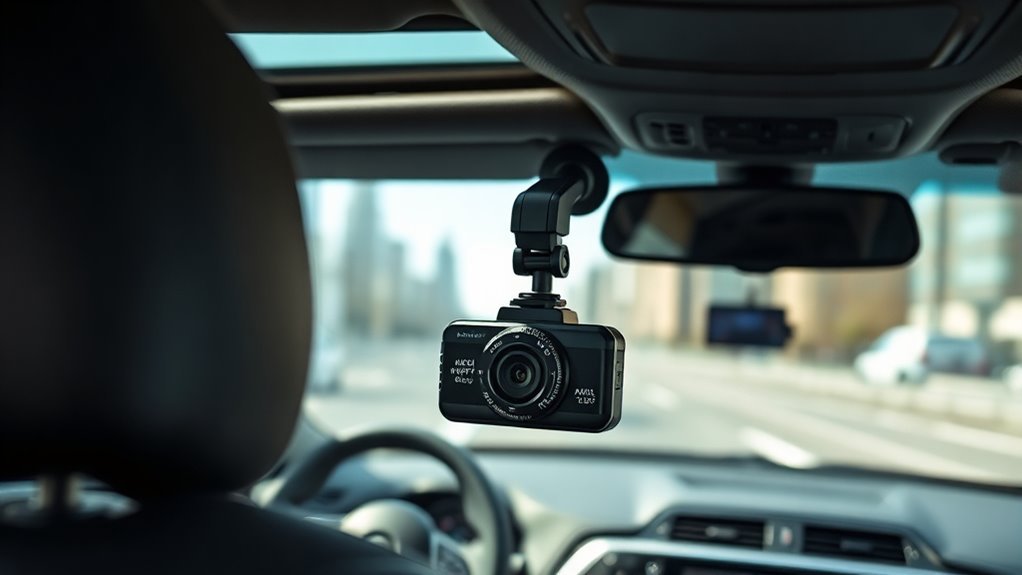
Best Dash Cams for Front and Rear Protection in Your Car
For solid front and rear car protection, choose a dual dash cam with at least 1080p resolution, night vision, wide-angle lenses, loop recording, and a G-sensor to lock footage on impact.
These features ensure you capture clear, reliable footage day or night, helping you stay safe and secure on the road.
Trusted models like the VIOFO A129 Duo and Nextbase 622GW balance clarity and reliability.
Whether you prefer wired stability or wireless ease, make sure installation suits your vehicle.
Keep exploring to find options that perfectly match your budget and security needs.
Key Takeaways
- Choose dual dash cams with high-resolution front (1080p or higher) and rear cameras for clear, comprehensive coverage. This way, you get a full view of what’s happening around your car.
- Make sure they include night vision and wide-angle lenses. These features help you capture reliable footage in low light and give you a broad view of the road behind.
- Look for extras like loop recording and G-sensors. They’re great for making sure your footage stays secure during incidents without any gaps.
- Some popular models to consider are the VIOFO A129 Duo, Nextbase 622GW, and Vantrue N4. They offer a solid mix of quality and affordability.
- Also, think about easy installation, wired power sources, and user-friendly interfaces with Wi-Fi. These make accessing your footage super convenient.
Top Features to Look for in Dual Dash Cams
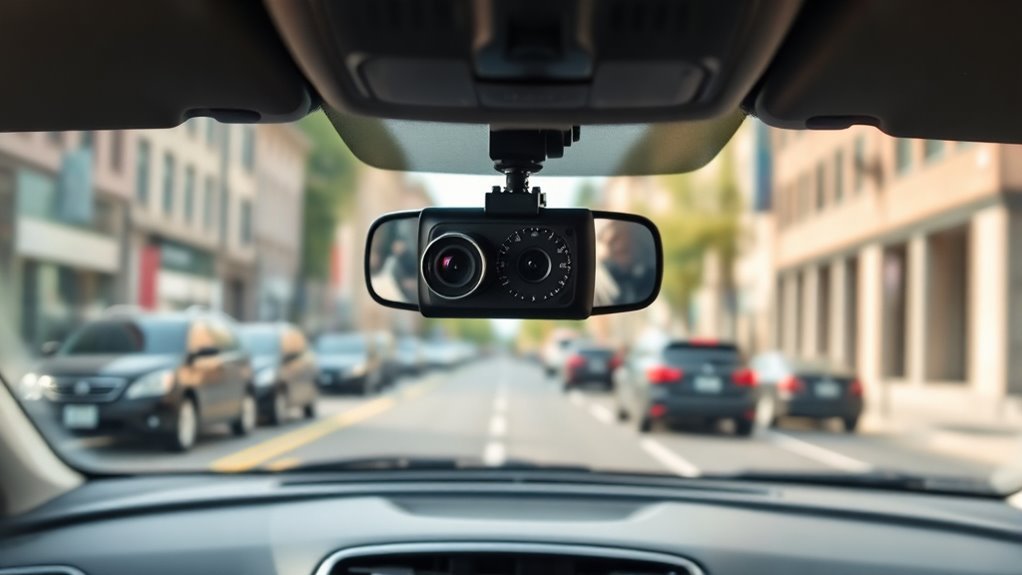
When choosing a dual dash cam, you’ll want to focus on features that enhance both front and rear recording quality. Look for cameras with high-resolution video—1080p is the minimum, but 1440p or 4K is even better for clear details.
Night vision is vital since you’ll want reliable footage in low light. Consider a wide-angle lens to capture more of the road behind and in front of you.
Reliable night vision and wide-angle lenses ensure you capture clear footage of both front and rear views.
Loop recording guarantees continuous footage by overwriting old files automatically, so you never run out of space. A sturdy G-sensor is essential; it detects sudden impacts and locks the footage to prevent overwriting.
Finally, easy installation and user-friendly controls make daily use hassle-free, letting you focus on driving confidently. It’s all about keeping things simple and effective!
High-Quality Front and Rear Dash Cam Models
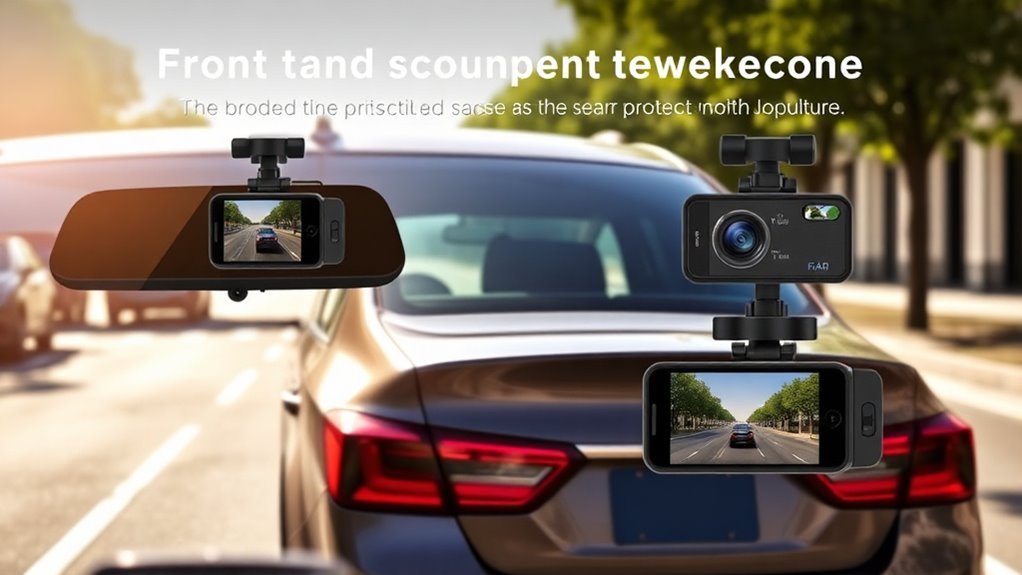
Choosing the right features sets the stage for picking a dash cam that fits your needs. When looking for high-quality front and rear dash cam models, focus on reliability, video clarity, and ease of use.
Top picks like the VIOFO A129 Duo deliver crisp 4K front and 1080p rear footage, perfect for capturing every detail. The Nextbase 622GW offers excellent image stabilization and seamless app integration, making it easy to review footage on your phone.
For budget-conscious buyers, the Vantrue N4 provides solid 1440p front and 1080p rear coverage with parking mode features. Each of these models guarantees continuous protection from both angles, giving you peace of mind on the road without compromising on quality or convenience.
Installation Tips for Dual Dash Cameras
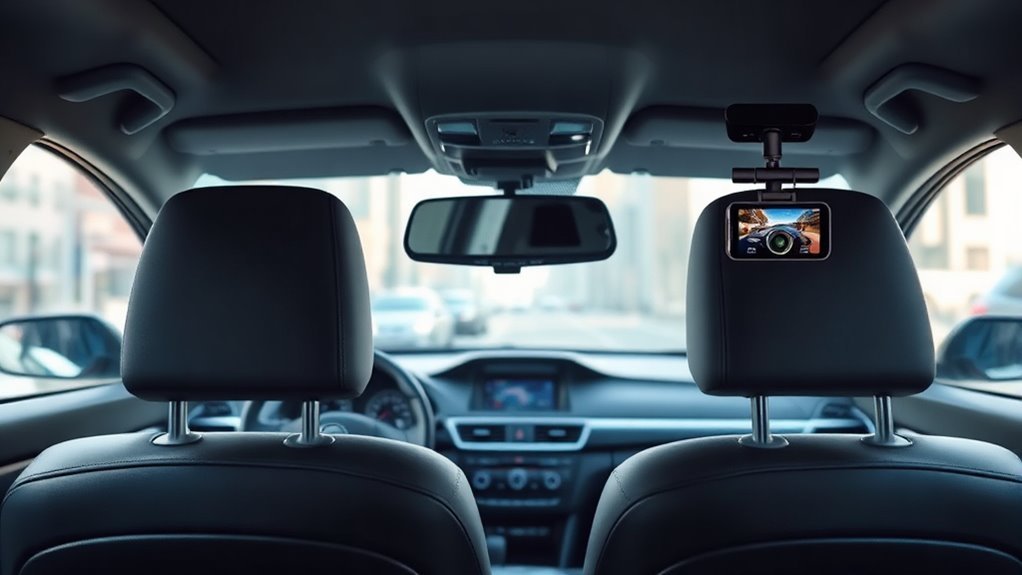
To get the best footage, you’ll want to place your front and rear cameras in ideal spots that capture clear views without obstructing your drive. Carefully managing wiring guarantees a clean setup and prevents any interference with your vehicle’s systems.
Don’t forget to connect to reliable power sources to keep your dual dash cams running smoothly. Taking these steps makes sure your cameras work well when you need them most. It’s all about keeping things simple and efficient!
Optimal Camera Placement
Placing dual dash cameras correctly guarantees you capture extensive footage from both inside and outside your vehicle. For the front camera, position it high on the windshield, near the rearview mirror, to minimize obstruction and maximize the field of view.
Make sure it’s centered to cover as much of the road ahead as possible. The rear camera should be mounted on or near the rear window, ideally at the top center. This way, it can record everything behind your car clearly.
Keep both lenses clean and free from glare or reflections by avoiding direct sunlight or harsh angles. Also, confirm the cameras are secure but easy to adjust if needed.
Proper placement guarantees you get clear, reliable footage that can protect you in any situation. It’s worth taking the time to get it right!
Wiring and Power Sources
Although installing dual dash cameras might seem complicated, understanding the wiring and power sources makes the process much smoother. You’ll typically have two options: hardwiring the cameras to your car’s fuse box or using the cigarette lighter socket.
Hardwiring offers a cleaner look and allows parking mode features but requires a fuse tap kit and basic knowledge of your vehicle’s electrical system. Alternatively, plugging into the cigarette lighter is easier and less permanent but may clutter your dashboard with cables.
When routing wires, tuck them along headliners, A-pillars, and under trim panels to keep them hidden and prevent interference with airbags. Always double-check your connections and test both cameras before finalizing the installation to guarantee reliable power and uninterrupted recording.
How Dual Dash Cams Enhance Vehicle Security
You’ll get complete coverage of your surroundings with dual dash cams, capturing both front and rear views. This setup records essential evidence during accidents and helps deter theft or vandalism by keeping an eye on your vehicle at all times.
Having both angles covered gives you greater peace of mind and protection on the road. It’s like having an extra set of eyes watching out for you whenever you’re driving or parked.
Comprehensive Coverage Benefits
When you install dual dash cams, you greatly increase your vehicle’s security by capturing both front and rear views simultaneously. This extensive coverage means you won’t miss any critical moments, whether they happen ahead or behind your car.
You’ll have a clearer picture of traffic conditions, potential hazards, and suspicious activity around your vehicle. Dual cameras also help prevent blind spots, giving you peace of mind when parking or driving in busy areas.
With footage from both angles, you can better protect yourself against false claims or vandalism. Overall, dual dash cams provide a more complete security solution, ensuring you’re covered from multiple perspectives without relying on just one camera’s limited field of view.
Accident Evidence Recording
A dual dash cam system captures essential accident evidence from multiple angles, giving you a stronger defense in case of disputes. When an incident occurs, having footage from both the front and rear cameras helps you prove exactly what happened.
You won’t have to rely solely on your word or eyewitness accounts that can be unreliable. These recordings provide clear, time-stamped video that law enforcement and insurance companies trust. Plus, if the other party tries to shift blame, your dual cameras offer undeniable proof of fault or innocence.
This can speed up claims and potentially save you money. By investing in a dual dash cam, you’re actively protecting yourself with concrete evidence that supports your case every time.
Theft and Vandalism Deterrence
Although accidents are a major concern, securing your vehicle against theft and vandalism is equally important. Dual dash cams provide continuous surveillance of both the front and rear of your car, making it harder for thieves or vandals to approach unnoticed.
When you park, motion detection features activate recording, capturing any suspicious activity around your vehicle. This footage can serve as vital evidence if your car is targeted, helping law enforcement identify culprits.
Additionally, visible dash cams act as a deterrent, discouraging potential criminals from attempting break-ins or damage. By installing dual dash cams, you’re not just protecting yourself during drives but also enhancing your vehicle’s security when it’s parked.
That way, you get peace of mind wherever you leave your car.
Comparing Wired Vs Wireless Dual Dash Cams
Since dual dash cams capture footage from both the front and rear of your vehicle, choosing between wired and wireless models can impact installation, reliability, and convenience.
Wired dual dash cams require running cables through your car, which can be time-consuming but guarantees a stable connection and continuous power supply. This setup reduces the risk of disconnections and often supports features like parking mode better.
On the other hand, wireless dual dash cams offer easier installation without messy wires, making them ideal if you want a quick setup or plan to move the cam between vehicles. However, they depend on battery life or separate power sources, which might limit recording time or reliability.
Budget-Friendly Options for Comprehensive Dash Cam Coverage
When you want reliable dash cam coverage without breaking the bank, plenty of budget-friendly options deliver solid performance and essential features. You don’t have to sacrifice quality for affordability—many models offer front and rear cameras, loop recording, and night vision at a reasonable price.
Look for dash cams with easy installation and user-friendly interfaces to save time and hassle. Some budget brands even include Wi-Fi connectivity, so you can review footage directly on your phone without extra equipment.
Prioritize devices with good video resolution (at least 1080p) to guarantee clear evidence if you need it. By choosing wisely, you can protect your vehicle thoroughly without overspending, making budget-friendly dash cams a smart and practical choice for everyday drivers.
Frequently Asked Questions
Can Dash Cams Record Audio Inside the Car?
Yes, dash cams can record audio inside your car, but it depends on the model. You’ll want to check if the microphone is enabled.
Also, make sure you know your local laws about audio recording before you start capturing conversations. It’s always better to be safe than sorry!
Are Dash Cams Legal in All States or Countries?
Dash cams aren’t legal everywhere; laws vary by state and country. You should check local regulations before using one, especially regarding audio recording.
This helps you avoid privacy or consent issues while protecting yourself on the road. It’s always better to be safe and informed!
How Long Do Dash Cam Memory Cards Typically Last?
Memory cards in dash cams typically last 1 to 3 years before wearing out. Like a vintage vinyl record, constant rewriting eventually degrades them.
You’ll want to replace or back up data regularly to keep recordings safe. It’s a good idea to check your card’s health every so often, just to be sure.
Can Dash Cams Connect to Smartphones for Live Viewing?
Yes, many dash cams can connect to your smartphone via Wi-Fi or an app. This lets you view live footage, download videos, and adjust settings easily.
Just make sure your model supports this feature before buying. It’s a handy feature that makes managing your dash cam way more convenient.
Do Dash Cams Work Well in Extreme Weather Conditions?
About 70% of dash cams are designed to operate from -20°C to 60°C. So, you can trust most models to work well in extreme weather.
But, always check the specs to verify durability in your climate. It’s better to be safe than sorry, right?
Conclusion
Choosing the best dash cams for front and rear protection lets you lock in lasting safety and seamless security. By balancing budget, benefits, and bold features, you’ll boost both your car’s coverage and your confidence on the road.
Whether wired or wireless, quality dual dash cams deliver dependable defense against dangers. They capture everything in front and behind your vehicle, giving you clear evidence if an accident happens.
Don’t delay—drive decisively with dual dash cams that double your protection and deliver peace of mind every mile. Investing in front and rear dash cams is one of the smartest ways to enhance your vehicle’s security. With the best dash cams for front and rear protection, you get reliable footage, increased safety, and the confidence to focus on the road ahead.