Can You Plug a Run Flat Tire?
You can sometimes plug a run-flat tire, but only when the puncture is small, single, and in the tread—not the shoulder or sidewall.
Run-flat tires are designed to keep you going even after a puncture, but that doesn’t always mean they’re easy to repair. You shouldn’t just assume it’s repairable because the tire still looks fine on the outside.
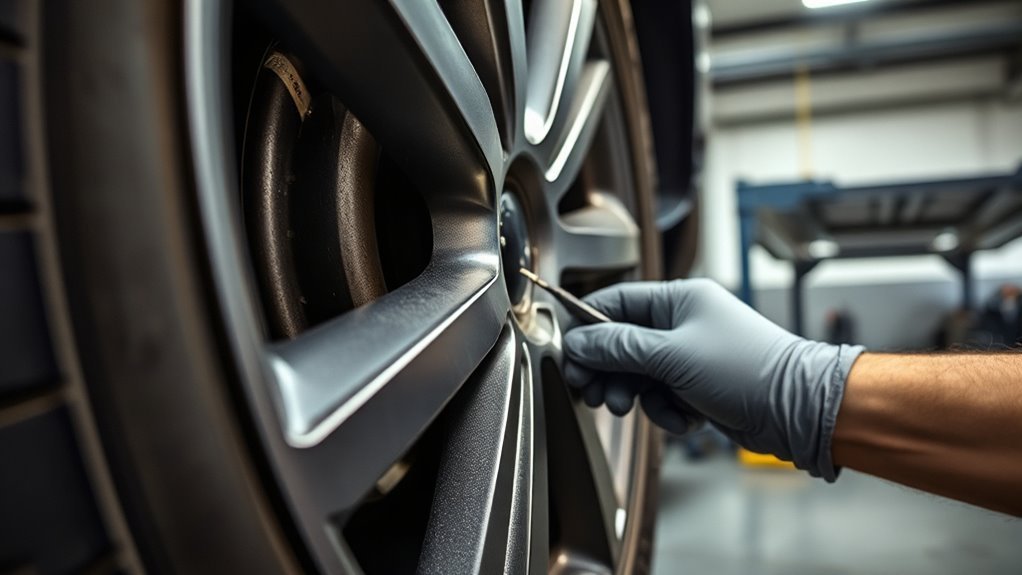
A qualified tire technician should remove the tire and inspect the inside carefully. They’ll check for heat damage or any broken structure and follow the tire maker’s repair limits.
If the tire was driven low or flat for a while, it might be safer to replace it instead of repairing it. There’s definitely more to consider before you decide whether plugging a run-flat tire is the right move for you.
Key Takeaways
- Sometimes, but only small tread-area punctures may be repairable after professional internal inspection.
- A simple plug alone is usually not preferred because it skips internal inspection and may not meet manufacturer rules.
- Shoulder and sidewall damage, oversized holes, irregular cuts, or multiple punctures usually require tire replacement.
- Run-flat tires driven with low or zero pressure can have hidden heat and sidewall damage that makes repair unsafe.
- The safest option is a qualified tire shop dismounting the tire, inspecting internally, and following tire and vehicle manufacturer guidelines.
Can You Plug a Run Flat Tire?
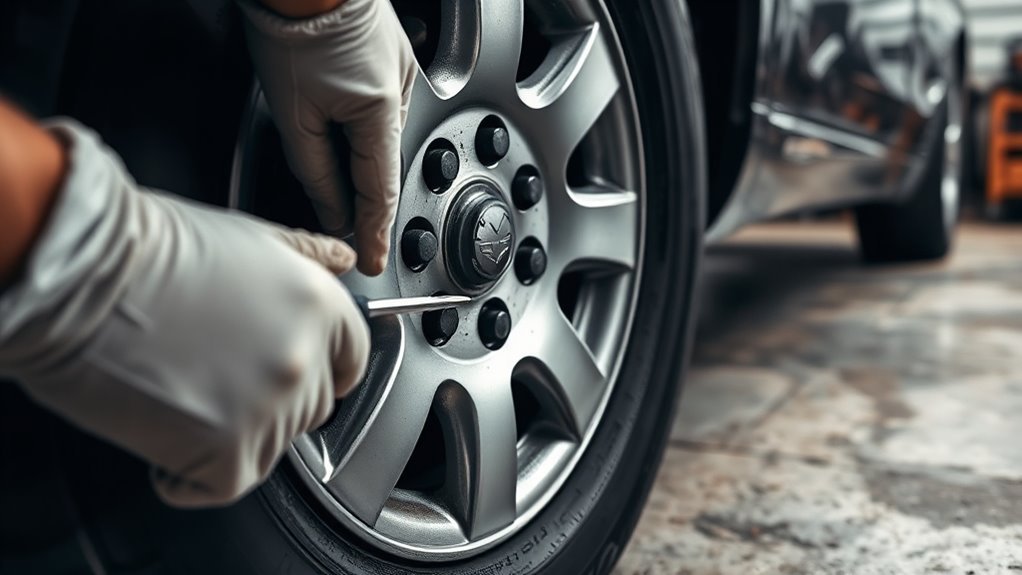
Yes, you can sometimes plug a run-flat tire, but only under specific conditions. Unlike a standard tire, a run-flat has reinforced sidewalls that let you keep driving after losing air. That design changes how damage affects the tire and how seriously you should treat a puncture.
You shouldn’t assume a plug is always safe or appropriate. A simple plug may stop air loss, but it doesn’t automatically restore the tire’s integrity. Run-flats experience extra stress after pressure drops, even if they still look normal from the outside.
Because of that, you need a careful inspection before deciding anything. You also need to follow the tire maker’s guidance, since some manufacturers don’t support plugging alone. If you’re unsure, have a qualified tire professional evaluate it first for safety.
When Can a Run Flat Tire Be Repaired?
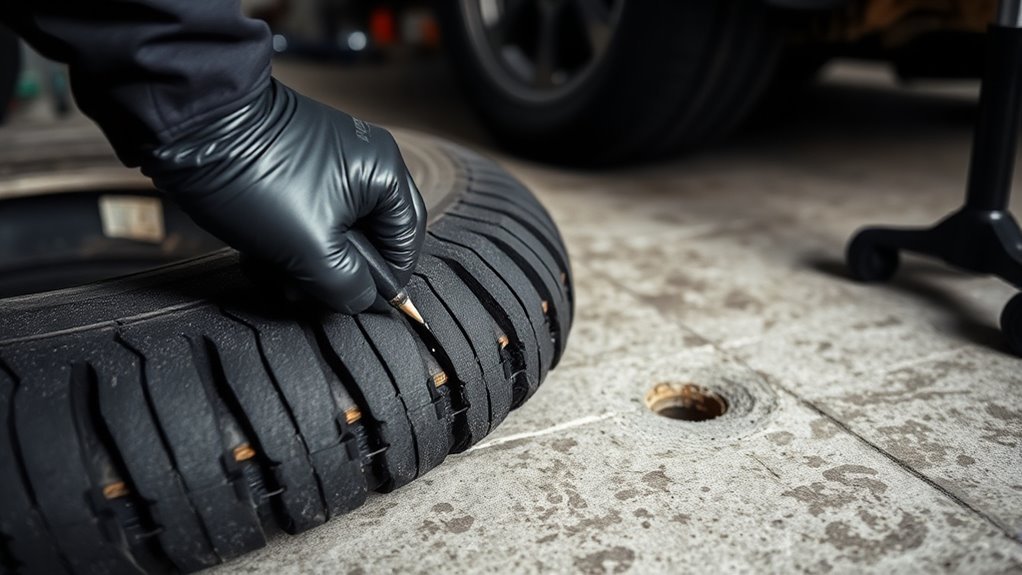
A run-flat tire can usually be repaired only if the puncture sits in the tread area, the damage is small, and you haven’t driven on it beyond the manufacturer’s limited distance or speed rating after it lost pressure.
Run-flat tires are usually repairable only when tread punctures are small and the tire wasn’t driven too far while deflated.
You also need a single, straightforward puncture rather than multiple holes, cuts, or irregular damage. In most cases, the opening must fall within standard repair size limits, and the tire must still hold its shape properly.
Follow your vehicle maker’s guidance, because some run-flat designs have stricter rules than conventional tires.
- Keep the puncture in the center tread.
- Make sure the hole is small.
- Avoid driving too far while deflated.
- Confirm the tire meets brand repair rules.
If those conditions apply, you may have a safe repair option available.
How a Shop Checks Run Flat Tire Damage
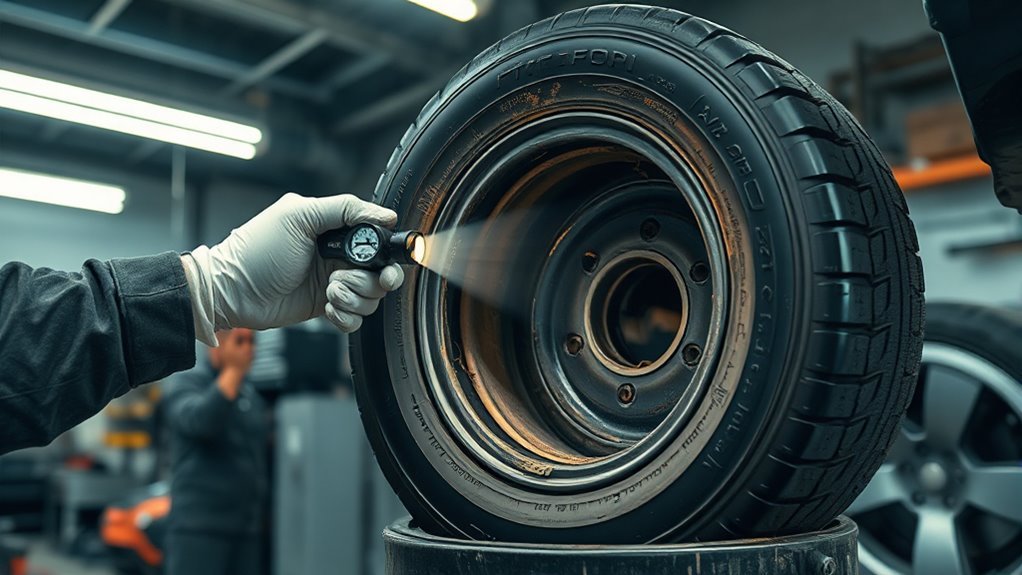
When you bring in a run-flat tire, the shop checks more than the puncture you can see. Technicians inspect the internal sidewall for heat damage, cracks, or flex-related wear that can make the tire unsafe.
They also assess how much air you lost and how long you drove on it. This information helps them figure out whether a repair is still possible.
Internal Sidewall Inspection
Because run-flat damage often hides beneath the surface, a shop won’t rely on the outside appearance alone. You’ll see technicians remove the tire from the wheel so they can inspect the inner sidewalls directly.
They’re looking for heat rings, wrinkling, rubber dust, and scuffing that signal the tire flexed beyond its design limits. They’ll also check for exposed cords, liner abrasion, or separations that make the structure unsafe.
- They inspect both sidewalls, not just the puncture area.
- They feel for softened spots, ripples, or thinning rubber.
- They look for discoloration caused by internal overheating.
- They reject any tire with structural distortion or cord damage.
If the inside shows these warning signs, you can’t count on a simple repair. The tire has already lost critical strength and durability.
Air Loss Assessment
Often, a shop will ask how long you drove after the warning light came on and how quickly the tire lost pressure. That air-loss history helps reveal whether the run-flat may have suffered hidden damage.
If you lost air slowly, the casing may have stayed cooler and retained more structural strength. But if pressure dropped fast, heat and flex can build quickly—especially if you kept driving at highway speed or carried extra weight.
Technicians compare your timeline with the tire maker’s distance and speed limits for zero-pressure operation. They’ll also check the pressure reading, look for puncture size, and note whether the tire went completely flat.
Together, those details help them judge whether a simple repair remains possible or if the tire’s internal support system was likely compromised beyond safe service limits.
Why Driving Flat Damages a Run Flat Tire
When you drive on a flat run-flat tire, you can crush the internal sidewalls even if the outside still looks usable.
You also create intense heat buildup, which weakens the tire’s materials and raises the risk of failure.
That’s why hidden structural damage can make a simple plug unsafe.
Internal Sidewall Damage
Although run-flat tires are built to support your car for a limited distance after losing air, driving on one while it’s flat can crush and overflex the reinforced sidewall. This can cause hidden internal damage.
That damage matters because you usually can’t see it from outside. Even if the tread looks usable, the tire’s structure may already be compromised. That means a simple plug might not be a safe fix.
Watch for these warning signs: The sidewall cords may bend, break, or separate. The inner liner can wrinkle, split, or tear under load.
Also, the tire may lose its designed shape and strength. And a repaired puncture won’t restore damaged sidewall integrity.
If you drove any distance while pressure was lost, don’t just assume the tire is repairable. Have it removed and inspected internally. Replace it if any damage shows up.
Heat Buildup Risks
Even if a run-flat tire can carry the vehicle after it loses air, driving on it while flat creates intense heat inside the tire. Without normal air pressure, the reinforced sidewalls flex far more than they should. That repeated bending generates friction, and friction quickly raises internal temperatures as you continue driving.
As heat builds, the tire’s rubber compounds and bonding materials begin to break down faster. You can’t cool the tire effectively because the missing air no longer helps dissipate heat from inside. Higher speeds, longer distances, heavy loads, and hot pavement make the problem worse.
Even a short drive can push temperatures beyond what the tire was designed to tolerate after a puncture. That’s why manufacturers limit run-flat distance and speed. The longer you drive, the more heat you create and the more repairability drops sharply.
Hidden Structural Failure
That heat doesn’t just age the rubber faster—it can also damage the tire’s internal structure in ways you can’t see. When you drive on a flat run-flat tire, the reinforced sidewalls flex far beyond their normal limits.
That stress can break cords, separate layers, and weaken the bead area. Even if the outside looks fine, the inside may be compromised, making a simple plug risky.
- Broken cords: You can’t spot snapped reinforcing strands from the outside.
- Layer separation: Internal plies can pull apart under excessive flex.
- Bead damage: The tire’s seal against the rim may distort or crack.
- Delayed failure: A repaired tire can fail later at highway speeds.
Should You Plug or Patch a Run Flat Tire?
Start by checking the tire maker’s repair guidelines, because you shouldn’t treat a run-flat like a standard tire. If repair is allowed, a patch-plug combo installed from inside usually beats an external plug alone.
You need the tire removed and inspected, since hidden damage can make a quick fix risky. A simple plug may seal the hole, but it doesn’t reinforce the inner liner or confirm the casing stayed sound.
| Method | What you get | Main drawback |
|---|---|---|
| Plug | Fast, cheap seal | No internal inspection |
| Patch | Inner liner coverage | Doesn’t fill injury path |
| Patch-plug | Seals and fills | Requires dismounting |
If you want the more dependable repair, choose the patch-plug approach. Make sure a qualified tire shop handles the work properly.
When a Run Flat Tire Must Be Replaced
A run-flat tire must be replaced when inspection shows sidewall damage, internal heat damage, or any structural injury beyond the repairable tread area. If you drove on low pressure too long, the reinforced sidewalls may overheat and weaken, even when damage isn’t visible.
You also shouldn’t repair punctures larger than the manufacturer’s limit or holes located in the shoulder.
- Replace it if the sidewall is cut, bulged, cracked, or abraded.
- Replace it after extended zero-pressure driving that causes heat rings or liner dust.
- Replace it when cords, belts, or inner liner layers are exposed or separated.
- Replace it if there are multiple punctures, uneven wear, or previous improper repairs.
When in doubt, have a qualified tire technician inspect it. Your safety depends on the tire’s hidden condition and remaining strength.
Frequently Asked Questions
How Long Do Run Flat Tires Typically Last?
Run-flat tires typically last 30,000 to 50,000 miles, though you’ll get more or less depending on your driving, maintenance, and roads.
You should check tread wear regularly, keep them inflated properly, and replace them when performance drops.
It’s all about staying on top of how they’re doing so you don’t get caught off guard.
Are Run Flat Tires More Expensive Than Regular Tires?
Yes, you’ll usually pay more for run-flat tires than regular ones. Like hiring armored horses for your carriage, you’re buying reinforced construction and mobility after punctures.
Can All Vehicles Use Run Flat Tires Safely?
No, you can’t safely use run-flat tires on all vehicles. You need compatible wheels, TPMS, suspension tuning, and manufacturer approval.
If your car wasn’t designed for them, you risk poor handling, a harsher ride, and potential damage. It’s not just about swapping tires; the whole setup has to work together.
Do Run Flat Tires Affect Ride Comfort?
Yes, run flat tires usually make your ride feel firmer and sometimes harsher because their stiffer sidewalls flex less.
You’ll often notice more road bumps and noise, though handling can feel sharper and more responsive. It’s a trade-off that some drivers don’t mind for the extra safety and convenience.
Can You Mix Run Flat and Regular Tires?
You shouldn’t mix run-flat and regular tires because you’ll compromise handling, stability, and braking.
You may also confuse your vehicle’s suspension tuning and tire pressure systems.
It’s best to replace tires in matched sets, or just follow your automaker’s guidance.
Conclusion
You can sometimes repair a run flat tire, but only if you haven’t driven on it too long and the damage stays within safe limits. A proper inspection matters, because hidden sidewall damage can turn a small problem into a bigger one.
In most cases, a patch from inside beats a simple plug. When safety’s on the line, it’s better to play it safe than sorry and replace the tire if there’s any doubt at all.
So, can you plug a run flat tire? Technically, yes, but it’s not always the best choice. Run flat tires are designed to handle specific conditions, and damage to their sidewalls is often more serious than it looks. That’s why a thorough inspection is crucial before deciding on a repair. If the damage is minor and caught early, a patch can work, but if there’s any uncertainty, replacing the tire is the safest bet. Remember, when it comes to run flat tires, safety should always come first.