Why Is My Tire Pressure Light Blinking?
A blinking tire pressure light usually means your TPMS has a system fault, not just low tire pressure. This warning can be confusing because it suggests something more than just a simple tire issue. Your tire pressure monitoring system might be dealing with weak batteries in the sensors, damage, lost communication, or it might need relearning after tire or wheel service.
First, check all four tires manually with a gauge and compare them to the door-sticker PSI. This helps confirm if the pressure is actually low or if the system is just acting up. You can usually drive cautiously if the car feels normal, but don’t ignore it. Future low-pressure warnings may not be reliable if the system has a fault. A few common causes stand out.
Key Takeaways
- A blinking tire pressure light usually means there’s a fault in the TPMS system, not just low tire pressure.
- It often blinks for about a minute when you start the car, then stays solid to show a stored system error.
- Common causes include weak sensor batteries, damaged sensors, leaks at valve stems, or recent tire service that requires a relearn.
- Check each tire manually with a gauge and compare the pressure to the driver’s door-sticker PSI, not the sidewall maximum.
- You can usually drive cautiously for now, but get the TPMS inspected soon.
- That blinking light means the pressure warnings might not be reliable.
What Does a Blinking Tire Pressure Light Mean?

If your tire pressure light is blinking instead of staying solid, it usually means there’s a problem with the tire pressure monitoring system itself, not just low air in a tire.
A blinking tire pressure light usually signals a TPMS system problem, not just a tire with low air.
Your car’s TPMS uses sensors in the wheels to track pressure and send data to the vehicle’s computer. When the light flashes, the system may not be receiving accurate information.
You might have a weak sensor battery, a damaged sensor, signal interference, or a fault in the TPMS module. Sometimes the light blinks for a minute, then stays solid to show the system detected an error.
Temperature changes can still affect tire pressure, but a blinking light points more toward a system issue. You should check your tire pressures manually and have the TPMS inspected to confirm what’s actually wrong.
Can You Drive With a Blinking TPMS Light?

You can usually keep driving with a blinking TPMS light, but you shouldn’t ignore it. A blinking light often points to a TPMS fault rather than an immediate tire emergency, so your car may still handle normally for the moment.
Even so, you’re driving without a reliable warning system, which means you could miss a real pressure problem later.
If the vehicle feels stable, you can continue cautiously to your destination or a repair shop. Slow down, avoid hard cornering, and stay alert for pulling, vibration, or a soft, sluggish feel.
If the light changes from blinking to solid, or if you notice clear handling issues, stop as soon as it’s safe. Driving for days or weeks without fixing the issue increases your risk of uneven wear, poor fuel economy, and reduced safety.
How to Check Your Tire Pressure First

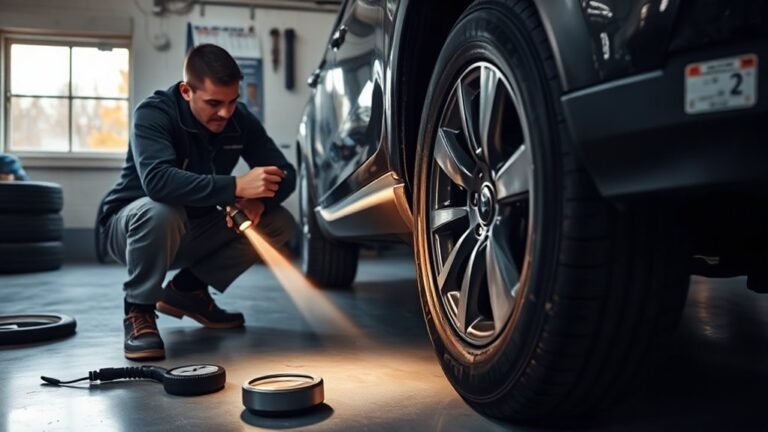
Start by using a tire gauge to check the pressure in each tire. Compare each reading to the recommended PSI listed on your driver’s door sticker or in your owner’s manual.
If the numbers don’t match, you’ll know whether your blinking TPMS light points to underinflation or overinflation. It’s pretty straightforward once you see the numbers.
Use A Tire Gauge
Grab a tire gauge before doing anything else, because it’s the quickest way to confirm whether low pressure is triggering the blinking tire pressure light. You don’t need special tools or mechanical experience.
Remove the valve cap from one tire, press the gauge firmly onto the valve stem, and read the number immediately. If the gauge hisses, reposition it and try again for an accurate reading.
Check all four tires, not just the one that looks low. Pressure can vary from tire to tire, and a single underinflated tire can trigger the warning.
Write each reading down so you don’t forget it while moving around the vehicle. If you use a digital gauge, make sure its battery works properly.
After checking, reinstall every valve cap securely to keep out dirt and moisture. Easy, right? Just a quick step that can save you a lot of trouble later.
Check Recommended PSI
The next step is checking your vehicle’s recommended PSI, because the number on the tire sidewall usually isn’t the correct target. That sidewall figure shows the tire’s maximum pressure, not the pressure your car needs for safe, even performance.
If you inflate to that number, you could affect handling, braking, and tread wear.
Instead, look for the recommended PSI on the driver’s door jamb sticker. You might also find it in your owner’s manual or fuel door.
Check the front and rear tire specs, since they can differ. Compare those numbers with your current readings from the gauge.
If the tires are cold, adjust them to match the recommendation. Using the correct PSI helps your TPMS work properly and makes diagnosing a blinking light easier later.
What Causes a Blinking TPMS Light?
When your TPMS light blinks instead of staying solid, it usually points to a problem with the monitoring system itself rather than low tire pressure alone. The warning often appears after startup, then stays on to tell you the system can’t read tire data correctly.
A blinking TPMS light usually signals a system fault, meaning your vehicle can’t read tire pressure data correctly.
You might see this happen after a battery change, tire rotation, wheel swap, or recent service. Blinking can also come from interference, a lost connection, or a control module issue that prevents normal communication.
Extreme cold, road salt, or impact damage may also disrupt the system and trigger the warning. If your tires look fine but the light keeps blinking, don’t ignore it.
You should still check pressure manually, then have the TPMS inspected so you can restore accurate monitoring and avoid driving with unreliable tire-pressure alerts later.
Which TPMS Sensor Problems Are Most Common?
Start with the sensor battery, because it’s one of the most common reasons your TPMS light blinks. These sealed batteries weaken with age, so the sensor can’t transmit a steady signal.
You might also have a damaged sensor body from potholes, corrosion, or rough tire service. In some cases, the issue isn’t the sensor itself, but a bad valve stem, broken seal, or mounting damage that creates leaks and confuses the system.
- Weak battery life causes intermittent or missing pressure readings.
- Corrosion inside the sensor can interrupt communication with your vehicle.
- Physical damage may follow curb strikes, potholes, or improper installation.
You can also run into programming problems after tire rotation or sensor replacement. If IDs don’t match your vehicle, the system may blink even when your tires are properly inflated.
When Should You Get the TPMS Checked?
You should get your TPMS checked right away if the warning light keeps blinking, stays on after you add air, or turns on with no clear cause.
It’s also a good idea to have it inspected if you notice uneven tire pressure readings or if you’ve recently had tire, wheel, or battery service done.
Even if everything seems fine, it’s smart to have the system checked during routine maintenance. That way, it keeps working when you really need it.
Immediate Warning Signs
Although a tire pressure light can come on for a minor pressure change, you should get the TPMS checked right away if the light blinks, stays on after you’ve added air, or appears with handling changes like pulling, vibration, or a soft tire.
Don’t ignore warning signs that point to a sensor fault or an unsafe tire issue. You need prompt inspection if you notice:
- The light flashes at startup, which often signals a TPMS malfunction.
- One tire keeps losing pressure, suggesting a puncture, valve leak, or wheel damage.
- Your steering feels unstable, especially during braking or highway driving.
If your light returns soon after inflation, your system may not be reading correctly, or a tire may be leaking. Acting quickly helps you avoid uneven wear, poor traction, and dangerous failures on the road.
Routine Service Timing
Beyond obvious warning signs, it’s smart to have your TPMS checked during routine tire service, including rotations, seasonal tire changes, and any time a tire is repaired or replaced.
These visits give technicians a chance to inspect sensors, verify battery strength, and confirm the system still reads each tire accurately. You should also request a TPMS check after hitting a pothole, curb, or road debris, since impacts can damage a sensor or throw off calibration.
If you install new wheels or switch between summer and winter sets, make sure the system is relearned so your vehicle recognizes every sensor. Following this schedule helps you catch weak sensor batteries, programming issues, and mounting damage before they trigger a blinking light or leave you driving with unreliable pressure warnings later.
Frequently Asked Questions
How Much Does TPMS Sensor Replacement Usually Cost?
You’ll usually pay $50–$250 per TPMS sensor replacement, or $200–$1,000 for all four, depending on your vehicle, sensor type, and labor.
You should also expect possible relearning or programming fees after installation at some shops. It’s a good idea to ask about these extra costs upfront so you’re not caught off guard.
Can Cold Weather Trigger the TPMS Light Unexpectedly?
Out of the blue, yes, cold weather can trigger your TPMS light unexpectedly. As temperatures drop, your tire pressure falls, and the system detects it.
You should check pressures promptly and inflate them to specifications. It’s a quick fix that helps keep you safe on the road.
Do Spare Tires Have TPMS Sensors Installed?
Yes, some spare tires have TPMS sensors installed, but many don’t. You should check your owner’s manual or inspect the spare.
If it’s sensor-equipped, you’ll need proper inflation and relearning after installation sometimes. It’s a good idea to keep an eye on it to avoid any surprises.
How Long Do TPMS Sensor Batteries Typically Last?
You can expect TPMS sensor batteries to last about 5 to 10 years, or roughly 100,000 miles. They’re sealed, so you can’t replace the battery alone.
Usually, you’ll replace the entire sensor when it dies. It’s just how they’re designed!
Can Aftermarket Wheels Affect TPMS Sensor Performance?
Yes, aftermarket wheels can affect your TPMS sensor performance. You might face signal interference, poor sensor fitment, or damaged sensors during installation.
It’s important to use compatible wheels and proper valve stems. Also, don’t forget to follow the correct relearn procedures afterward to keep everything working smoothly.
Conclusion
A blinking tire pressure light usually means more than low air—it often points to a TPMS fault you shouldn’t ignore. Start by checking all four tires to see if any need air.
If the light keeps flashing, it’s time to schedule a service appointment. Don’t wait too long because proper tire pressure can improve gas mileage by up to 3%, according to the U.S. Department of Energy.
Even a small tire pressure issue can cost you more at the pump. Acting quickly helps you stay safer, protect your tires, and avoid bigger repair bills later.
So, if your tire pressure light is blinking, treat it as a warning sign. Checking your tires and getting the TPMS inspected can save you money and keep your vehicle running smoothly. It’s a simple step that goes a long way in maintaining your car’s safety and efficiency.