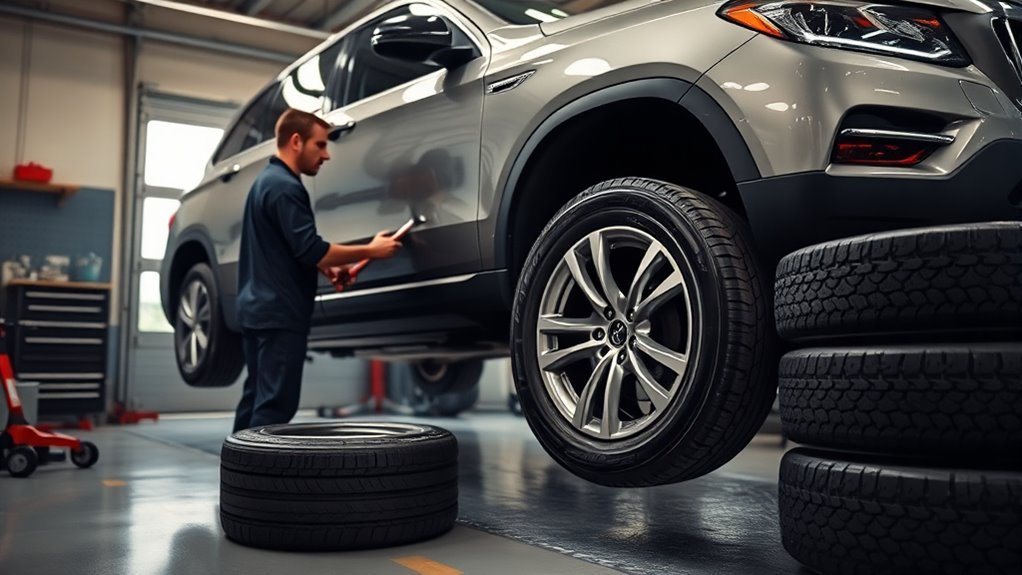
How Many Miles to Rotate Tires?
You should rotate your tires every 5,000 to 7,500 miles to keep tread wear even and help them last longer. Regular tire rotation is key to maintaining good traction and ensuring your tires wear evenly over time. It’s a simple step that can save you money and improve your vehicle’s performance.
Check your owner’s manual, since your vehicle, tire type, drivetrain, and driving habits can change the ideal interval. If you drive rough roads, carry heavy loads, tow often, or face extreme weather, rotate them sooner. Skipping rotations can cause uneven wear, more noise, poorer traction, and earlier tire replacement.
A little farther on, you’ll see what pattern fits.
Key Takeaways
- Rotate tires every 5,000 to 7,500 miles for most vehicles. This helps promote even tread wear and extends the life of your tires.
- Always check your owner’s manual for the exact interval. Manufacturer recommendations can vary depending on your vehicle, tires, and drivetrain.
- If you drive on rough roads, tow heavy loads, face extreme weather, or drive aggressively in stop-and-go traffic, consider rotating sooner.
- Watch out for uneven tread wear, vibration, road noise, or your vehicle pulling to one side. These can be signs that your tires need rotation earlier.
- Regular rotations not only improve traction and braking but also enhance ride comfort. Plus, they can help you avoid premature tire replacement and costly repairs.
How Many Miles Should You Rotate Tires?
Generally, you should rotate your tires every 5,000 to 7,500 miles. The right interval depends on your vehicle, tire type, and driving habits.
Most drivers should rotate tires every 5,000 to 7,500 miles, depending on the vehicle, tires, and driving conditions.
That range matches many maintenance schedules and helps your tires wear more evenly across all four positions. When you rotate them on time, you improve traction, support steadier handling, and help extend overall tire life.
You can also use your oil change schedule as a simple reminder, especially if you service your car regularly. Check your owner’s manual for the exact recommendation and follow it consistently.
If your vehicle has a tire maintenance monitor, don’t treat it as a substitute for routine rotation. Staying within the recommended mileage window helps you protect your investment and avoid uneven tread wear that can shorten tire performance over time.
What Changes Your Tire Rotation Interval?
Your tire rotation interval can change based on how and where you drive. If you face rough roads, heavy loads, stop-and-go traffic, or extreme weather, your tires may wear faster and need more frequent rotation.
Also, your tire type and drivetrain matter a lot. Front-wheel drive, rear-wheel drive, all-wheel drive—they all affect how your tires wear. Different tread designs don’t wear at the same rate either, so keep that in mind.
Driving Conditions
Often, the way and where you drive affects how often you should rotate your tires. Rough roads, stop-and-go traffic, steep hills, and frequent hard braking can speed up uneven tread wear.
If you regularly drive in demanding conditions, you’ll usually need rotations sooner than the standard recommendation. Paying attention to your daily routes helps you protect traction, improve handling, and extend tire life.
- Potholes and broken pavement can stress tires and wear edges faster.
- City driving creates repeated braking and turning that scrubs tread unevenly.
- Gravel, mud, and construction zones can increase abrasion and trap debris.
- Long highway trips may wear tires more evenly but still require checks.
When your driving conditions change seasonally or suddenly, inspect tread more often and adjust your rotation schedule accordingly to maintain even wear.
Tire And Drivetrain Type
Different tire designs and drivetrain layouts can change how quickly tread wears, so they can also change how often you should rotate your tires. If you drive a front-wheel-drive vehicle, your front tires usually wear faster because they handle steering, acceleration, and much of the braking force.
With rear-wheel drive, rear tires often take more abuse during acceleration. All-wheel-drive systems can spread wear more evenly, but they still need timely rotations to protect traction and drivetrain components.
Your tire type matters too. Directional tires limit rotation patterns, while staggered setups may prevent front-to-back swaps entirely.
Performance tires and softer compounds can wear faster, especially if you drive aggressively. If your vehicle has these setups, you shouldn’t rely on a generic mileage interval.
Follow your owner’s manual and inspect tread regularly.
Which Tire Rotation Pattern Should You Use?
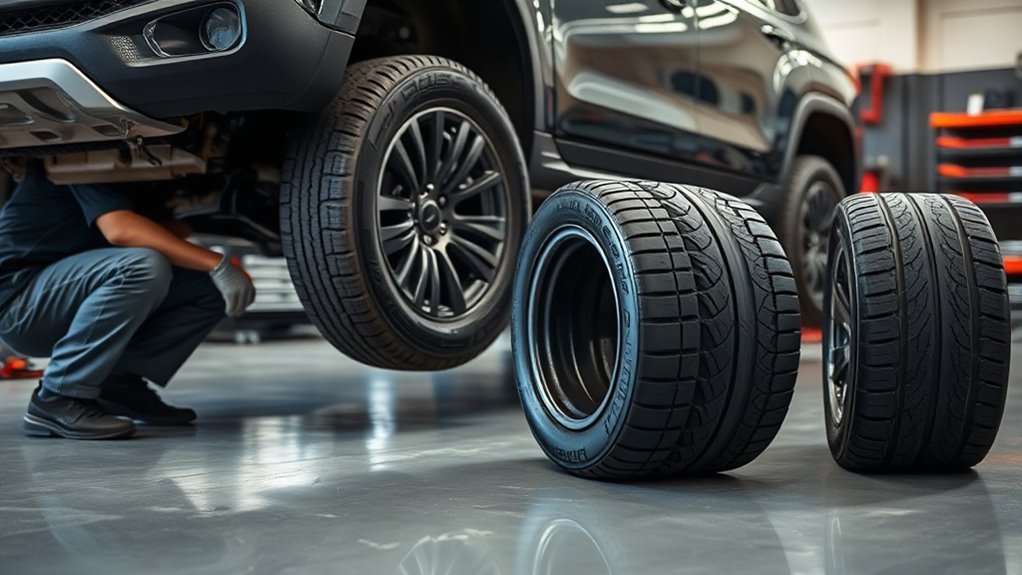
You can’t use the same tire rotation pattern for every vehicle, because different setups call for different approaches. You’ll need to know the main rotation pattern types, such as front-to-back, cross, and side-to-side.
It’s also important to choose a pattern based on your drivetrain, tire design, and whether your tires are directional or staggered. That way, you get the best performance and longest life out of your tires.
Rotation Pattern Types
Choosing the right tire rotation pattern comes down to your vehicle’s drivetrain, tire type, and whether the tires are directional or staggered. You’ll use specific layouts to move tread wear around the car, helping each tire share the workload more evenly.
The main patterns are simple, but each moves tires differently.
- Forward cross: Front tires go straight back; rear tires cross to the front.
- Rearward cross: Rear tires go straight forward; front tires cross to the rear.
- X-pattern: Each tire switches corners diagonally, creating an X across the vehicle.
- Side-to-side: Tires swap left to right on the same axle, common with directional sets.
If you recognize these rotation types, you’ll understand what your shop recommends and why the tire positions change during service visits. It makes the whole process a lot less confusing.
Pattern Selection Factors
Because no single rotation pattern fits every vehicle, the right one depends on how your car puts power to the road, whether the tires are directional or non-directional, and whether all four tires match in size and wheel setup.
If you drive a front-wheel-drive car, you’ll usually use a forward cross pattern because the front tires wear fastest. With rear-wheel drive or four-wheel drive, a rearward cross often works better.
If your tires are directional, you can’t swap sides, so move them front to back only. If you run staggered sizes or different wheel offsets, rotation may be limited or impossible.
You should also check your owner’s manual, since some performance cars need specific patterns. Choosing the correct pattern helps you spread wear evenly and protect handling.
When Should You Rotate Tires Sooner?
Sometimes, tires need rotation sooner than the standard mileage interval, especially when driving habits, road conditions, or vehicle issues cause uneven wear. If you drive aggressively, carry heavy loads, or travel rough streets often, your tires can wear faster between scheduled services.
Shorter intervals also make sense after installing new tires on one axle or after suspension work.
- You tow trailers, haul gear, or frequently drive with passengers.
- You commute on gravel, pothole-filled roads, or uneven pavement.
- You drive a performance vehicle with staggered stress between axles.
- You’ve recently changed alignment, shocks, struts, or tire positions.
Checking your owner’s manual helps, but your real-world use matters more. When conditions are harder than average, rotating earlier protects tread life, supports balanced handling, and helps you get more value from every mile.
What Signs Mean Your Tires Need Rotation?
Uneven tread wear is the clearest sign your tires need rotation, and you can often spot it before it affects performance. Check for one shoulder wearing faster, feathering across tread blocks, or a front-to-rear difference in depth.
You might also notice your steering feels slightly off, road noise gets louder, or the ride feels less settled on familiar streets. If your tires have rotated positions before, compare each one closely during a pressure check.
| Sign | What you may feel |
|---|---|
| Outer-edge wear | Concern seeing fast wear |
| Inner-edge wear | Unease about alignment-like patterns |
| Feathered tread | Annoyance from rough texture |
| More road noise | Frustration on every drive |
| Front/rear depth mismatch | Worry that something looks off |
These clues tell you it’s time to schedule a rotation soon. Don’t wait too long—rotating your tires helps keep your ride smooth and safe.
What Happens If You Skip Tire Rotation?
If you skip tire rotation, your tires won’t wear at the same rate, and that can shorten their lifespan fast. Front and rear tires handle different loads, so neglecting rotation creates uneven tread wear that hurts grip, comfort, and braking.
You may also notice more road noise and a rougher ride as imbalance increases over time.
- Your front tires can wear out much sooner than expected.
- Uneven tread can reduce traction in rain and light snow.
- Extra strain on suspension and steering parts can increase wear.
- You’ll likely replace tires earlier, costing more overall.
Skipping rotations can also affect handling. Your car may pull slightly, feel less stable in turns, or respond unpredictably during sudden stops.
Frequently Asked Questions
Can Tire Rotation Improve Gas Mileage?
Yes, tire rotation can improve your gas mileage by promoting even tread wear and reducing rolling resistance.
You’ll help your tires maintain balanced contact with the road, so your vehicle won’t work as hard to move.
It’s a simple maintenance step that can save you some money at the pump. Just keep up with regular rotations, and your tires—and wallet—will thank you!
Does Tire Rotation Affect Wheel Alignment?
Yes—subtle steering shifts sometimes surface after rotation, but rotation doesn’t directly change alignment. You may notice pull, shimmy, or uneven wear because tires swap spots, spotlighting preexisting alignment problems.
If symptoms start, you’ll want an alignment check.
Should New Tires Be Rotated After Installation?
Yes, you should rotate new tires after installation, following your vehicle’s recommended interval, usually 5,000 to 7,500 miles.
Doing this helps promote even tread wear and extend the life of your tires. It also keeps traction steady and helps your vehicle handle more consistently.
Is Tire Rotation Necessary for All-Wheel Drive Vehicles?
Yes—on all-wheel drive vehicles, you should rotate tires regularly. Even 2/32-inch tread differences can strain the drivetrain.
You’ll promote even wear, preserve handling, and avoid costly repairs by following your owner’s recommended rotation schedule. It’s a simple step that really pays off in the long run.
How Much Does a Typical Tire Rotation Cost?
You’ll typically pay $20 to $50 for a tire rotation, though some shops charge more.
You can often get it free with tire purchase packages, maintenance plans, or dealership service specials and promotions.
Conclusion
Rotate your tires about every 5,000 to 7,500 miles, but don’t treat that number like gospel. Your driving habits, road conditions, and tire setup all steer the schedule.
If you watch for uneven wear and act early, you’ll keep your ride smoother, safer, and easier on your wallet. Skip rotations, and your tires can wear out like runners on a crooked track.
Stay ahead of the curve, and your tires will carry you farther with fewer surprises. Regular tire rotation helps maintain even tread wear, which improves handling and extends tire life. By rotating your tires on time, you not only enhance safety but also get the most value from your investment. So, keep an eye on your mileage and road conditions, and make tire rotation a regular part of your vehicle maintenance routine. This simple step can save you money and keep your ride running smoothly for miles to come.