How Much Does a Tire Weigh?
Most passenger-car tires weigh about 20 to 30 pounds each, though compact car tires can be closer to 15 to 20 pounds.
If you drive a sedan or minivan, expect around 20 to 27 pounds per tire.
SUV and pickup tires often run 28 to 45 pounds, while heavy-duty truck tires can exceed 100 pounds.
Tire size, tread depth, and reinforced construction all affect weight.
Keep going and you’ll see what changes the numbers most. It’s interesting to know how much a tire weighs because it affects your vehicle’s performance and fuel efficiency.
Plus, knowing the weight helps when you’re shopping for new tires or planning a road trip.
Key Takeaways
- Most passenger car tires weigh about 20–30 pounds each. Compact car tires are often lighter, usually closer to 15–20 pounds.
- Sedan and minivan tires usually weigh around 20–27 pounds. On the other hand, SUV and pickup tires often range from 28–45 pounds.
- Heavy-duty truck tires commonly start near 50 pounds. Depending on size and construction, they can exceed 100 pounds.
- A complete tire-and-rim assembly typically weighs between 30 and 70 pounds. Larger SUV or off-road setups tend to weigh the most.
- Tire weight mainly depends on factors like size, tread depth, materials, sidewall thickness, and load or speed rating. These all play a role in how heavy a tire ends up being.
How Much Does a Tire Weigh on Average?
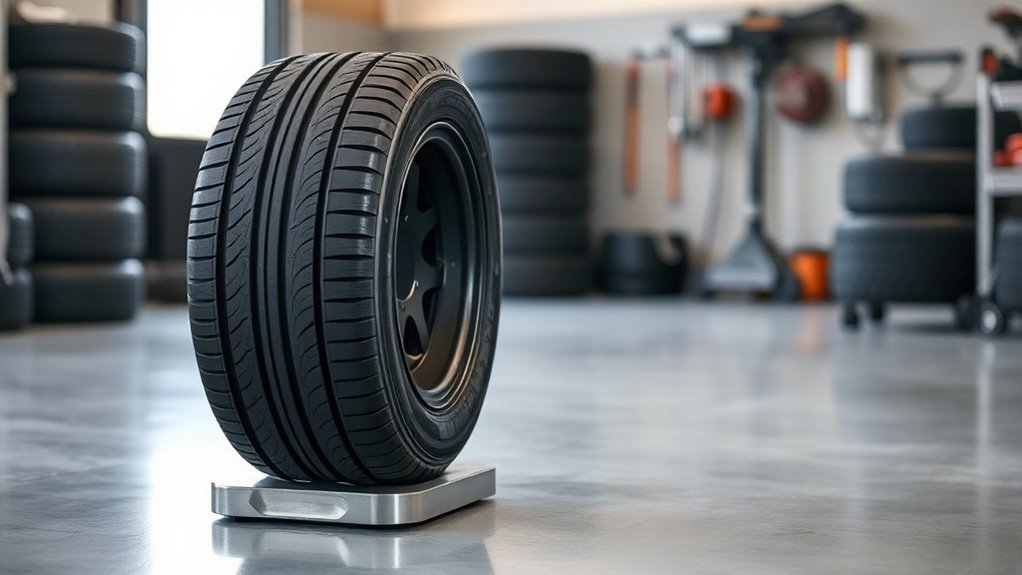
Most passenger car tires weigh between 20 and 30 pounds on average, though the exact number depends on the tire’s size, type, and construction. If you pick up a standard tire, you’ll notice that rubber, steel belts, and internal layers all add to the total.
Most passenger car tires average 20 to 30 pounds, with size, construction, and internal materials all affecting the final weight.
Wider tread, thicker sidewalls, and reinforced designs usually make a tire heavier. Smaller, simpler tires generally weigh less.
You should also remember that tire weight isn’t just a trivia point; it affects handling, fuel use, and ease of installation. A heavier tire can feel sturdier, but it may also add rotating mass that your vehicle must move.
When you compare options, check the manufacturer’s specifications instead of guessing. That gives you a clearer idea of what you’re buying and how it may perform on the road.
Average Tire Weight by Vehicle Type
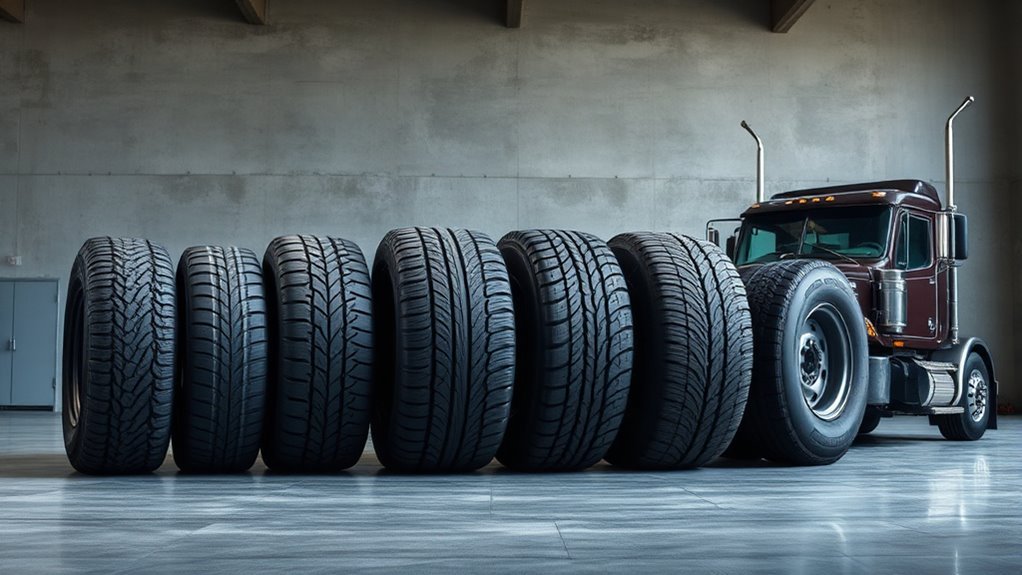
Average tire weight changes quite a bit once you sort tires by vehicle type. If you know what you drive, you can estimate tire weight more accurately and compare options faster.
Passenger-car tires usually stay on the lighter end, while larger vehicles need heavier rubber.
- Compact cars: You’ll usually see tires weighing about 15 to 20 pounds each.
- Sedans and minivans: Most tires fall between 20 and 27 pounds, depending on size.
- SUVs and pickup trucks: Expect roughly 28 to 45 pounds per tire for everyday models.
- Heavy-duty trucks: Tires can start around 50 pounds and climb well past 100 pounds.
These ranges give you a practical baseline. When you shop, replace, or transport tires, you’ll have a clearer idea of what each vehicle category typically demands overall.
What Affects Tire Weight?
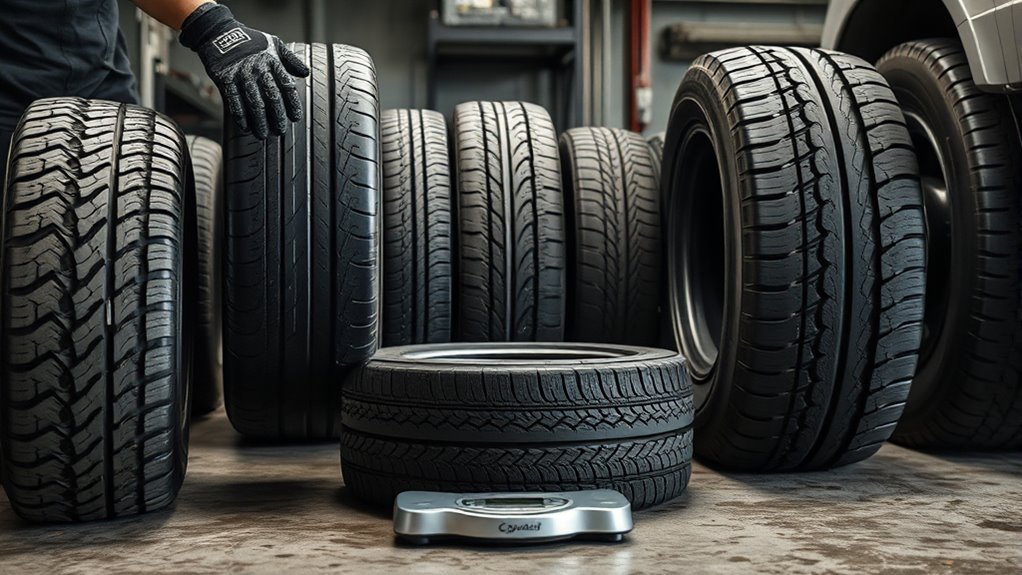
Although tire size plays a big role, several factors affect how much a tire weighs. The tire’s construction matters first. If you choose a tire with thicker sidewalls, extra plies, or reinforced belts, you’ll get more durability, but you’ll also add weight.
Materials make a difference too, since rubber compounds, steel, polyester, and aramid all vary in density. So, the type of materials used can really change the overall weight of the tire.
Tread design also changes weight. Deeper tread and aggressive patterns use more material, so off-road and winter tires often weigh more than standard highway tires.
Load rating matters because tires built to carry heavier vehicles need stronger internal components. Speed rating can add weight as well, since higher-rated tires may use sturdier construction.
Even brand and model influence weight because manufacturers balance performance, comfort, strength, and fuel economy differently in each design. So, it’s not just about size—it’s a bunch of different things working together.
How Much Does a Tire and Rim Weigh Together?
A complete wheel assembly combines the tire and rim, so the total weight usually falls somewhere between 30 and 70 pounds, depending on the vehicle and wheel size. If you drive a compact car, your wheel and tire may weigh closer to 30 to 40 pounds.
On a pickup or SUV, you’ll often see 50 to 70 pounds.
- Smaller steel rims usually add more weight than basic alloy rims.
- Low-profile tires often weigh less than taller, heavier-duty tires.
- Larger diameters, like 20-inch wheels, increase combined weight quickly.
- Off-road setups can weigh the most because both the tire and rim are beefier.
If you want an exact number, check the tire specs, wheel specs, or weigh the full assembly at a shop. That gives you the most accurate answer.
How Tire Weight Affects Fuel Economy and Handling
Because tire weight adds to the mass your engine has to move, it can affect both fuel economy and the way your vehicle feels on the road. Heavier tires require more energy to accelerate, so you may notice slightly lower gas mileage, especially in stop-and-go driving.
They can also increase rotating mass, which makes braking and quick acceleration feel less responsive.
When you drive, extra tire weight can change handling by making steering feel slower and less precise. Your suspension must work harder to control heavier wheels over bumps, which can reduce ride comfort and road feedback.
Lighter tires often help your vehicle feel more nimble, while heavier ones can add stability but may dull responsiveness. The overall effect depends on your vehicle, tire size, driving style, and typical road conditions.
How to Find Your Tire’s Exact Weight
To find your tire’s exact weight, start with the sidewall size code so you can identify the precise model and construction. Then check the manufacturer’s weight specs, since they usually list the tire’s weight for each size and load rating.
If you want to confirm it yourself, take the tire to a shop and have it weighed. It’s a quick way to get the exact number without any guesswork.
Sidewall Size Code
Start by checking the size code molded into your tire’s sidewall, since that string of letters and numbers gives you the exact specifications you need to estimate or confirm its weight. You’ll usually see something like P225/65R17 102H. Each section tells you dimensions that affect mass and construction.
- Prefix letter shows tire type, such as P for passenger or LT for light truck, which hints at heavier build strength.
- Section width is the three-digit number in millimeters; wider tires typically weigh more than narrower ones.
- Aspect ratio follows the slash; a taller sidewall usually adds material and can increase weight slightly.
- Construction and wheel diameter appear as R17; radial design is standard, while larger diameters often mean a heavier tire.
Read the full code carefully before comparing tire options. It really helps to understand what each part means when you’re shopping around.
Manufacturer Weight Specs
Once you have the sidewall size code, check the tire manufacturer’s specifications to find the exact weight for that model. You’ll usually find it on the brand’s website under product details, data sheets, or technical specifications.
Make sure to match the full size, load index, and speed rating so you don’t confuse similar versions. If the tire has extra features, like reinforced construction or run-flat design, confirm those too, because they can change weight noticeably.
| What you find | Why it matters |
|---|---|
| Exact tire model | Gives you confidence |
| Technical data sheet | Removes frustrating guesswork |
When you verify the manufacturer’s listed weight, you protect yourself from costly mistakes. You’ll know exactly what you’re lifting, storing, shipping, or mounting. And that certainty brings real peace of mind every time.
Tire Shop Weighing
Bring your tire to a local tire shop if you want the most accurate weight without relying on catalogs or estimates. Most shops have calibrated scales and can weigh loose tires quickly.
If your tire is mounted, ask whether they can separate the tire’s weight from the wheel’s weight. It’s good to know exactly what you’re dealing with.
- Call ahead and confirm the shop offers weighing services.
- Clean out mud, rocks, and debris before you go.
- Ask for the weight in pounds and kilograms.
- Record the brand, size, and model with the result.
You’ll get a real-world number that reflects your exact tire, not just a general specification. That’s especially helpful if the tire is worn, repaired, or a different load range.
A quick stop at a shop can save you from guessing when accuracy matters most. It’s a small step that makes a big difference!
Frequently Asked Questions
How Long Do Tires Typically Last Before Needing Replacement?
Tires typically last 25,000 to 50,000 miles, though you’ll replace them sooner if you drive aggressively, skip rotations, or face harsh roads.
You should check tread depth regularly and replace them when traction drops. It’s kind of like keeping an eye on your shoes—once they start wearing thin, it’s time for a new pair.
Can Tire Weight Affect Shipping or Storage Costs?
Absolutely—like carrying bricks, heavier tires raise your shipping and storage costs. You’ll pay more for freight, handling, and shelving space.
This is especially true when you’re moving large volumes or storing oversized models for long periods. It really adds up!
Are Heavier Tires More Difficult to Install Manually?
Yes, you’ll find heavier tires harder to install manually because they require more lifting force, balance, and control. They can tire you faster, increase strain on your back and arms, and make alignment trickier.
It’s not just about muscle, either. Handling a heavy tire means you have to be extra careful to avoid injury. So, take your time and maybe get some help if you can!
Does Tire Age Change Its Weight Over Time?
Verily, you won’t see a tire’s weight change much as it ages. You might notice tiny losses from drying or wear, but moisture, repairs, or trapped debris can also make it weigh slightly more.
Can Tire Weight Impact Electric Vehicle Battery Range?
Yes, tire weight can affect your electric vehicle’s battery range because heavier tires increase rotational mass and rolling resistance. You’ll use more energy accelerating and maintaining speed.
Conclusion
When you know how much a tire weighs, you can make smarter, smoother choices for your vehicle. From compact car tires to hefty truck setups, weight shapes fuel use, handling, and overall performance.
If you check your tire’s exact specs, you’ll better balance safety, savings, and steering feel. It’s all about finding that sweet spot where your ride feels just right.
In the end, tire weight isn’t just a number—it’s a powerful piece of the puzzle. Understanding tire weight helps you improve fuel efficiency, enhance handling, and boost overall safety. So, whether you’re upgrading your tires or just curious, knowing how much a tire weighs keeps your vehicle rolling with steady, surefooted confidence every mile.