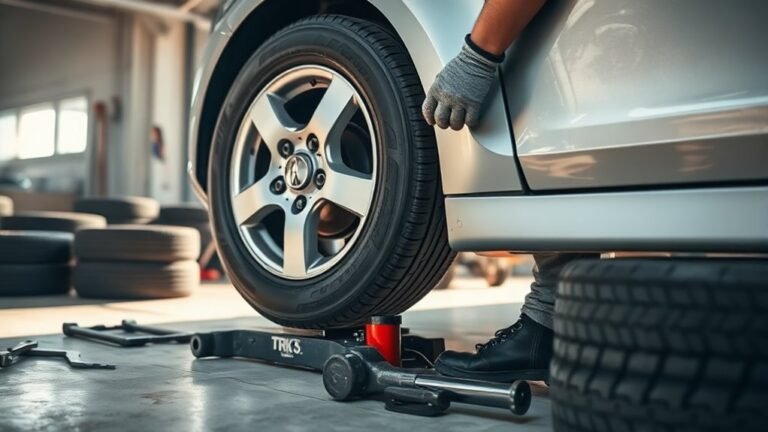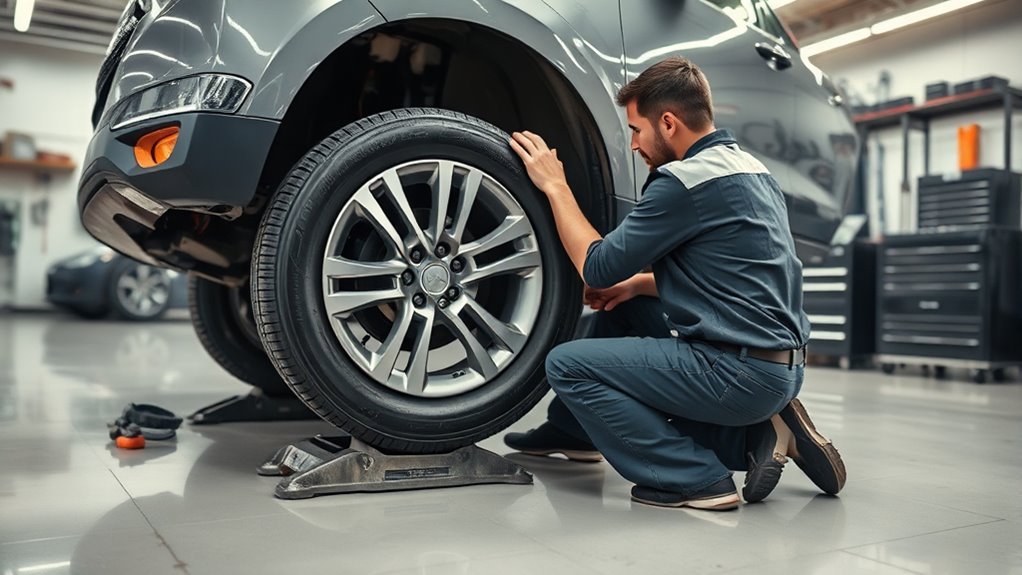
How Often Should You Get Your Tires Rotated?
You should rotate your tires about every 5,000 to 8,000 miles, or roughly every six months.
This regular tire rotation helps your tires wear evenly and improves traction, which can extend their life. However, your owner’s manual should always set the exact interval for your specific vehicle.
If you drive in stop-and-go traffic, tow heavy loads, or notice uneven tread wear, vibration, or pulling, you might need a rotation sooner.
These signs mean your tires aren’t wearing evenly, so it’s a good idea to check them more often. Rotating your tires keeps your ride smoother and safer.
Keep going, and you’ll see what else affects the tire rotation schedule. It’s all about maintaining your tires for the best performance and longevity.
Key Takeaways
- Rotate tires every 5,000 to 8,000 miles, or about every six months, unless your owner’s manual says otherwise.
- Some vehicles need rotations closer to 5,000 to 7,500 miles, especially with specific tire types or drivetrain setups.
- Rotate sooner if you notice uneven tread wear, vibration, pulling, or a steering wheel that sits off-center.
- Heavy towing, stop-and-go driving, rough roads, and aggressive driving can require more frequent tire rotations.
- Regular rotations help tires wear evenly, last longer, and maintain better traction, handling, and braking performance.
How Often Should You Rotate Tires?
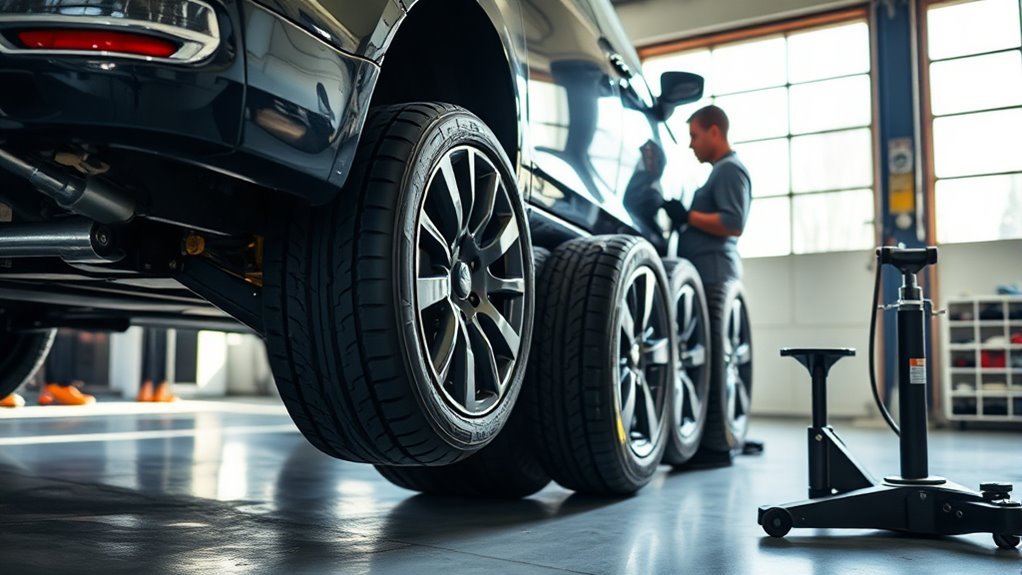
Most drivers should rotate their tires every 5,000 to 8,000 miles, or about every six months. But your vehicle’s owner’s manual should always come first.
You should treat that schedule as a baseline, not a universal rule. Your driving habits and tire type can change the ideal interval.
If you drive mostly in stop-and-go traffic, tow heavy loads, or put on mileage quickly, you may need rotations sooner. And if you drive a performance or all-wheel-drive vehicle, the manufacturer may recommend a different pattern or cadence.
Regular rotations help you spread wear more evenly across all four tires. This supports better traction, smoother handling, and longer tread life.
Keep a simple maintenance log so you can stay on schedule and avoid guessing. It really makes a difference in keeping your tires in good shape.
Signs You Need a Tire Rotation Now?
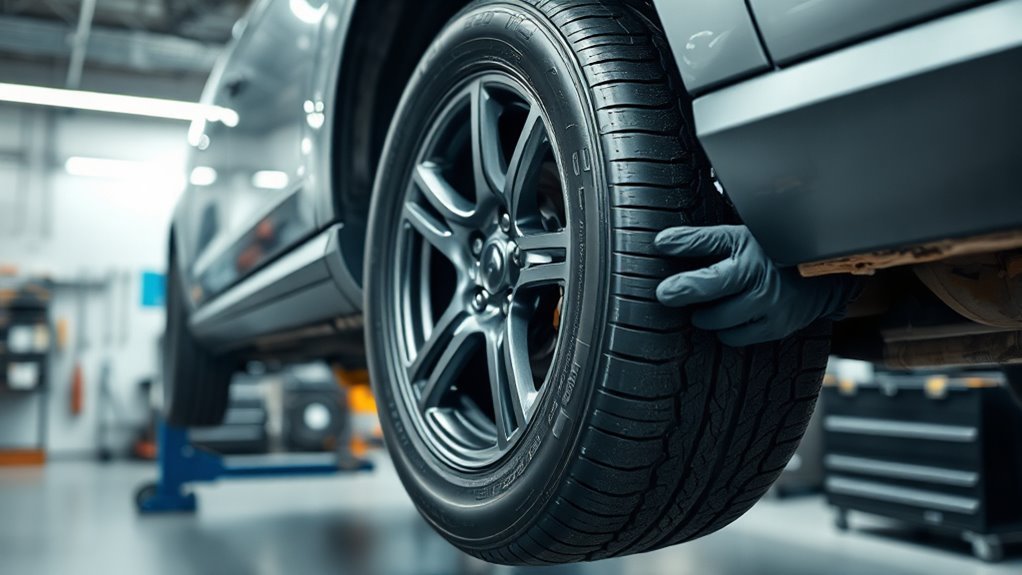
If you notice uneven tread wear, vibration, pulling to one side, or a noisier ride, it may be time for a tire rotation now. You should inspect your tires for worn edges, bald spots, or differences in tread depth between the front and rear.
Uneven tread wear, vibration, or pulling to one side may mean it’s time for a tire rotation.
These clues often mean your tires aren’t wearing evenly, and your vehicle may start feeling less stable. You might also see your steering wheel sit off-center when you drive straight.
Don’t ignore these changes, even if your tires still look usable at a glance. A rotation can help spread wear more evenly, improve handling, and support better traction.
If the problem keeps getting worse, schedule service soon so you can protect your tires and keep driving with confidence.
What Changes Your Tire Rotation Interval?
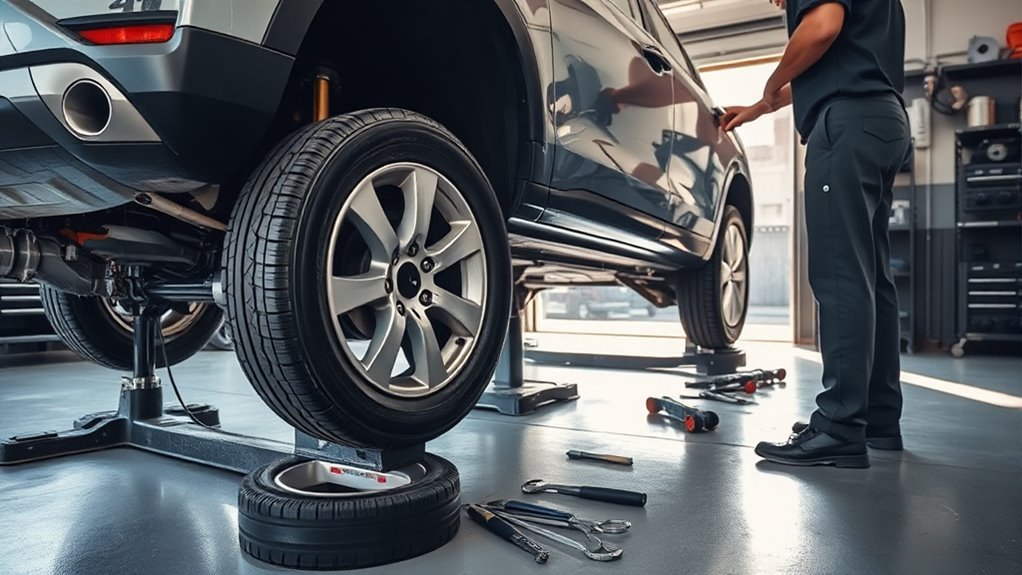
Your tire rotation interval can change based on how and where you drive. Short trips, stop-and-go traffic, rough roads, and heavy loads can make you rotate sooner.
Your vehicle type and drivetrain also matter, since some setups wear tires unevenly. Tire pressure, alignment, and driving habits can shift the schedule, too.
- City driving
- Highway driving
- Aggressive braking
- Towing or hauling
- Uneven tire wear
If you drive in harsher conditions, you may need more frequent service than the owner’s manual suggests. Check your tires regularly and follow the interval that fits your routine, not just a generic mileage target.
When your driving changes, your rotation timing should change with it.
How Does Tire Rotation Extend Tire Life?
Tire rotation helps your tires wear more evenly, which can add thousands of miles to their life. When you move each tire to a new position, you balance the stress from steering, braking, and acceleration.
Your front tires often handle more scrubbing and weight, while the rear tires may wear differently. So, swapping them helps prevent one set from aging faster than the others.
This even wear keeps tread depth more consistent across all four tires, letting you use them longer before replacement. It also helps you maintain better traction and handling as the tread wears down.
What Happens If You Skip Tire Rotation?
Skip tire rotations long enough, and your tires can wear unevenly, lose traction sooner, and need replacement much earlier than they should. You’ll also notice rougher road noise and less predictable cornering.
Skip tire rotations too long, and you’ll wear tires unevenly, lose traction sooner, and replace them much earlier.
Plus, you might see reduced grip in rain, faster tread loss on certain wheels, and extra strain on suspension parts.
When tread wears at different rates, your car won’t handle as smoothly, and braking performance can suffer. You may feel vibration, pulling, or a bouncier ride, especially as wear worsens.
Skipping this simple service also wastes money because you’ll buy new tires sooner and may face avoidable repair costs. Rotating them helps spread wear evenly, so each tire does its job longer and better.
When Should You Rotate Tires on Your Vehicle?
Most vehicles need a tire rotation every 5,000 to 7,500 miles, but you should always check your owner’s manual for the exact interval. You should also rotate your tires when you notice uneven tread wear, a vibration that wasn’t there before, or after major service that includes wheel removal.
If you drive in stop-and-go traffic, haul heavy loads, or commute long distances, you may need rotations more often. Front-wheel-drive and rear-wheel-drive vehicles wear tires differently, so sticking to a schedule matters.
Rotate them before the tread gets too low, because waiting too long can shorten tire life and hurt handling. If you’re unsure, just ask your mechanic to inspect the tread and recommend the right timing for your vehicle.
Frequently Asked Questions
Can I Rotate Tires Myself at Home?
Yes, you can rotate tires yourself at home if you’ve got a jack, jack stands, lug wrench, and your vehicle’s rotation pattern.
Just make sure to check the torque specs, work safely, and recheck the lug nuts after driving.
It’s not too hard once you get the hang of it! Just take your time and be careful.
Does Tire Rotation Affect Tire Pressure Monitoring Systems?
Like a watchful guardian, tire rotation can affect your TPMS if sensors move, relearn procedures are needed, or pressures change.
You’ll usually be fine, but you should check and reset the system afterward.
Should Spare Tires Be Rotated Too?
Usually, you don’t rotate a spare tire with the others unless it’s a full-size matching spare.
If it is, you should include it in rotations so you keep wear even and avoid surprises.
Do All-Wheel-Drive Vehicles Need Special Rotation Patterns?
About 80% of AWD drivetrains wear tires unevenly, so you should use your owner’s manual’s rotation pattern. You’ll often need a front-to-rear or cross pattern, and you shouldn’t mix tread depths much.
It’s really important to follow these patterns to keep your tires wearing evenly. Mixing tread depths can cause problems, so try to avoid that. Just stick to what your manual says!
Is Tire Rotation Covered Under Warranty?
Sometimes, but you’ll need to check your warranty. You usually get tire rotation coverage only if it’s included in a maintenance plan or treadwear warranty.
Also, you have to follow the required service schedule exactly. Otherwise, it might not be covered. Just keep an eye on the fine print!
Conclusion
In the end, you should rotate your tires regularly to help them wear evenly and last longer. Skipping this simple service can lead to rougher rides, poor handling, and faster tire wear.
Why risk replacing tires sooner than you need to? By staying on top of your rotation schedule, you protect your safety and your budget at the same time.
A little maintenance now can save you a lot later, so don’t put it off. Regular tire rotation is key to getting the most out of your tires, improving your vehicle’s performance, and ensuring a smoother, safer ride. Remember, keeping up with tire rotation not only extends tire life but also helps maintain even tread wear. So, make tire rotation part of your routine car care—it’s an easy step that pays off big in safety, savings, and overall driving comfort.