10 Signs to Tell If You Need New Tires
You need new tires if the tread is shallow, the wear bars are flush, or the tires wear unevenly. Keep an eye out for cracks, splits, bulges, cuts, exposed cords, or repeated leaks. These signs often mean your tires are past their prime and could be unsafe to drive on.
If your car pulls to one side, shakes, or feels vague on wet roads, your tires may be failing. Old tires can harden and lose grip even if the tread looks okay.
Don’t wait for a blowout or costly repair—there’s more to know about spotting trouble early. Paying attention to these tire issues can save you money and keep you safe on the road.
Key Takeaways
- Check tread depth and wear bars; shallow tread reduces wet-road traction and means it’s time for new tires.
- Look for cracks, bulges, cuts, or exposed cords on sidewalls, which signal dangerous structural damage.
- Watch for uneven wear like bald spots, feathering, cupping, or edge wear. These issues are often caused by pressure or alignment problems.
- Repeated flat tires or pressure loss can indicate an internal leak or damage that needs replacement.
- Replace aged, hardened, or discolored tires, even if the tread looks okay. That’s because rubber loses flexibility over time.
Check Tread Depth on Your Tires
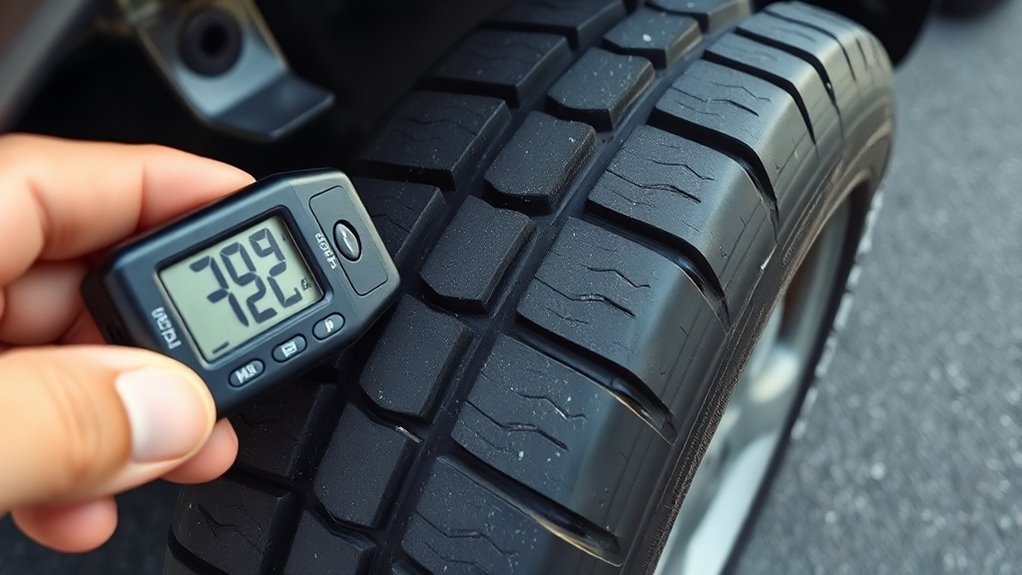
Start by checking your tire tread depth, since worn tread can reduce traction and make driving less safe. You can use a tread depth gauge for a quick, accurate reading.
Just place it into the grooves and compare the measurement with your vehicle manual or the tire maker’s recommendation. If the tread is getting shallow, your tires may not grip wet roads well, and stopping distances can increase.
Make sure to inspect all four tires, because uneven wear can point to alignment or inflation problems. Don’t wait for handling to feel obviously worse; by then, safety may already be compromised.
If your tread depth is below the recommended level, plan to replace the tires soon. Also, keep your driving conditions in mind, especially in rain, snow, or heavy traffic.
Find the Tread Wear Bars
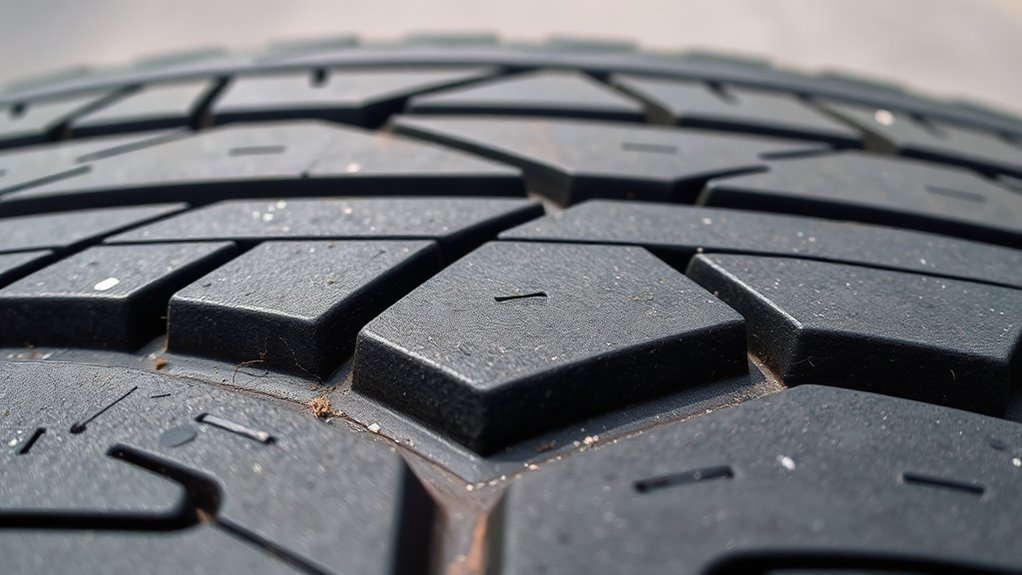
Another quick way to judge tire wear is to look for the tread wear bars built into the tire. These small raised strips sit in the grooves between tread blocks and show you when the tire has worn down too far.
Tread wear bars built into the tire quickly show when tread has worn down too far.
As the tread gets shallower, the bars become easier to spot. If the tread around them is level with the bars, you’ve reached the legal minimum and should plan for replacement soon.
Check several spots across each tire, because wear can differ from edge to edge. You don’t need special tools to use this method, and it only takes a minute.
Regularly inspecting these bars helps you catch worn tires before they hurt traction, braking, or handling in wet conditions. It’s a simple step that can make a big difference.
Look for Cracks in the Tire Rubber
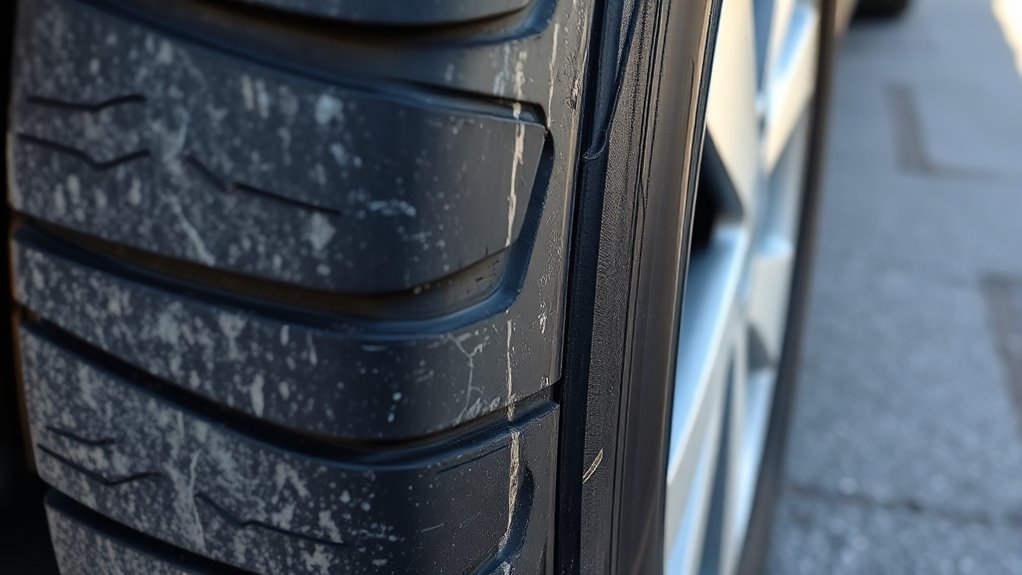
Check your tire sidewalls for cracks, since they can signal aging or damage that needs attention. Then inspect the tread surface for small splits or fissures, especially if the rubber looks dry or brittle.
If you spot either type of cracking, it’s time to plan for replacement. Don’t wait too long—these cracks can lead to bigger problems on the road.
Spot Sidewall Cracking
Sidewall cracking often means the tire rubber is aging and losing flexibility, so look closely for small splits, dry lines, or deeper cracks along the sidewall. If you see these marks, you shouldn’t ignore them, even when the tire still holds air.
The sidewall flexes every time you drive, and cracks can spread as the tire heats up, cools down, and carries weight. Check both the outside and inside edges, because damage may show up in more than one place.
If the cracks look deep, wide, or numerous, plan to replace the tire soon. You can also ask a tire professional to inspect it, since they can judge whether the tire’s structure is still safe.
Check Tread Surface Cracks
Look over the tread surface for any cracks in the rubber, especially small splits between the grooves or along the tread blocks. If you see them, you shouldn’t ignore them.
These cracks often mean the tire is drying out, aging, or losing flexibility, which can reduce grip and make the tread weaker under stress. Check the full tire, not just one spot, because cracking can spread unevenly from heat, sun exposure, or underinflation.
Run your eyes across the entire tread and watch for shallow lines that deepen over time. If the cracks look wide, numerous, or seem to reach deeper into the rubber, it’s time to replace the tire.
Even if the tread still looks decent, damaged rubber can’t safely perform as it should on wet, rough, or hot roads. So, don’t take any chances with cracks like these.
Watch for Bulges and Sidewall Damage
A bulge in a tire’s sidewall is a serious warning sign that the tire’s internal structure may be failing. You should inspect each tire for blisters, swelling, cuts, or exposed cords after potholes, curb hits, or road debris.
These defects can grow quickly and raise the risk of a sudden blowout, so don’t ignore them. If you spot damage, replace the tire soon and avoid high-speed driving until you do.
| Damage type | What it may mean |
|---|---|
| Bulge | Internal cord failure |
| Deep cut | Weakened sidewall |
| Cracked area | Structural damage |
Look closely in good light, and run your hand near the sidewall only when the tire is cool. If the damage looks serious, have a professional inspect it before you drive any farther.
Notice Uneven Tire Wear
When you inspect your tires, look for uneven wear patterns like bald spots, feathering, or wear on just one edge. These signs can point to problems with alignment, inflation, or suspension parts.
Catching them early helps you fix the cause before you need new tires sooner than expected. It’s definitely worth taking a little extra time to check now and then. That way, you avoid bigger headaches down the road.
Spotting Wear Patterns
Uneven tire wear can signal trouble long before a tire is completely worn out. You should check the tread across the entire surface, not just the center.
If one edge looks bald while the other still has depth, your tire isn’t wearing evenly. You might also notice feathering, cupping, or patches that look more worn than the rest. These patterns tell you the tire isn’t gripping the road the same way everywhere.
Run your hand across the tread blocks to feel for smooth spots, sharp edges, or dips. Compare all four tires, since one problem tire can stand out fast.
When you spot these differences early, you can replace the tire before traction drops, braking worsens, or a blowout risk rises. It’s better to catch these things sooner rather than later.
Causes Of Uneven Wear
Once you’ve spotted uneven wear, the next step is figuring out what’s causing it. You might have low tire pressure, which wears the edges faster, or overinflation, which can scrub the center tread.
Misaligned wheels can also pull your tires unevenly, and worn suspension parts may let them bounce or tilt.
| Cause | What You’ll Notice | What to Do |
|---|---|---|
| Low pressure | Edge wear | Inflate to spec |
| Overinflation | Center wear | Reduce pressure |
| Misalignment | Pulling or feathering | Get aligned |
| Suspension wear | Cupping or scalloping | Inspect parts |
| Rotation neglect | Uneven tread depth | Rotate tires |
If you keep driving, the wear gets worse fast. So, check your tires regularly, and fix the root problem before you buy replacements. It’s way better to catch it early!
Feel for Vibration While Driving
If you feel a vibration through the steering wheel, seat, or floor while driving, your tires may be wearing out or losing balance. You might notice it at highway speeds first, but it can show up anytime the tread wears unevenly, a tire bulges, or the wheel assembly needs service.
Vibration through the steering wheel, seat, or floor may signal worn or unbalanced tires.
Don’t ignore a shake that starts suddenly or gets worse over time. It can mean your tires aren’t rolling smoothly, which affects comfort and control.
Check for visible damage, low tread, or uneven wear patterns, then have a mechanic inspect the tires and alignment. If balancing doesn’t fix the problem, you may need replacement.
Catching vibration early helps you avoid further wear and keeps your drive steadier, safer, and more predictable. So, if you feel something off, it’s best to get it checked out sooner rather than later.
Watch for Poor Grip on Wet Roads
A tire with worn tread often loses its ability to channel water, so you may notice less traction on rainy roads, longer stopping distances, or the car slipping more easily during turns.
If your tires feel fine on dry pavement but start skidding when the road gets wet, the tread may no longer be doing its job. You might also notice the steering feels vague or that the car hydroplanes over puddles at lower speeds than before.
Don’t ignore these warning signs, because reduced wet-weather grip can quickly turn a normal drive into a dangerous one. Check your tread depth and compare all four tires.
If the rubber looks worn, hard, or uneven, it’s smart to replace them before the next heavy rain makes the problem worse and your safety depends on better traction.
Check for Repeated Flats or Slow Leaks
Repeated flats or slow leaks can be a sign your tires are wearing out or getting damaged beyond a simple patch. If you keep adding air, only to lose pressure again, inspect the tread, sidewall, and valve stem for trouble.
A nail may cause one flat, but recurring losses often point to internal harm, bead issues, or weakened rubber. You can use this quick guide:
| Symptom | What it may mean |
|---|---|
| Frequent top-offs | Hidden leak |
| Same tire goes flat | Structural damage |
| Bubble on sidewall | Impact failure |
| Patch won’t hold | Tire is compromised |
| Pressure drops fast | Replace soon |
Don’t ignore repeated repairs. If the leak keeps returning, you’re likely dealing with a tire that can’t safely seal anymore. Better to check it out sooner than later!
Know When Tire Age Makes Replacement Necessary
How old are your tires? Check the DOT code on the sidewall to find the week and year they were made. Even if the tread looks decent, rubber ages and loses flexibility over time.
Check the DOT code on your tire’s sidewall to see when it was made.
Heat, sunlight, and long periods of storage speed that process up. So, a tire that’s been sitting on a shelf or parked for years can still need replacement.
You should also inspect the sidewalls for tiny cracks, hardening, or discoloration. Those signs often point to age-related wear.
If you can’t confirm the tire’s manufacture date, ask a tire shop to decode it for you. When your tires are old enough, replace them before age-related deterioration affects how your vehicle grips, steers, and stops in everyday driving.
Replace Tires Before They Become Dangerous
Once your tires show serious damage or wear, don’t wait for a blowout or loss of control to force the issue. If you see deep cracks, bulges, exposed cords, or tread that’s too low, replace them right away.
Worn tires can’t grip wet roads well, and they can fail when you least expect it. You should also act fast if your vehicle shakes, pulls, or takes longer to stop, since those signs often point to tire trouble.
Don’t try to stretch a tire’s life past safe limits just to save money. A new set costs less than an accident, a tow, or repairs after a sudden failure.
Stay ahead of the risk, check your tires often, and replace them before they become dangerous.
Frequently Asked Questions
How Often Should I Rotate My Tires?
You should rotate your tires every 5,000 to 7,500 miles, or about every six months. Check your owner’s manual for specific recommendations.
Rotate sooner if you notice uneven wear, vibration, or if you do a lot of highway driving. Keeping an eye on your tires helps them last longer and keeps you safe on the road.
What Tire Pressure Should My Car Use?
You should use the pressure listed on your driver’s door placard, not the tire sidewall. Check it cold.
A soft gauge, a steady hand, and the right number keep you safe, efficient, and smooth.
It’s really all about keeping things balanced and making sure your ride feels just right.
Can I Replace Only Two Tires at Once?
Yes, you can replace only two tires at once, but you should match them to the others as closely as possible.
You’ll usually want the newer pair on the rear axle for better control, especially in wet conditions.
This helps keep your vehicle stable and safe while driving. It’s a simple step that makes a big difference!
Do Winter Tires Wear Out Faster?
Yes, winter tires can wear out faster because you use softer rubber and more aggressive tread.
You’ll shorten their life if you drive them on warm, dry roads or keep them on year-round. It’s really best to switch them out when the seasons change.
Should I Align My Wheels After New Tires?
Yes, you should align your wheels after new tires, especially if your old tires wore unevenly. This helps protect your new set and improves handling.
It also helps you avoid premature wear. Check your alignment whenever you notice pulling or vibration.
Keeping an eye on these signs can save you time and money down the road. So, it’s definitely worth a quick alignment check!
Conclusion
If you’ve ever wondered whether tires “last until the tread looks low,” that theory only tells part of the story. You need to check tread depth, but cracks, bulges, uneven wear, wet-road grip, leaks, and age can all mean trouble long before the tread is gone.
When your tires show any of these signs, don’t wait. Replace them before a small problem turns into a dangerous blowout or a loss of control.
Remember, keeping an eye on tread depth is important, but it’s not the whole picture. Other issues like cracks, bulges, and uneven wear can seriously affect your safety. Tires that don’t grip well on wet roads or start leaking are clear signals it’s time for new tires. Plus, even if your tires look okay, age can weaken them over time. So, don’t ignore these warning signs—getting new tires when needed helps you avoid accidents and keeps your ride smooth and safe.