How Often to Rotate Tires?
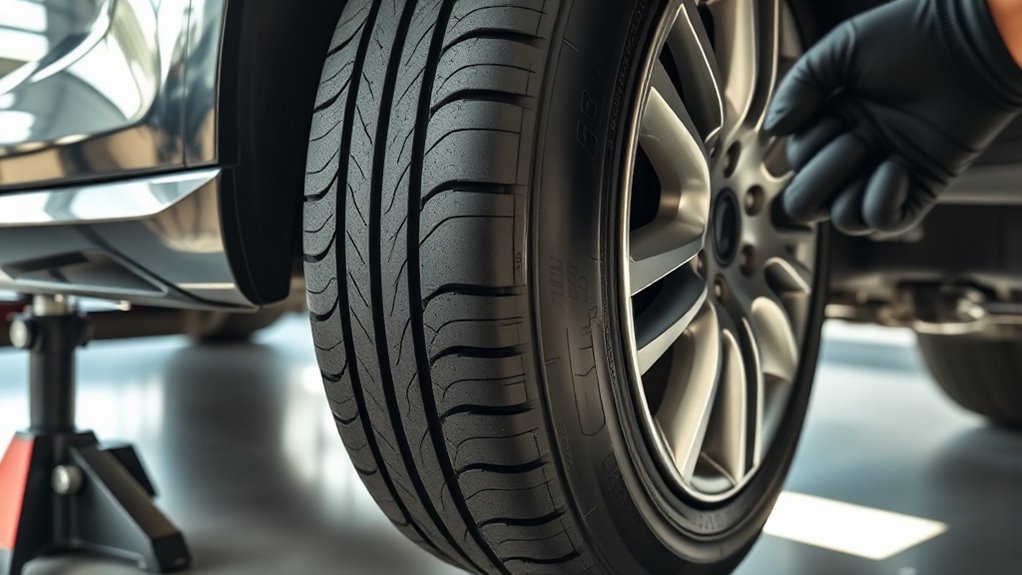
You should rotate your tires every 5,000 to 7,500 miles to guarantee even wear and extend their lifespan. Regular tire rotation is essential for keeping your tires in good shape and ensuring your safety on the road. If you drive on rough roads or carry heavy loads, you’ll want to rotate them more often to avoid premature wear.
Watch for signs like uneven tread wear, steering vibration, or pulling to one side. These symptoms can tell you when it’s time to rotate your tires. Rotation also improves safety and fuel efficiency, making it a smart maintenance step.
Following your vehicle’s recommendations and using the proper rotation patterns helps keep your tires balanced and performing well. Next, you’ll learn how to spot signs that it’s time for a rotation and how to choose the right rotation pattern for your vehicle.
Key Takeaways
- Rotate tires every 5,000 to 7,500 miles. This often lines up nicely with your oil change intervals, making it easier to keep track.
- If you drive on rough roads or carry heavy loads, consider rotating your tires more often. This helps prevent uneven wear and keeps things balanced.
- Always check your vehicle manufacturer’s recommendations for the best tire rotation schedule. They know what’s optimal for your specific car.
- Take a look at your tires every month. Watch out for uneven tread wear, vibrations, or pulling — these signs might mean you need to rotate sooner.
- Use the right rotation patterns based on your drivetrain type. Doing this balances tread wear and helps your tires last longer.
How Often Should You Rotate Your Tires?
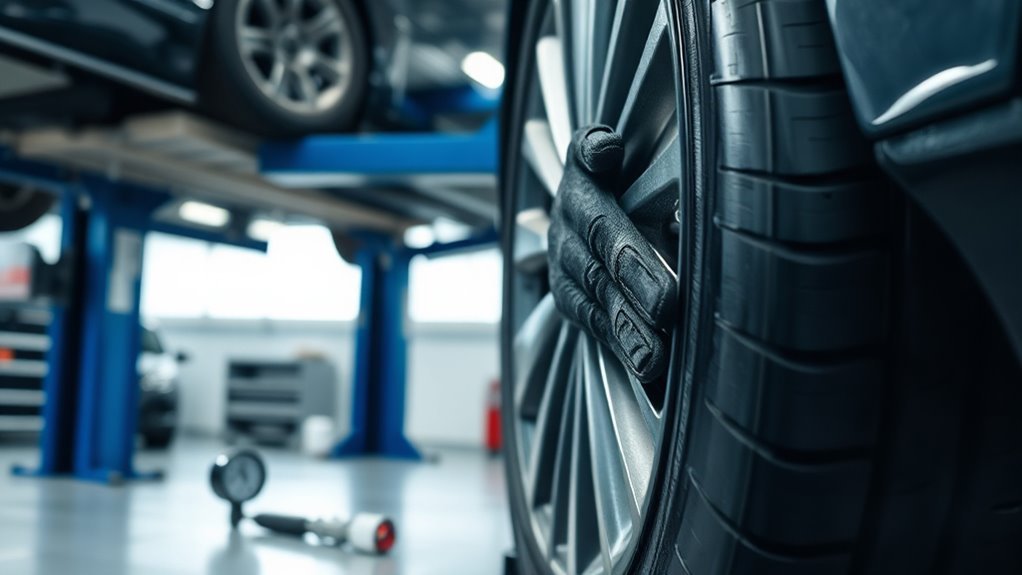
Regularly rotating your tires helps guarantee even wear and extends their lifespan. You should rotate your tires every 5,000 to 7,500 miles, which often aligns with oil change intervals.
This schedule helps balance tread wear between front and rear tires since they handle different driving stresses. If you drive frequently on rough roads or carry heavy loads, consider rotating your tires more often.
Following your vehicle manufacturer’s recommendations is also vital, as some models require specific rotation patterns or intervals. Sticking to a consistent rotation routine not only improves tire performance but also enhances safety and fuel efficiency.
How Do You Know When Tires Need Rotation?
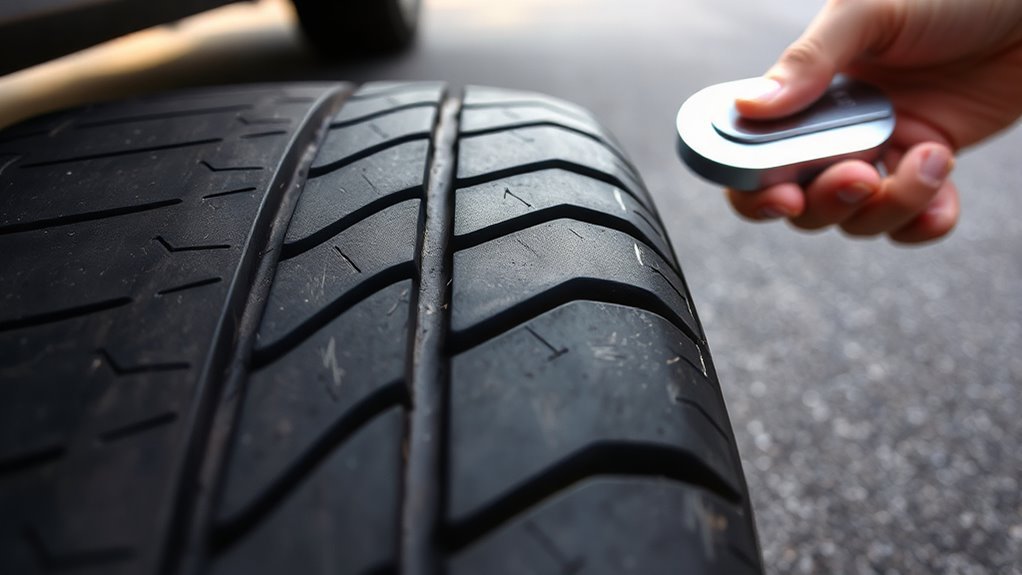
You can often tell when your tires need rotation by checking for uneven tread wear or changes in driving performance. If one tire looks more worn than the others, it’s a sign to rotate.
You might also notice vibrations, pulling to one side, or a rough ride. Regularly inspecting your tires helps you spot these issues early and maintain safety.
| Sign | What It Means |
|---|---|
| Uneven tread wear | Tires need rotation |
| Steering wheel vibration | Imbalanced or uneven tires |
| Pulling to one side | Unequal tire wear or alignment |
| Rough or noisy ride | Tires wearing unevenly |
Check your tires monthly to catch these signs and rotate accordingly. It’s a simple step that can save you from bigger problems down the road.
What Affects How Often You Should Rotate Your Tires
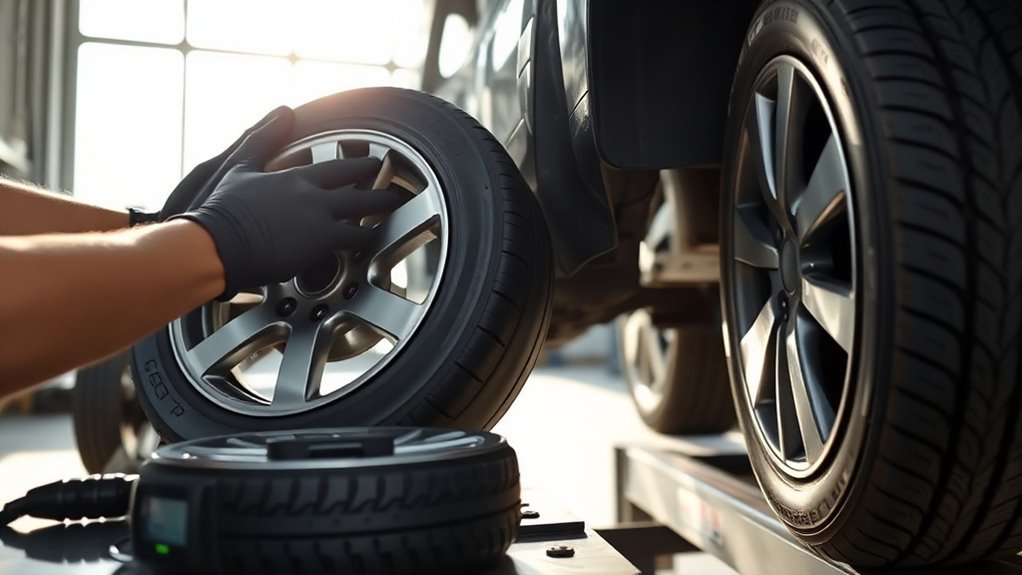
Several factors influence how often you should rotate your tires, and understanding these can help you maintain peak performance and safety. Your vehicle type plays a big role—front-wheel-drive cars tend to wear front tires faster, so you might need more frequent rotations.
How you drive matters, too; aggressive driving or frequent stop-and-go traffic can cause uneven wear. Road conditions also affect tire wear—rough or unpaved roads wear tires faster than smooth highways.
Additionally, tire type and quality influence durability; high-performance tires may require more attention. Finally, your vehicle’s alignment and suspension condition impact how evenly your tires wear.
Common Tire Rotation Patterns and Why They Matter
Tire rotation patterns act like a roadmap for even wear, helping your tires last longer and perform better. The most common is the “forward cross” pattern, ideal for front-wheel-drive vehicles.
Here, you move the front tires to the rear on the same side and cross the rear tires to the front. For rear-wheel or all-wheel-drive cars, the “rearward cross” is often recommended, swapping rear tires straight forward and crossing the front tires to the rear.
If your tires are directional, you’ll keep them on the same side and simply switch front to back. Knowing and following the right pattern matters because it balances tread wear, improves traction, and enhances safety.
Using the correct rotation pattern guarantees your tires wear evenly and extend their lifespan. It’s a simple step that really makes a difference.
What Happens If You Don’t Rotate Your Tires Regularly
If you skip regular tire rotations, uneven wear will develop quickly, leading to reduced traction and compromised handling. Your tires won’t last as long, and you’ll find yourself replacing them sooner than expected.
Skipping tire rotations causes uneven wear, reducing traction and handling, and shortens tire lifespan.
Uneven wear also makes your ride less comfortable, causing vibrations or pulling to one side. Most importantly, it increases the risk of blowouts or accidents, especially in bad weather.
Here’s what can happen if you don’t rotate your tires regularly:
- Accelerated tire wear on certain tires
- Poor vehicle handling and decreased safety
- Reduced fuel efficiency due to uneven rolling resistance
- Higher long-term costs from premature tire replacement
Rotating tires keeps them balanced and extends their life, so don’t overlook it. It’s a simple step that really makes a difference.
Tips for Scheduling and Tracking Your Tire Rotations
Regularly planning and tracking your tire rotations can save you time and money in the long run. Start by checking your vehicle’s owner manual for the manufacturer’s recommended rotation interval—usually every 5,000 to 7,500 miles.
Set reminders on your phone or calendar to alert you when it’s time to rotate. You can also keep a maintenance log, either physical or digital, to record each rotation date and mileage. This helps you stay consistent and spot uneven wear early.
If you visit a mechanic, ask them to note the rotation on your service record. By staying organized and proactive, you’ll extend tire life, improve performance, and avoid costly replacements. Scheduling rotations is a simple habit that pays off.
Frequently Asked Questions
Can Tire Rotation Improve Fuel Efficiency?
Yes, rotating your tires can improve fuel efficiency by promoting even tire wear, which reduces rolling resistance.
When your tires wear evenly, your vehicle handles better and uses less fuel. This means you save money in the long run.
Are Tire Rotations Necessary for All Vehicle Types?
You should rotate tires on most vehicles, but some, like certain all-wheel drives or specialty cars, may have specific recommendations.
Check your owner’s manual to make sure you’re following the right rotation schedule for your vehicle type. It’s always best to be safe and keep your tires wearing evenly.
How Much Does a Professional Tire Rotation Cost?
You’ll usually pay between $20 and $50 for a professional tire rotation, depending on your location and vehicle type.
Some shops even offer free rotations with oil changes or tire purchases, so be sure to ask. It never hurts to check!
Can I Rotate Tires Myself Safely at Home?
You can safely rotate tires yourself at home if you have a jack, lug wrench, and follow instructions carefully.
For example, Sarah rotated her tires every 6,000 miles. This helped improve tire life and saved her money on labor costs.
Do Winter Tires Require Different Rotation Schedules?
Yes, winter tires need rotation too, but you might want to rotate them more frequently—around every 4,000 to 5,000 miles. This helps guarantee even wear and maintain traction on slippery roads throughout the season.
Keeping your tires balanced like this can really make a difference when the weather gets rough. So, it’s a good idea to stick to this schedule to stay safe out there.
Conclusion
Rotating your tires every 5,000 to 7,500 miles can extend their life by up to 20%, saving you money and improving safety. You’ll notice better handling and even wear, which keeps your ride smooth.
Don’t wait for uneven tread—it’s smarter to stick to a schedule. Use reminders or apps to track rotations easily.
Taking this simple step helps you get the most from your tires and keeps you confidently on the road. Regular tire rotation not only boosts tire longevity but also enhances vehicle performance and safety. So, make tire rotation a routine part of your car maintenance to enjoy a smoother, safer driving experience while saving on costly tire replacements.