How Do You Know If You Need New Tires?
You need new tires when the tread is worn down, the rubber is cracked, or you see bulges, cuts, or exposed cords. These signs mean your tires aren’t safe anymore and could cause problems on the road. Checking your tires regularly for these issues helps keep you and your vehicle safe.
Also, watch out for uneven wear, bald spots, or one edge wearing faster than the other. These can signal alignment or inflation problems that need fixing. A quick way to check tread depth is using the penny test or a tread gauge. Don’t forget to look at the DOT date code too—it tells you how old your tires are.
If you keep an eye on these warning signs, you’ll know exactly when it’s time for new tires before things get risky. It’s all about staying safe and avoiding surprises while driving!
Key Takeaways
- Check tread depth; replace tires at 2/32 of an inch or when the penny test shows Lincoln’s head. It’s an easy way to see if your tires are getting too worn.
- Inspect for cracks, cuts, bulges, blisters, or exposed cords on the sidewalls and tread. These signs can mean your tires aren’t safe anymore.
- Look for uneven wear, such as one-sided wear, bald spots, feathering, or shiny patches. Uneven wear can affect how your car handles and may signal other issues.
- Compare all four tires; a much more worn tire, repeated air loss, or vibration needs attention. Don’t ignore these warning signs—they can lead to bigger problems.
- Check tire age using the DOT date stamp, since old tires can deteriorate even with decent tread. Tires get old and unsafe over time, no matter how much tread they have left.
Check the Signs of Tire Wear
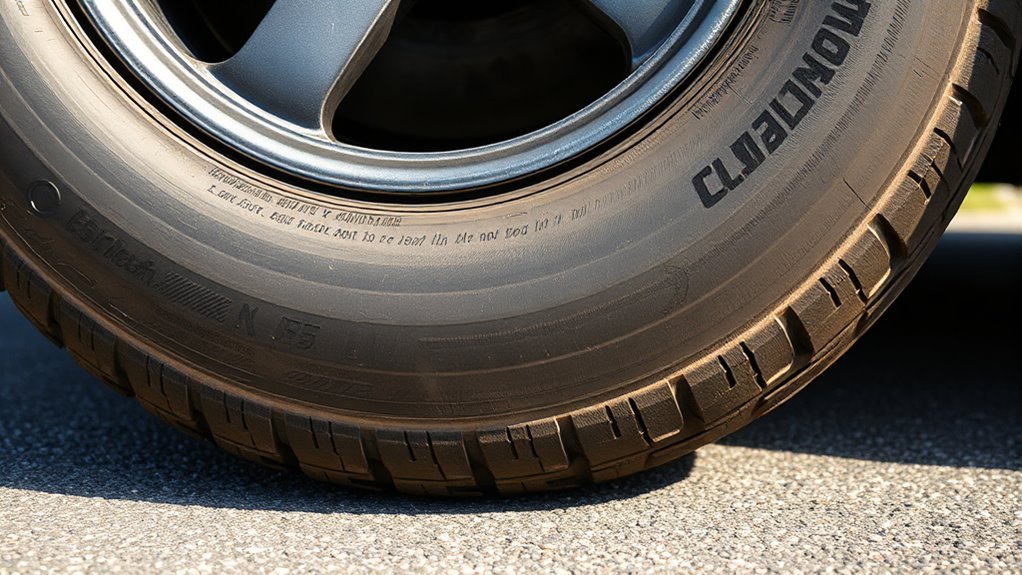
Start by looking closely at your tires for obvious wear. You should check both sidewalls and the tread for cracks, cuts, bulges, or uneven patches.
If you see exposed cords, deep splits, or chunks missing, your tires need attention right away. Also, notice whether one edge wears faster than the other. That often points to a problem that’s shortening tire life.
Scan for embedded objects, too, because nails or glass can slowly damage the rubber. After that, compare all four tires. If one looks much more worn than the others, don’t ignore it.
Fresh-looking rubber should have a consistent surface, while aging tires often show dry, rough areas and fading texture. When wear is obvious, it’s smarter to act early than wait for a failure.
Measure Tire Tread Depth
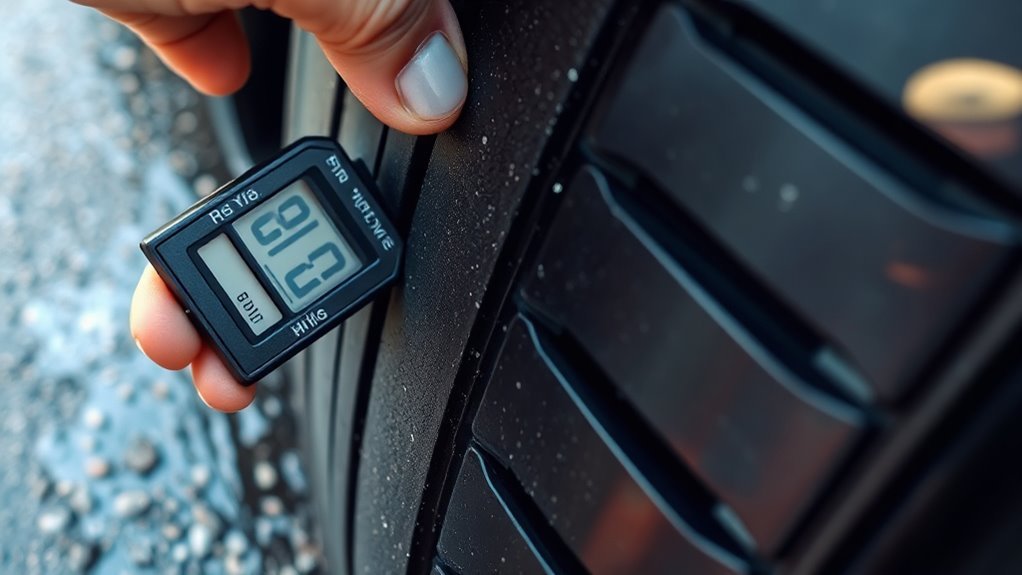
You can measure your tire tread depth with a tread depth gauge for the most accurate reading.
If you don’t have one, try the penny test by inserting a penny into the tread with Lincoln’s head down.
If you can see the top of his head, your tread’s too shallow and it’s time to replace the tires.
Tread Depth Gauge Use
A tread depth gauge gives you a quick, accurate way to see how much life your tires have left. Clean the tread first so dirt doesn’t skew the reading, then insert the probe into the deepest grooves.
Read the measurement at several spots across each tire, because uneven wear can hide problems.
- Check the inner, center, and outer grooves.
- Compare all four tires, not just one.
- Write down the numbers so you can spot changes over time.
- Replace tires when readings stay low or differ sharply side to side.
You’ll get the clearest picture when you measure on level ground and repeat the test monthly. If one tire reads much lower, you may need an alignment, rotation, or replacement soon.
Penny Test Method
The penny test gives you a fast, easy way to check tread depth when you don’t have a gauge handy. Insert a penny into several grooves with Lincoln’s head pointing down. If you can see the top of Lincoln’s head, your tread is too shallow and you need new tires soon.
Make sure to check both the inner and outer edges, because uneven wear can hide a problem. Test all four tires, since one worn tire can still affect handling and braking.
Think of this method as a quick screen, not a final diagnosis. It won’t measure tread as precisely as a gauge. And if your tires pass only barely, plan to replace them before wet roads or winter driving make safety worse.
Spot Cracks, Bulges, and Sidewall Damage
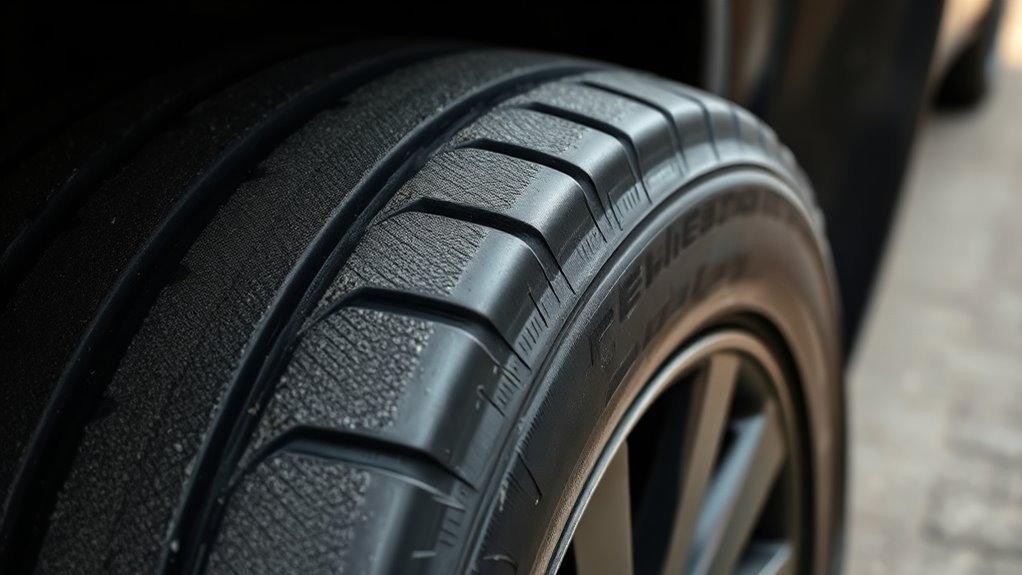
Look closely at the tire’s sidewalls and tread edges for cracks, bulges, cuts, or other visible damage, since these signs often mean the tire is weakening and may fail soon.
If you spot any of these issues, don’t ignore them. Sidewall bubbles can signal internal separation, while deep cracks can let air escape or expose cords.
Even a small tear can worsen quickly under heat, load, or rough roads. Check all four tires in good light and run your hand along the rubber.
- Inspect for cracks around the rim.
- Watch for raised spots or blisters.
- Look for cuts, gouges, or punctures.
- Replace any tire with exposed cords immediately.
If damage looks serious, get it checked by a tire professional before you drive far.
Look for Uneven Tire Wear Patterns
Uneven tread wear can tell you a lot about your tires’ condition, so check for bald spots, feathering, or one-sided wear. These patterns often point to problems like misalignment, improper inflation, or suspension issues.
If you spot them early, you can fix the cause before you need new tires sooner than expected. It’s definitely better to catch these signs early rather than wait until it’s too late!
Spotting Uneven Tread Wear
Check your tires for wear patterns across the tread, not just how deep it looks overall. You’ll catch problems sooner when you inspect each tire closely and compare the inner, center, and outer edges.
Uneven tread wear often shows up as bald spots, feathered ribs, or one side wearing faster than the other. Use a simple tread gauge or a coin test to spot differences at several points around the tire.
- Measure tread depth in three places.
- Inspect both front and rear tires.
- Look for smooth, shiny patches.
- Compare wear from left to right.
If one tire looks noticeably different, don’t ignore it. Uneven wear shortens tire life and can make your vehicle feel less stable on the road. So, it’s worth keeping an eye on!
Causes of Irregular Wear
Irregular tire wear usually points to an underlying issue, not just normal aging. You might see the inner or outer edges wearing faster, which often means your alignment is off.
If your tires feather, cup, or show patchy bald spots, your suspension or shocks may be failing. Underinflation can also wear the shoulders quickly, while overinflation wears the center tread.
Hard cornering, frequent braking, and rough roads can make the problem worse. You should also check for bent wheels, worn steering parts, or a tire that wasn’t balanced correctly.
Catching these causes early helps you protect your tires, improve handling, and avoid a blowout. If the pattern looks unusual, don’t wait—have a mechanic inspect your vehicle soon.
Check Your Tire’s Age
Even if your tires still look fine, age can make them unsafe. You should check the DOT code on the sidewall to find the week and year they were made.
Rubber dries out over time, and heat, sunlight, and ozone speed up that aging. Even if the tread seems decent, old tires can lose flexibility and grip.
Use these quick checks:
- Find the four-digit date stamp.
- Compare the manufacture date to today.
- Inspect for cracking, hardening, or discoloration.
- Have a pro assess tires you can’t date.
If you bought a used car or spare, don’t just assume the tires are young. Age matters because the materials inside break down long before the tread disappears. So, a dated tire can’t always protect you well.
Know When to Replace Your Tires
Once you know your tires’ age, the next step is deciding whether they’ve reached the point where replacement is the safer choice. You should inspect the tread depth, look for cracks, bulges, uneven wear, and check how the tires handle on wet roads.
Once you know your tires’ age, inspect tread depth, wear, and visible damage to decide if replacement is safer.
If the tread wears down to 2/32 of an inch, you need new tires right away. You should also replace them if you notice repeated air loss, vibration, or sidewall damage.
Even if the tread still looks decent, older tires can harden and lose grip. Don’t wait for a blowout or skidding problem to force your hand.
When you see multiple warning signs at once, act quickly and schedule a tire replacement before your safety, braking, and traction start to suffer.
Frequently Asked Questions
How Often Should I Rotate My Tires?
You should rotate your tires every 5,000 to 7,500 miles, often with each oil change.
Check your owner’s manual, though, because driving habits and tire type can shift that schedule.
It’s a good idea to keep an eye on your tires and adjust as needed. Keeping them rotated helps them wear evenly and last longer.
Can I Drive on a Punctured Tire Briefly?
You can drive on it only a very short distance if it’s losing air slowly, but stop soon and inspect it.
Don’t drive if it’s flat, wobbling, or damaged; you’ll risk a blowout.
Do All-Season Tires Last Longer Than Summer Tires?
Not always; all-season tires often wear longer because you’re using them year-round, while summer tires can grip better but soften faster.
Like a marathon runner pacing wisely, you’ll trade peak performance for endurance and versatility.
Should I Replace Tires in Pairs or All Four?
You should usually replace all four tires, but if you can’t, replace them in pairs on the same axle. That keeps handling balanced, improves traction, and helps you avoid uneven wear or dangerous skidding.
It’s better for your safety and your car’s performance. So, try to avoid mixing old tires with new ones whenever possible.
Does Tire Pressure Affect Handling and Safety?
Yes, tire pressure affects handling and safety. You’ll feel steering changes, uneven grip, and longer stopping distances when it’s low or high.
It’s a good idea to check pressures monthly. Just keep them at your vehicle’s recommended level, and you’ll be good to go.
Conclusion
If your tires are starting to look like worn-out boots, listen closely—they may be telling you it’s time for a change. Check the tread, scan for cracks or bulges, and watch for uneven wear that hints at bigger problems.
Even if they still roll, age can turn rubber brittle. Don’t wait for a roadside wake-up call; replace tired tires before they leave you stranded on the road ahead.
Knowing when to get new tires is key to your safety and vehicle performance. Regularly inspecting your tires for signs like low tread depth, cracks, bulges, or uneven wear helps you catch issues early. Tires that are old or damaged can compromise handling and increase the risk of blowouts.
So, keep an eye on your tires and don’t ignore those warning signs. Timely tire replacement ensures better grip, safer driving, and peace of mind every time you hit the road.